Karnataka governor asks State to “re-examine” switch from marks to grades for third language in SSLC
The Hindu
Karnataka Governor urges re-evaluation of the state's move from marks to grades for SSLC third language, citing educational concerns.
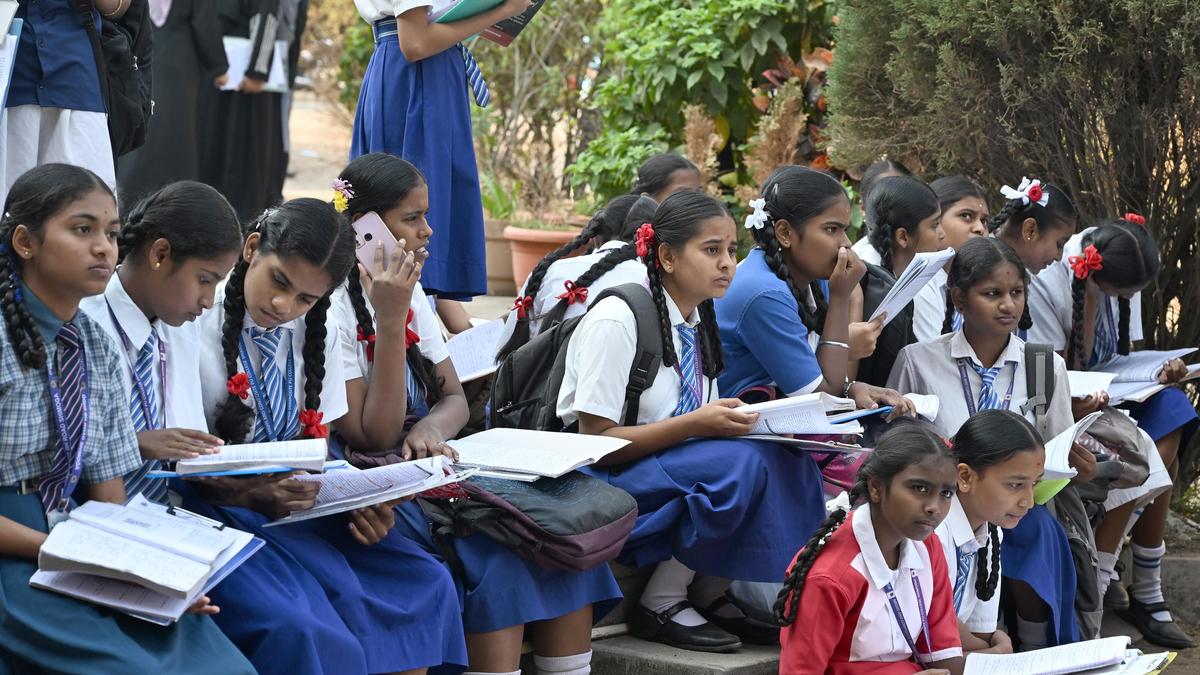
The Karnataka Governor Thaawarchand Gehlot has called for a comprehensive examination of concerns over the State government’s decision to award only grades, without marks, for the third language in the SSLC examination, following a representation highlighting its potential impact on academic engagement and linguistic diversity.
In a communication to state Chief Secretary Shalini Rajneesh, Secretary to Governor R. Prabhu Shankar forwarded a representation submitted by the Association for Preservation of Local Languages, Bengaluru, which raised apprehensions about the policy’s implications for students, teachers and the broader education system.
“I am directed to forward herewith a copy of a representation submitted by the Association for Preservation of Local Languages, Bengaluru, which has been addressed to the Governor of Karnataka, concerning the recent decision to award only grades, without including marks, for the third language in the SSLC examination,” the letter stated.
The representation underscored the importance of the third language in promoting linguistic diversity, awareness and intellectual development among students, while cautioning that a shift to a grading-only system may inadvertently diminish the academic importance of the subject and affect students’ motivation to engage seriously with it.
It further reflected concerns among teachers, parents and educationists regarding the long-term implications of the move on the quality and inclusiveness of school education in the state.
“The Governor has taken note of the issues raised in the representation and desired that the matter be examined comprehensively, keeping in view its academic and administrative aspects across the education sector,” the communication said.


Coimbatore Corporation has collected ₹472 crore in property tax for 2025–26, achieving 89% of its target so far.

A NIMHANS review highlights the lasting impact of child suicides on parents and mental health professionals, urging better support systems.

People who distribute food to poor and needy in Hyderabad are concerned of potential LPG cylinder shortages, risking meal preparations for the poor and needy they serve daily.

Vishu Mahajan assumes office as Thoothukudi Collector

Rangayana's 'Chinnara Mela' summer camp for children runs from April 14 to May 10, 2026, in Mysuru.

West Bengal is gearing up for assembly elections. Mamata Banerjee will face her toughest challenge, given the anti-incumbency factor of three terms. The BJP, in 2021, had cemented its position as the primary opposition, winning 77 seats to the Trinamool’s 215 seats. This time, unusually, but no longer surprisingly, the Election Commission has become a key character in the political narrative. The Special Intensive Revision (SIR) ended up deleting more than 60 lakh voters. And in many constituencies, the number of voter deletions is greater than the margins of victory in previous elections. Another issue is the mass transfers in the state bureaucracy, which are unprecedented, and were challenged in court by the TMC. Mamata has used these developments to frame the polls as a fight between a besieged Bengal and Bengali ‘asmita’ on one side, and a BJP-led Centre on the other. The BJP has been playing the anti-migrant card to polarise voters, and has also sought to target the TMC on corruption and misgovernance. Whose narrative will gain the upper-hand? What is happening with the lakhs of voter deletions? How will the SIR impact the outcome?

India quietly commissions the INS Aridhaman, its third nuclear-powered submarine, enhancing its strategic defense capabilities.

Karnataka governor asks State to “re-examine” switch from marks to grades for third language in SSLC
Karnataka Governor urges re-evaluation of the state's move from marks to grades for SSLC third language, citing educational concerns.

Mumbai will soon host electric boats for a luxury commute to Alibaug, revolutionising travel with silent, eco-friendly rides.

Trial one-way traffic around KBR Park in Hyderabad on Sunday; no U-turns, follow diversions for smoother movement.

Israel under fire as Trump warns of destroying Iranian infrastructure; BJP, Congress release candidate lists for T.N. Assembly polls, and more in The Hindu’s top news of April 3, 2026.

YouTuber Salman Khan attempts self-harm live, alleging harassment by Bidar police officials over his journalistic work.

Conservationists urge documentation of freshwater fish species in Tamil Nadu's waterbodies, highlighting the importance of native species preservation.