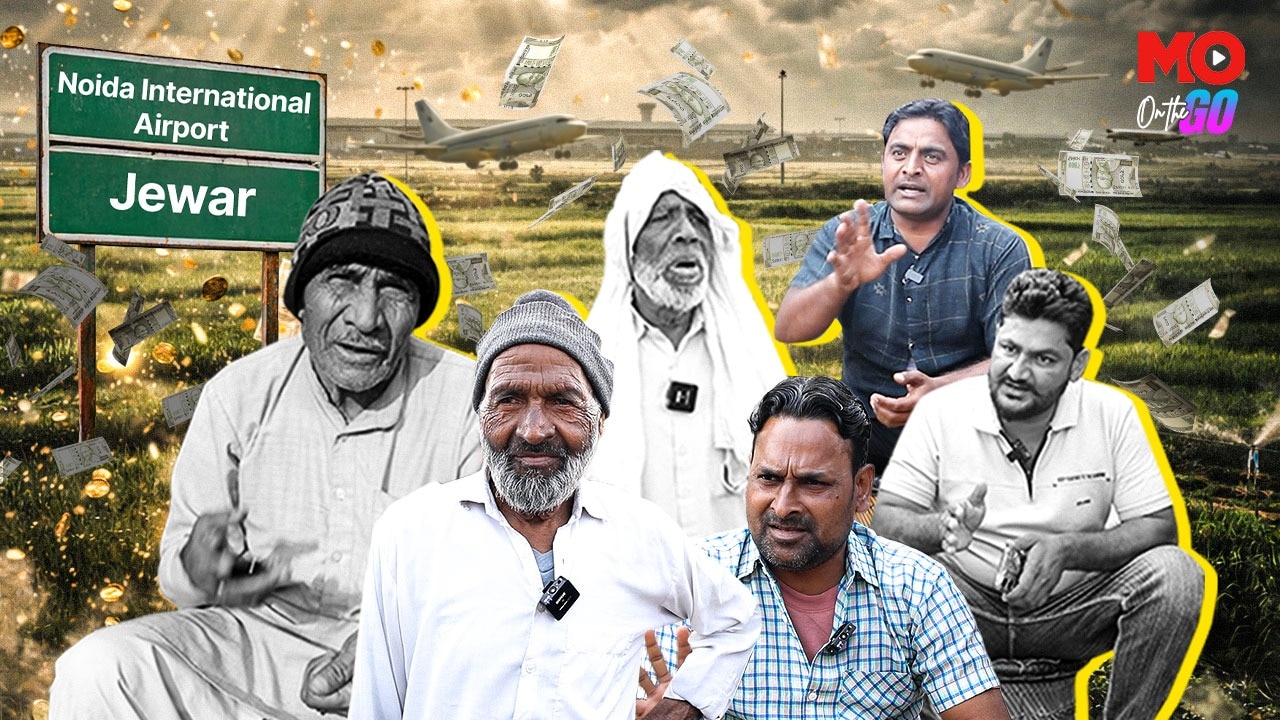
Jewar airport: When farmers became crorepatis overnight, then lost it all on luxuries
India Today
For generations, land was the farmers' only steady asset, producing food, income and security. Compensation replaced that asset with a lump sum, but this money came without financial planning support, guidance or long-term safeguards.
When India’s largest airport began rising in Jewar, Uttar Pradesh, local farmers had to part with 12,000 acres of fertile land. In return, they were compensated with crores of rupees. For many families, this was wealth they had never imagined. Houses replaced fields. Cars replaced tractors. iPhones replaced basic phones. The life in Jewar’s villages transformed, propelled into locally unheard levels of prosperity. But just ahead of the airport’s expected inauguration, some of that sheen appears to be weaning off.
“I Bought a 90,000 Phone. Now I Can’t Fix It.”
Mohd. Kaif, a farmer’s son, shows his smartphone, bought for nearly 90,000 when compensation money arrived. Today, the screen is damaged. He runs the phone by attaching a makeshift charger, unable to afford repairs.
“We go to the fields by travelling in a Thar now,” says Ismail Khan, a farmer. “But we don’t have any money left even for petrol.”
Another points to what remains of his purchases: an iPhone 11 Pro Max, now sold, replaced by a cheaper Android phone.
One village home looks like a luxury hotel lobby. Marble floors. Stylish living room, a kitchen equipped with a modern chimney. An investment of nearly 3 crore in construction alone.


The bench directed the authorities to ensure that no one plays any mischief that has the potential to create any "untoward situation". It clarified that the police arrangements in the area shall continue till the upcoming festival of Ram Navami.

One Mumbai-based buyer purchased one plot, while another secured three by placing the top bids. Authorities have not yet revealed the identities of either of the successful bidders.

Arvind Kejriwal visited the site of a devastating fire in Delhi's Palam area that claimed the lives of nine people including three children. Kejriwal described the incident as a "tragic accident" and expressed grief over the loss.

A series of gas cylinder explosions in Surat's Bharat Nagar Industrial Society killed two people and injured 11 after a massive fire broke out early Thursday morning.


Prime Minister Modi has been constantly in touch with several leaders of the Middle East countries and other world leaders discussing the ongoing conflict as the military hostilities between the US – Israel and Iran get more intense every day.

Baksa district judge Sharmila Bhuyan has been appointed to preside over the fast-track court, to conduct day-to-day trial proceedings in Zubeen Garg's death.

Hospital Superintendent Deepika Singhal said that before police involvement, a resolution was reached between the driver, the affected woman, and her family, resulting in no further action.

Police said the murder was planned after Darbar discovered that his wife Dharmiba was having an affair with Bhanabhai Majirana, who also lived in the same village.

Analysis by India Today's OSINT team shows that at least 24 to 29 LPG tankers, carrying volumes similar to Shivalik, are still required to meet monthly demand. Yet, in the last two weeks of the West Asia conflict, only two such vessels have arrived.

A growing rift inside Congress over the West Asia conflict reveals sharp differences on India's foreign policy, with senior leaders backing the government even as the party leadership questions New Delhi's moral and strategic stance.

A sudden raid in Uttar Pradesh uncovers a startling gap between official LPG stock and ground reality, raising questions over supply, black marketing and the real reason behind long queues outside gas agencies.

The Supreme Court said the snake venom case against YouTuber Elvish Yadav cannot be sustained in law as the complaint under the Wildlife (Protection) Act was not filed by an authorised person.