Jesse Welles: Keeping the spirit of American folk music alive
CBSN
The story of America can be told through the lyrics of folk music – songs of the Great Depression, the civil rights era, and the social revolutions of the 1960s. As folk singer Pete Seeger put it in 1967, "A song isn't a speech; a song is not an editorial. If a song tries to be an editorial or a speech, often it fails as a song. The best songs tell a story, paint a picture, and leave the conclusion up actually to the listener."
The story of America can be told through the lyrics of folk music – songs of the Great Depression, the civil rights era, and the social revolutions of the 1960s. As folk singer Pete Seeger put it in 1967, "A song isn't a speech; a song is not an editorial. If a song tries to be an editorial or a speech, often it fails as a song. The best songs tell a story, paint a picture, and leave the conclusion up actually to the listener."
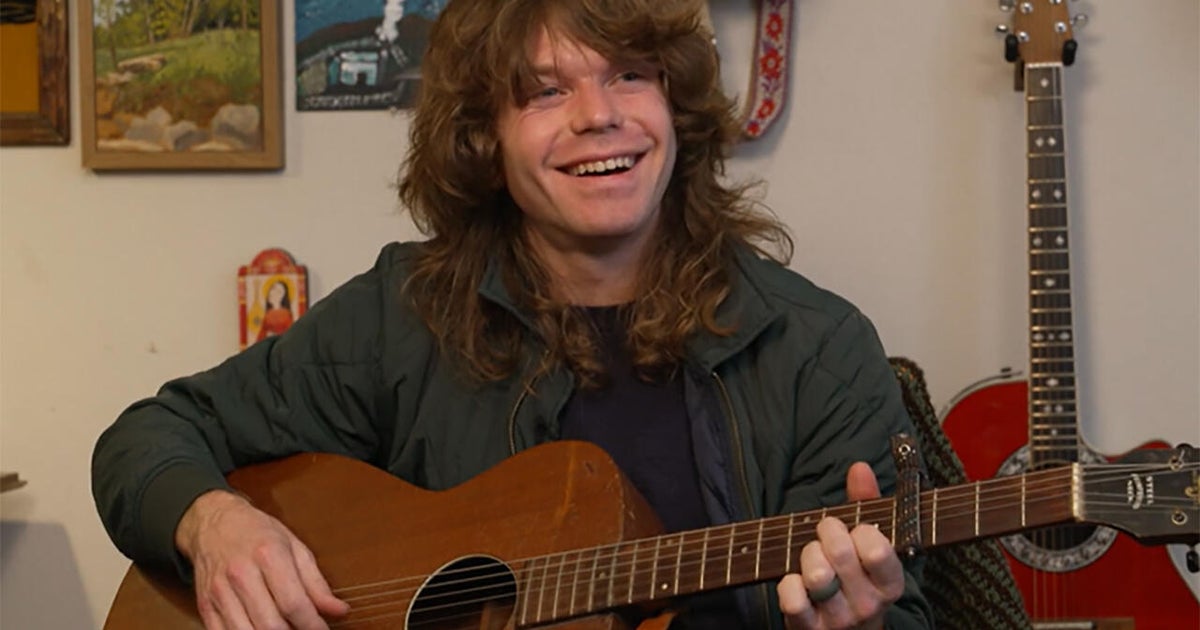
And if you're wondering whether folk music is still relevant today, take a listen to Jesse Welles. He is 33 years old, with a voice older than his years, and a message that speaks across generations:
It ain't the banks And it ain't the taxes It ain't the payday loans and the high rent homes And predatory fees and practices …
If you worked a little harder Then you'd have a lot more So the blame and the shame's on you For being so damn poor, yeahFrom "The Poor"
If it seems fitting right now to have a guy with six strings singing about the times, Welles said, "Every dog has its day!"


The story of America can be told through the lyrics of folk music – songs of the Great Depression, the civil rights era, and the social revolutions of the 1960s. As folk singer Pete Seeger put it in 1967, "A song isn't a speech; a song is not an editorial. If a song tries to be an editorial or a speech, often it fails as a song. The best songs tell a story, paint a picture, and leave the conclusion up actually to the listener."