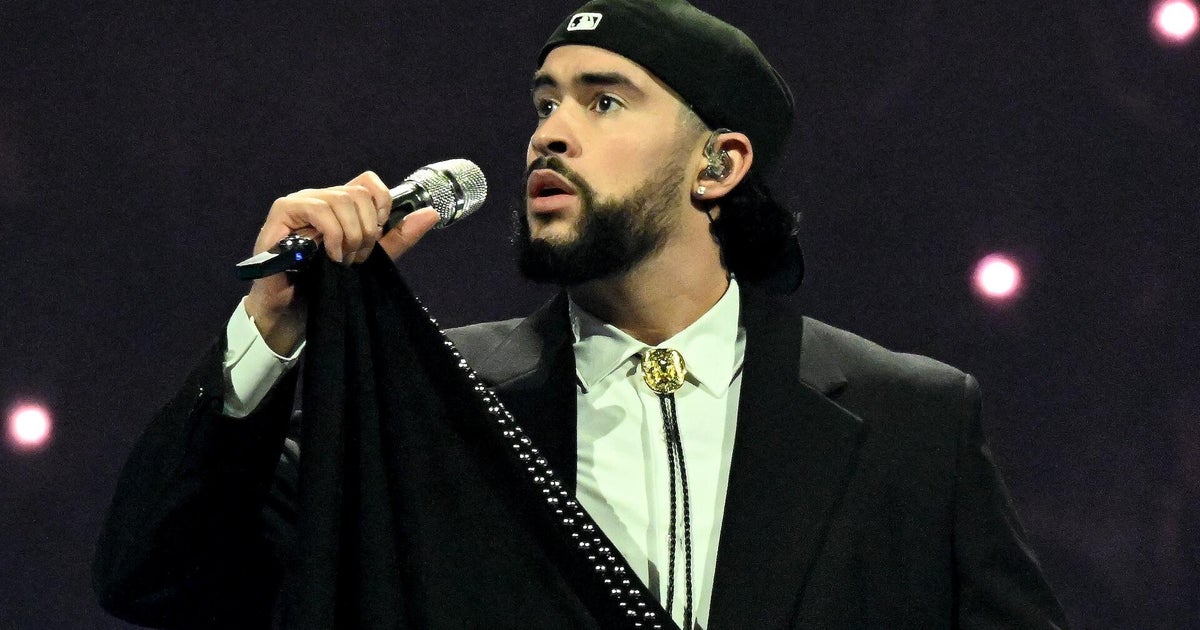
Bad Bunny's Super Bowl halftime show role breaks barriers and sparks debate
CBSN
A week after his "ICE out" declaration dominated Grammy headlines, anticipation is building over whether Bad Bunny will turn the biggest performance of his career — the 2026 Super Bowl halftime show — into a political call to action. In:
A week after his "ICE out" declaration dominated Grammy headlines, anticipation is building over whether Bad Bunny will turn the biggest performance of his career — the 2026 Super Bowl halftime show — into a political call to action.
"One thing about Bad Bunny is that he is a master at the art of surprise," Petra Rivera-Rideau, an associate professor of American studies at Wellesley College who specializes in Latin music and U.S.-Latinx pop cultures, told CBS News.
But some believe Bad Bunny, whose real name is Benito Antonio Martínez Ocasio, doesn't need theatrics to send a message.
"I think a lot of people are expecting him to have a political message in there," Mike Alfaro, the creator of Millennial Lotería who has gone viral for translating Bad Bunny lyrics into English ahead of the big game, added. "I think just him being there is the political message."
Reactions poured in when it was announced that the Super Bowl's halftime headliner would be the popular Puerto Rican artist who performs mainly in Spanish, with some hailing the historic choice and others criticizing it.


The story of America can be told through the lyrics of folk music – songs of the Great Depression, the civil rights era, and the social revolutions of the 1960s. As folk singer Pete Seeger put it in 1967, "A song isn't a speech; a song is not an editorial. If a song tries to be an editorial or a speech, often it fails as a song. The best songs tell a story, paint a picture, and leave the conclusion up actually to the listener."