India-US deal isn't just a trade deal. It adds muscle to India's China fight
India Today
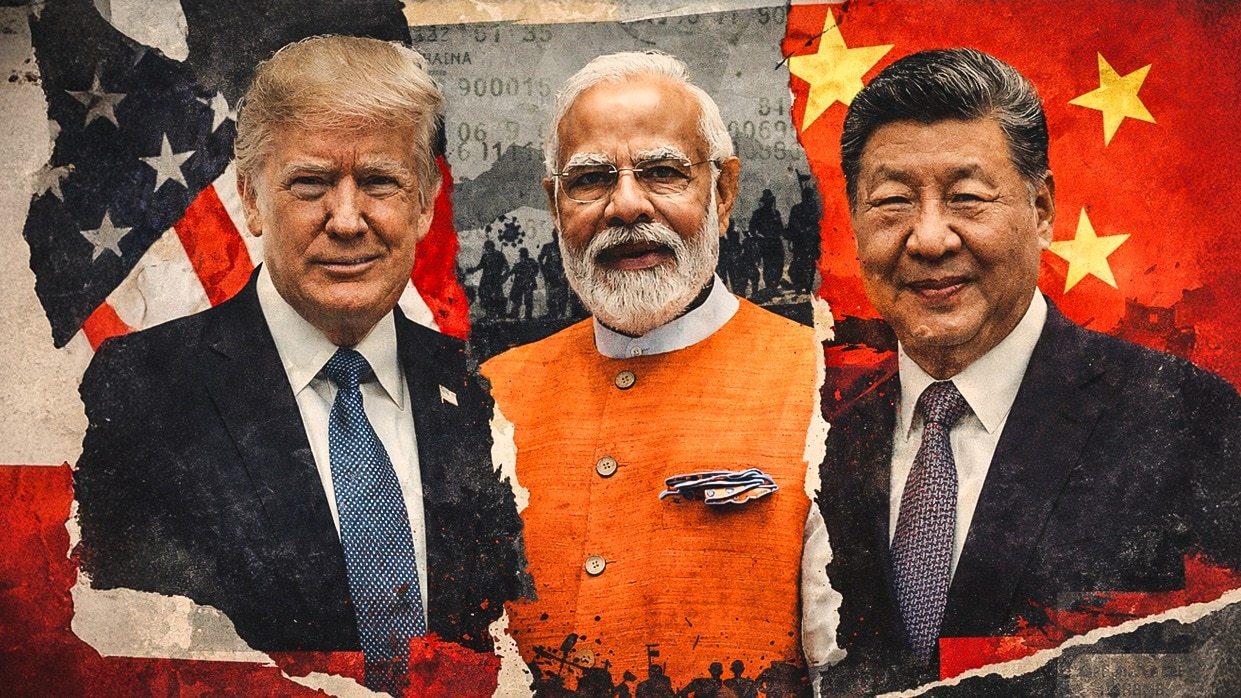
US President Donald Trump's announcement of the finalisation of a broad trade agreement with India is more than Indian exports facing fewer tariffs in America. This is how it boosts India's prospects as it competes with China in manufacturing, exports and strategic weight.
President Donald Trump on Monday (February 2), said he and Prime Minister Narendra Modi agreed on a broad India-US trade agreement. The announcement of the trade pact by Trump, which ends months of tensions, will boost Indian exports. It would position Delhi as a key alternative to China in global supply chains. In effect, the deal, after coming into effect, would prove to be a booster shot for India, which is competing with China in its manufacturing and commercial space, say experts. Beyond just being a trade deal, the India-US FTA will give India a strategic edge, especially against China. US Vice President JD Vance earlier said that the deal "aims to rebalance global trade".
Washington has long held that global trade has been tilted towards China. As Vance said during his India visit in April 2025, "India and the US finalising the terms of references for the trade deal is a vital step and sets a roadmap for the final deal".
The announcement of the agreement, which slashed tariffs on Indian exports to the US down to 18% from 50%, is lower than rates on competitors. China continues to face tariffs of 47%, while Pakistan and Bangladesh are at 20%, and Vietnam and Indonesia hover around 19-20%.
While the 18% US tariff cut will translate into immediate gains for Indian exports, the follow-up deal is expected to further position India as a strong manufacturing and exporting hub, especially as it is also slated to ink a free trade agreement with another major trading partner, the European Union in 2026, and it will be operational by 2027.
The potential deal also revives the 'China-Plus-One' strategy, which is a business approach where companies diversify their manufacturing and supply chains away from sole dependency on China by expanding operations into other countries. And China's counterweight, India, is an attractive investment destination for companies looking for a safe bet.
Entrepreneur and scholar at Takshashila Institute, Yusuf Unjhawala, said, "For export to the US, with the trade deal, India's tariff is at 18%. China's effective tariff rate is 47.5%. If this holds for a good period of time, India will benefit in multiple sectors".


The victim, identified as Naitik Kumar, allegedly rammed his speeding Bullet motorcycle into a scooter near Janeshwar Mishra Park in Lucknow, triggering a crash that left him dead and two others injured.

RJD MLA who skipped Bihar Rajya Sabha poll voting cites mother's illness

West Bengal Chief Minister Mamata Banerjee led a protest march in Kolkata against the alleged LPG shortage, accusing the PM Narendra Modi-led Centre of failing to ensure adequate supply.

Himayani Puri, daughter of Union Minister Hardeep Singh Puri, has moved the Delhi High Court over "false and malicious" reports linking her to convicted sex offender Jeffrey Epstein.

The family, a resident of Thyagaraju Street in Punganur town, had recently repaired the engine of their two-wheeler vehicle. A local mechanic advised the family to keep the engine running overnight to "set" the newly installed parts. However, this turned out to be fatal for the family.

The Supreme Court closed criminal proceedings against Ashoka University professor Ali Khan Mahmudabad after the Haryana government said it would not grant sanction to prosecute him over social media posts related to Operation Sindoor.

Three Congress MLAs in Bihar are reportedly out of contact as voting for five Rajya Sabha seats is underway, with the INDIA bloc and the BJP-led NDA locked in a tight contest for the fifth seat that could hinge on cross-voting.

Bunty Solanki stabbed his wife to death following a quarrel at their residence in Vadodara's Bakrawadi area. Rita died on the spot.

The girl's family members were angered over the friendship, and as a result, they called Jadhav last Saturday evening and allegedly beat him.

External Affairs Minister S Jaishankar has said that direct talks with Iran to restore shipping through the war-hit Strait of Hormuz have yielded results, stressing that direct engagement with Tehran is the most effective way to address the disruption.

This moment comes days after the Supreme Court allowed Harish Rana to die with dignity – a historic first court-ordered case of passive euthanasia in India. The court acknowledged the medical opinion that Rana will never recover and that the tubes that feed him and keep him alive are only prolonging his pain.


Ground videos from Shopian showed snow-draped pine trees as the weather brought joy for tourists. Speaking to reporters, a tourist from Bihar said she was unable to contain her happiness over the unexpected snowfall.