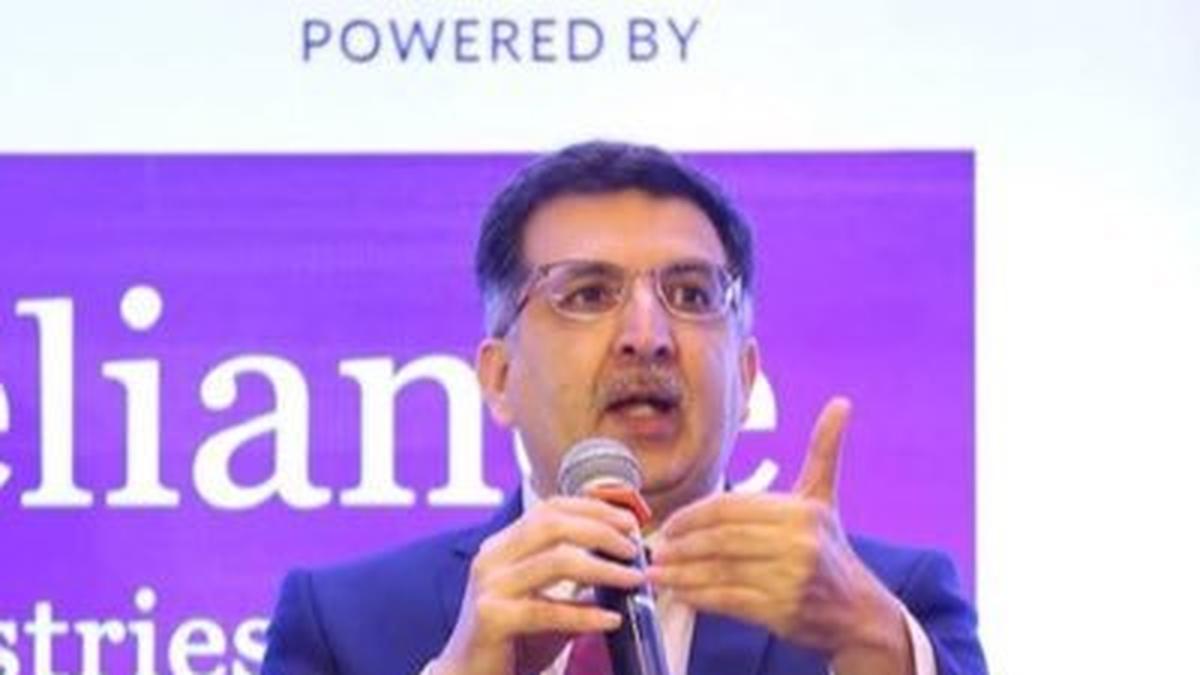
India’s climate challenge cannot be solved in conference rooms: Tata Trusts CEO
The Hindu
Tata Trusts CEO emphasizes that India's climate challenge requires grassroots action, not just discussions in conference rooms.
India’s battle with climate change needs to be fought in everyday decisions of people and cannot be impactful if discussed in conference rooms, said Siddharth Sharma, CEO of Tata Trusts.
“India’s climate challenge will not be solved in conference rooms like this alone. It will be solved in board offices, and engineering departments, in health facilities and school systems, in transport authorities and housing boards. It will be solved and rooted in the everyday decisions that shape how our cities actually function, how footpaths are designed, how building codes are enforced, how water is priced, how waste is managed, how trees are protected, how mangroves are restored, and how profit goods are financed,” he said, while delivering the key note address on urban sustainability at the Mumbai Climate week on Tuesday (February 17, 2026).
He further said that efforts towards climate adaptation would “operationally and morally fail if it does not reach informal workers, informal settlements, women, children and elderly first.” He expressed concern over the fact that in many Indian cities, air pollution is treated like a background noise as it has been normalised.
Mr. Sharma sought alignment between governments, philanthropists, businesses, researchers, and communities around a small set of priorities that can be scaled up over time on the event of the first Mumbai Climate Week.


The booming market for artificial intelligence servers brought Taiwan's Foxconn a 24 percent jump in annual net profit, the company said

In a statement on its website, Adobe said it has in recent years streamlined its sign-up and cancellation processes and made them more transparent.

Stock markets recover as Sensex and Nifty bounce back following a three-day slump, driven by value-buying in blue-chip stocks.

U.S. President Donald Trump’s administration is set to receive a roughly $10 billion fee from investors in the recently completed deal to take control of TikTok’s U.S. business, the Wall Street Journal reported

Meta is planning sweeping layoffs that could affect 20% or more of the company, three sources familiar with the matter told Reuters

Learn how to choose the best personal loan lender by evaluating eligibility, interest rates, and borrowing experience.

Discover why pension planning is essential in modern India to ensure financial security and peace during retirement.

The U.S. has launched two investigations under Section 301 of the Trade Act of 1974 against India and other economies to examine practices that may be ‘unreasonable or discriminatory and burden or restrict U.S. commerce’. One probe examines whether countries, including India, are using excess manufacturing capacity to export to the U.S. in a manner that hurts American businesses, while another looks at whether countries have taken ‘sufficient steps’ to prohibit imports of goods produced with forced labour.

NHAI raises annual pass fee to ₹3,075 from April 1, 2026, streamlining toll payments for FASTag users.

The U.S. probes forced labour in global supply chains, scrutinizing China and India's exports, warns the Global Trade Research Initiative.

The Hindu collection of images of the LPG crisis: War lights a kitchen fire

The company, which launched its IPO in 2020, is now listed on the National Stock Exchange as well as the Bombay Stock Exchange.

Explore the Essential Commodities Act's role in addressing India's gas crisis and its impact on various sectors.