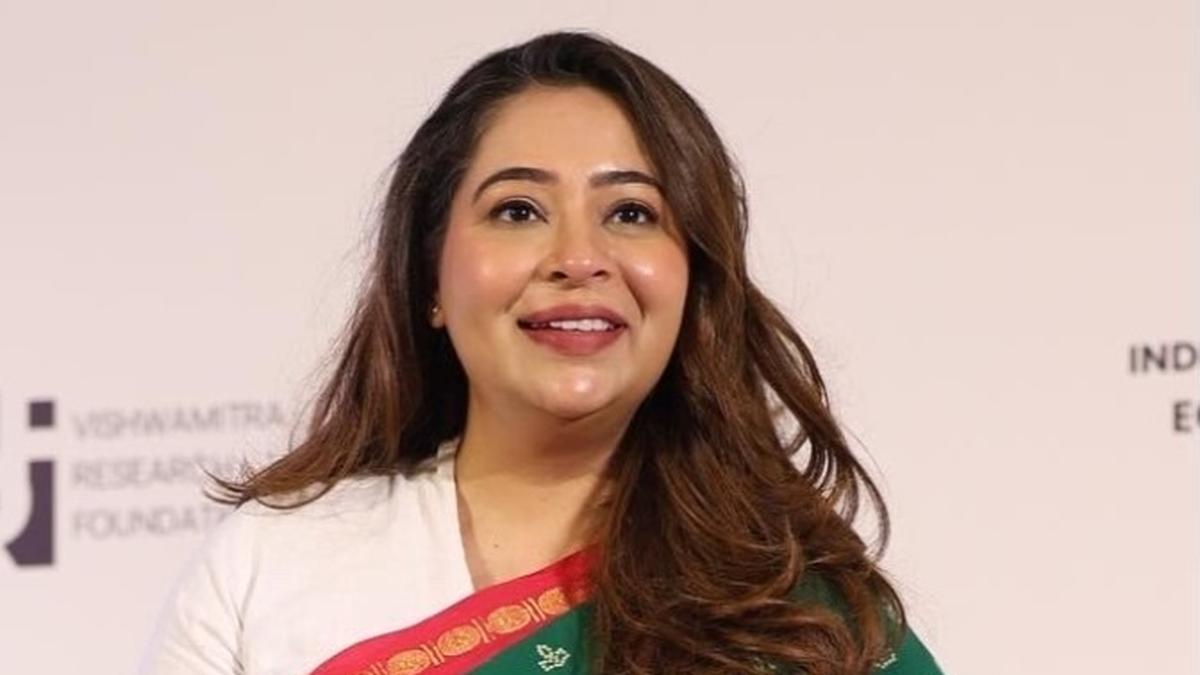
India in demand by both developed countries and global south economies: Priyam Gandhi-Mody
The Hindu
Priyam Gandhi-Mody highlights India's rising significance as developed nations and global south economies seek collaboration at the GEC summit.
India currently enjoys a place in the global economy where developed countries want to increasingly engage with it, while governments in smaller countries want India to anchor projects in those countries, Priyam Gandhi-Mody, the founder and chairperson of the Future Economic Cooperation Council (FECC) said.
The FECC is organising a three-day Global Economic Cooperation (GEC) summit in Mumbai on February 17-19, which will bring together delegations from both developed and developing countries. While Minister of External Affairs S. Jaishankar is confirmed to be speaking at the event, Prime Minister Narendra Modi is also expected to deliver a special address, although that is yet to be officially confirmed.
The FECC itself is backed by the Ministry of External Affairs and the Government of Maharashtra.
According to Ms. Gandhi-Mody, the ongoing global disruption is affecting every country, but also simultaneously places India at an “interesting intersection”.
“On the one side, we have the larger economies and blocs like the European Union, the US, Australia, and multiple other countries in the developed part of the world wanting to engage more and more with India,” she told The Hindu in an interview. “On the other side, the countries that are smaller, particularly in the global south, are looking at having India be the anchor of important projects in their countries, and do something jointly with India.”
The GEC was therefore conceived as a platform where decision-makers from each section of the global economy can come together in Mumbai and discuss either how to invest in India, or how the developed world can increase investments in the developing countries, with India anchoring these relationships.


U.S. President Donald Trump’s administration is set to receive a roughly $10 billion fee from investors in the recently completed deal to take control of TikTok’s U.S. business, the Wall Street Journal reported

Meta is planning sweeping layoffs that could affect 20% or more of the company, three sources familiar with the matter told Reuters

Learn how to choose the best personal loan lender by evaluating eligibility, interest rates, and borrowing experience.

Discover why pension planning is essential in modern India to ensure financial security and peace during retirement.

The U.S. has launched two investigations under Section 301 of the Trade Act of 1974 against India and other economies to examine practices that may be ‘unreasonable or discriminatory and burden or restrict U.S. commerce’. One probe examines whether countries, including India, are using excess manufacturing capacity to export to the U.S. in a manner that hurts American businesses, while another looks at whether countries have taken ‘sufficient steps’ to prohibit imports of goods produced with forced labour.

NHAI raises annual pass fee to ₹3,075 from April 1, 2026, streamlining toll payments for FASTag users.

The U.S. probes forced labour in global supply chains, scrutinizing China and India's exports, warns the Global Trade Research Initiative.

The Hindu collection of images of the LPG crisis: War lights a kitchen fire

The company, which launched its IPO in 2020, is now listed on the National Stock Exchange as well as the Bombay Stock Exchange.

Explore the Essential Commodities Act's role in addressing India's gas crisis and its impact on various sectors.

Star Health Insurance plans to boost AI-driven claim settlements from 20% to 50% within two years, investing heavily in technology.

The iron ore production has increased by nearly two-thirds since 2015

Benchmark indices fell 2% as high crude oil prices and FII selling pressures impacted market sentiment on March 14, 2026.