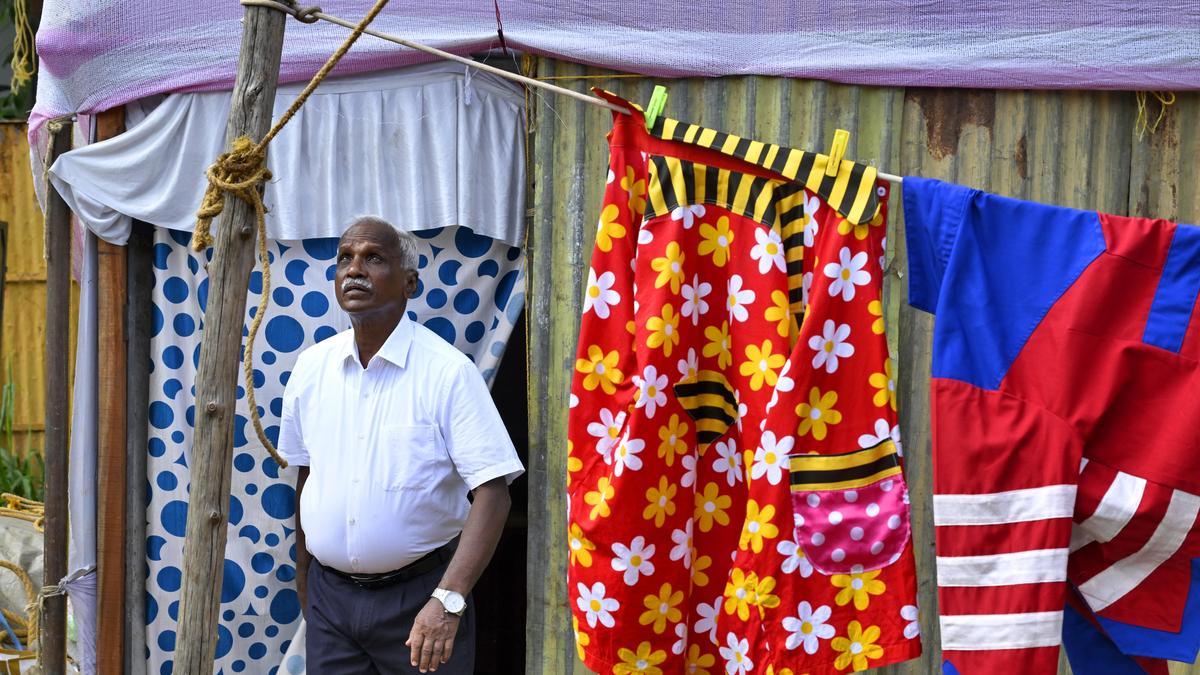
In the spotlight: Gemini Circus trainer C Lakshmanan on his legacy of 65 years, the highs and lows of the art and more
The Hindu
Lakshmanan's journey from a young circus enthusiast to a seasoned trainer bore witness to rise and fall of the circus entertainment industry in India.
Lakshmanan was in third grade when his parents took him to see a circus for the first time in the mid-1950s. He went to catch the Great Eastern Circus in his hometown Thalassery, in Kannur district, famed as the City of Three Cs - cake, cricket and circus. One of the memories that is still fresh in his mind as he witnessed that spectacle is the sight of a young woman who was twirled and lifted by an elephant with its trunk, in a show of strength and skill as a packed crowd cheered.
Today, as Lakshmanan stands tall in the circus ring as a trainer at Gemini Circus, boasting decades of experience in and around the country, he is accompanied by neither the beast nor the cheer.
“The circus is in a decline, and I don’t think we might be able to sustain it for more than two years,” says 77-year-old Chakiyath Lakshmanan, who has been working in the industry for 65 years.
Established in 1951, Gemini Circus founded by MV Shankaran and K Sahadevan, had its maiden performance on August 15, in Bilimora, Gujarat. This iconic establishment entertained guests of honour such as the former prime ministers Jawaharlal Nehru, Indira Gandhi and Rajiv Gandhi, American civil rights activist Martin Luther King Jr., Russia’s Valentina Tereshkova (first woman in space) and many more. However, today this circus camp is one of the few surviving souvenirs of a bygone era, with only seven major circus companies surviving in India as of 2020.
Lakshmanan’s journey as a circus artist began when he knocked on the doors of Shankaran. “I used to live right next to him. I went to his house and asked whether I could join,” he recalls.
Lakshmanan adds that his father was ready to disown his son when he wanted to join the circus. “We were not rich; he knew that life would be difficult in the camp and that I might be punished by the trainers during practice,” he adds.
Slowly, yet steadily Lakshmanan climbed the ranks from a clown to a trapeze artist to a seesaw acrobat and so on for a starting salary of ₹50, he remembers. His ability to do handstands made him an integral cog in the wheel, as he also trained his juniors at the camp.


Mumbai court denies discharge plea for Mayor Ritu Tawde in 2016 teachers' assault case, citing sufficient evidence for charges.

RJD announces candidates for Kerala Assembly polls: M.K. Bhaskaran, P.K. Praveen, and P.K. Anil Kumar to contest.

SSLC annual exams begin in Karnataka, with over 8.65 lakh students participating across 2,871 centers amid tight security.

Dhurandhar 2 earns an 'A' certificate after 21 modifications, surpassing Rs 100 crore in pre-sales ahead of its March 19 release.

Eid food in India: A look at Bhopali, Bohra and Memon culinary traditions

Hyderabad experiences intermittent rain and IMD forecasts more thundershowers, bringing relief from rising temperatures.

Real Madrid and PSG eliminate Manchester City and Chelsea, while Bodø/Glimt's fairytale Champions League run ends against Sporting Lisbon.

Tragic fire in Palam residential building claims at least 7 lives, including 3 children; rescue operations ongoing.

Lorry owners in Andhra Pradesh reject government proposal to reduce vehicle fitness test fees by up to 50%.

Watch the thrilling trailer for 'Dune: Part Three,' showcasing epic battles and Paul Atreides' struggle with power and resistance.

TMC announces candidates for 2026 Bengal Assembly elections, contesting 291 seats; BGPM to handle three Darjeeling hill seats.

DMK finalizes a seat-sharing deal with CPI for Tamil Nadu elections, allotting five seats amid ongoing discussions with CPI(M).

Parliament Budget Session LIVE: Follow The Hindu's latest updates on the Parliament Budget Session on March 18, 2026.