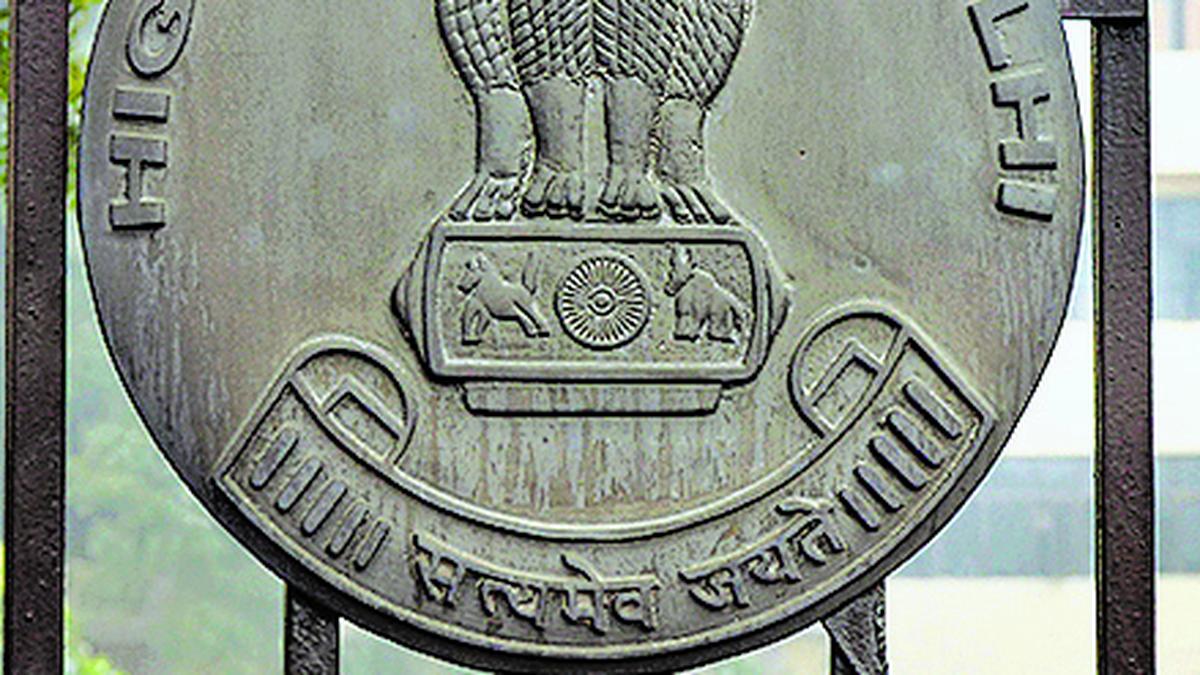
Implement ‘National Litigation Policy’ in time-bound manner: HC to Centre
The Hindu
A bench noted that more than a decade has passed since the discussion on the issue of a litigation policy commenced.
The Delhi High Court has order the Centre to prepare a time-bound action plan for implementation of the ‘National Litigation Policy’ noting that overwhelming majority of cases currently clogging the judicial system involve either the Central Government, State Governments, or public sector undertakings (PSUs).
National Litigation Policy, which was conceived in October 2009 with the objective to bring down the litigation from government agencies, has remained in draft stage at that juncture.
A bench of Chief Justice Satish Chandra Sharma and Justice Sanjeev Narula, on Friday, noted that more than a decade has passed since the discussion on the issue of a litigation policy commenced and “it is unclear as to when the proposed framework or guidelines will be in place”.
The bench highlighted that “there is thus an urgent need for a system that prevents unnecessary litigation by engaging in an audit of the decision-making process which leads to such litigation”.
The High Court’s order came while dealing with a public interest litigation (PIL) initiated by it after encountering a bunch of cases involving the Indian Railways and Cement Corporation of India Limited where “they resorted to unfounded arguments and false assertions”.
The High Court said, “There appears to be a troubling ethos among government officers: a belief that false claims can be advanced with impunity. These actions not only perpetrate injustice upon genuine litigants but also place undue burden on both the judiciary and the government”.
“The officials responsible for raising these frivolous claims often escape without any consequences, fuelled by the absence of mechanisms for accountability for such misconduct. This stark lack of accountability, which carries significant public implications, amplifies the urgency for systemic reform to prevent such instances from recurring,” the High Court added.


Special prayers mark Eid-ul-Fitr celebrations in Madurai

India’s gem and jewellery industry continues to demonstrate remarkable resilience and a spirit of innovation, said Kirit Bhansali, chairman of the Gem and Jewellery Export Promotion Council (GJEPC), at the inauguration of the 4th edition of IIJS Bharat-Tritiya 2026 at Bengaluru International Exhibition Centre (BIEC) here on Saturday, March 21.

HYDGEN dispatches eight modular green hydrogen systems to Surat, enhancing on-site industrial hydrogen generation and operational efficiency.

Fight is between AIADMK and DMK, says Rajan Chellappa

Two habitual offenders arrested in Miyapur for wine shop burglary; police recover stolen cash and bike.

Tiruchi's Smart City projects face underutilisation despite completion, raising concerns about planning, execution, and revenue generation.

Election Observer Anubha Shrivatsava inspects polling booths in Western Ghats, ensuring smooth arrangements amid challenging conditions.

A.P. Minister announces ₹9.8 crore development of Barashaheed Dargah and ₹20 crore international school for minorities in Nellore.

Vice-President Radhakrishnan advocates for modern university syllabi to enhance employability and skill development in today's evolving job market.

A poignant protest at Palakkad Medical College highlights ongoing developmental challenges, initiated by a symbolic wreath-laying by a young girl.

A three-year-old girl was tragically killed by a truck while walking with her mother near Bengaluru.

Iran's President calls for U.S.-Israeli aggression cessation and urges BRICS to ensure regional peace and security.

Harish Rao accuses govt. of cancelling ₹1,070 cr. work sanctioned to Siddipet