Humans are very stupid: Iran war, Strait of Hormuz & climate collapse expose our biggest failure | POV
India Today
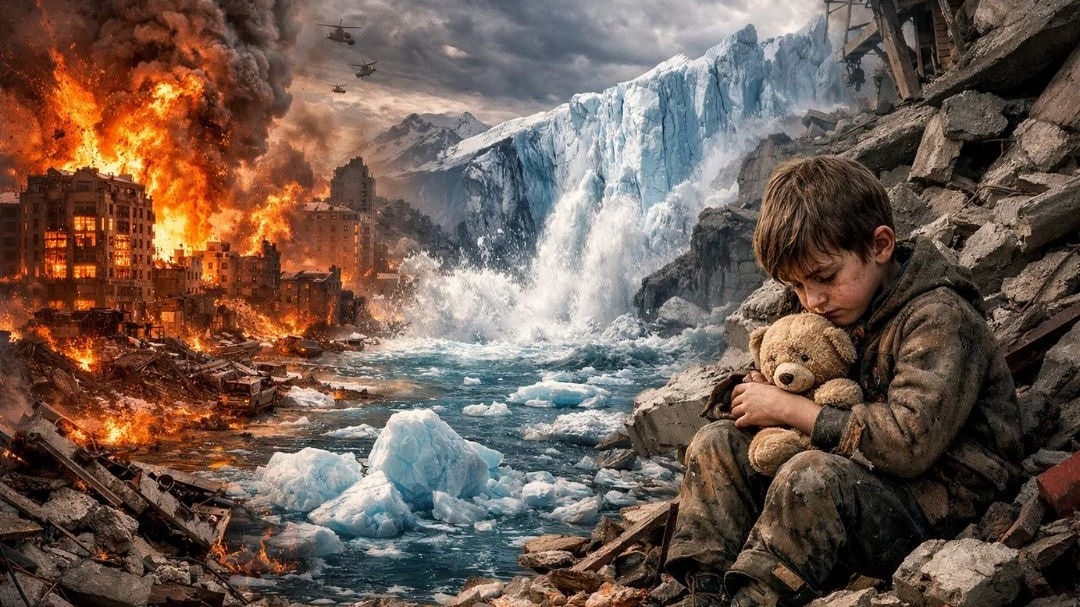
We are the only species on this planet with the intelligence to understand exactly what we are doing to it. And the only species doing it anyway.
There is a certain kind of madness that only becomes visible when you step back far enough to see the whole picture. We are a species that split the atom, decoded our own DNA and sent a car into space purely for the spectacle of it. Somewhere right now, in a well-funded laboratory, serious and brilliant people are drawing up plans to put human beings on Mars, a barren, frozen, airless rock sitting 225 million kilometres from here. And yet, for all of that extraordinary ambition, we cannot stop blowing each other up on the planet we already have.
The war next to the world's oil supply
In West Asia in 2026, the United States and Israel have gone to war with Iran. Missiles are flying, cities are shaking and children are dying. Sitting in the middle of all of it is a narrow strip of water roughly 33 miles wide at its narrowest point, separating Iran from Oman. The Strait of Hormuz. According to the United States Energy Information Administration, 20 million barrels of oil pass through that strait every single day, amounting to 20 per cent of everything the entire world consumes. One fifth of the fuel that heats homes, runs cars, powers hospitals and flies planes. Since the war began on 28 February, tanker traffic through the Strait has come to a near-complete standstill. A handful of vessels are still making the transit, many under naval escort, while hundreds more sit stranded at anchor on both sides, waiting.
Nobody in any war room seems to be asking the obvious question. When an oil tanker in the Strait of Hormuz is struck, where does the oil go? It does not evaporate. It spills into the water. Greenpeace Germany has described the threat of an oil spill in the Strait as an ecological ticking time bomb, with simulations showing that a major spill could devastate coral reefs, mangrove forests and seagrass meadows across the Arabian Sea and the Gulf of Oman. According to NOAA, the United States' own National Oceanic and Atmospheric Administration, the consequences of a large oil spill on marine ecosystems can be felt for decades, not years. Oil destroys the insulating fur of sea otters and the feathers of marine birds, exposing them to hypothermia. It suffocates coral, poisons fish, shellfish, dolphins and whales, blocks sunlight from reaching the ocean floor and dismantles entire food chains. A war has been lit next to a shipping lane carrying a fifth of the world's oil, and the ocean has no interest in our politics.
The planet is already keeping score


A Mumbai man offered paid "listening services" for people's problems at a beach, which led to several users praising the simple yet relatable idea of charging to hear others out.

The Trump administration has been pushing for a single legislative framework that can be applied uniformly across the country, rather than leaving states to form their own plans.

A man surprised his mother by arranging a meeting with her childhood crush Jonty Rhodes, capturing her emotional reaction in a heartwarming video that went viral online.

Reacting to reports of the F-35 aircraft being damaged, Mohammad Bagher Ghalibaf mocked the reputation of the F-35 as an "untouchable" platform and framed the episode as a turning point.


A video from Kolkata showed a chaotic interaction between a man and a cop after he hurled stones at his vehicle, which left social media users jaw-dropped.

On March 18, Israel struck a gas field in Iran. Tehran responded in a matter of hours, striking refineries in several Gulf countries. What explains this sharp, quick counter-attack capability of a country whose military infrastructure has supposedly been severely degraded? The answer lies in a cheap drone and a dispersed military.

The truck, loaded with straw beyond its capacity, began swerving dangerously while moving towards the temple stretch. Eyewitness visuals show the vehicle tilting and rolling sideways on the road as bystanders shouted for it to stop.

How Benjamin Netanyahu handed Donald Trump a war and a bill he may never stop paying

A video showed a man calmly eating popcorn while a heated argument broke out outside a screening of Dhurandhar The Revenge, with his reaction stealing the spotlight online.

From Eli Cohen to AI-driven espionage, Israel has turned infiltration into its sharpest weapon. For Iran, the real threat isn't missiles at its borders, but invisible enemies within, quietly mapping targets and striking with precision.

A Gurgaon housing society decided to publicly name maintenance defaulters on a board at the main gate. They also plan to block services like domestic help and deliveries, sparking debate over strict recovery measures.