How the Creative India Education Fund brings music for all
The Hindu
Founder of Creative India Education Fund, Lubomir Jabbanda talks about how they are taking music to the underserved
Bengaluru’s Lubomir Jabbanda has had a circuitous route into setting up Creative India Education Fund (CIEF), a non-profit which aims at providing music, dance, sports and arts education to underserved youth in the city and state.
It was when his long-gestated dreams of becoming an in-demand artiste came up against the uncertainties of the pandemic-enforced lockdowns that Lubomir — who makes music under the moniker Beat Hierarchy — turned to teaching basic music-making skills to school children in South India.
After the initial CSR outing in 2023, the composer-producer, guitarist and rapper saw the potential in setting up a non-profit organisation, and the Creative India Education Fund finally came into being in late 2024. Since then, Lubomir has had additional music teachers — multi-instrumentalist Gourav (who switched from a corporate job to music education), flautist Mushkan Rajani, dance artist Priya Mitra and his fellow trustee Swathy Ramanath — join him in his endeavour.
After gaining considerable teaching experience at government schools across South India over the better part of a year, Lubomir channelled that know-how into CIEF. When he began approaching colleges and schools to offer free music education — instrument training, song-making and electronic music equipment training — few would say no, but it still took convincing.
“In some villages, a lot of principals don’t consider this an education,” he says.
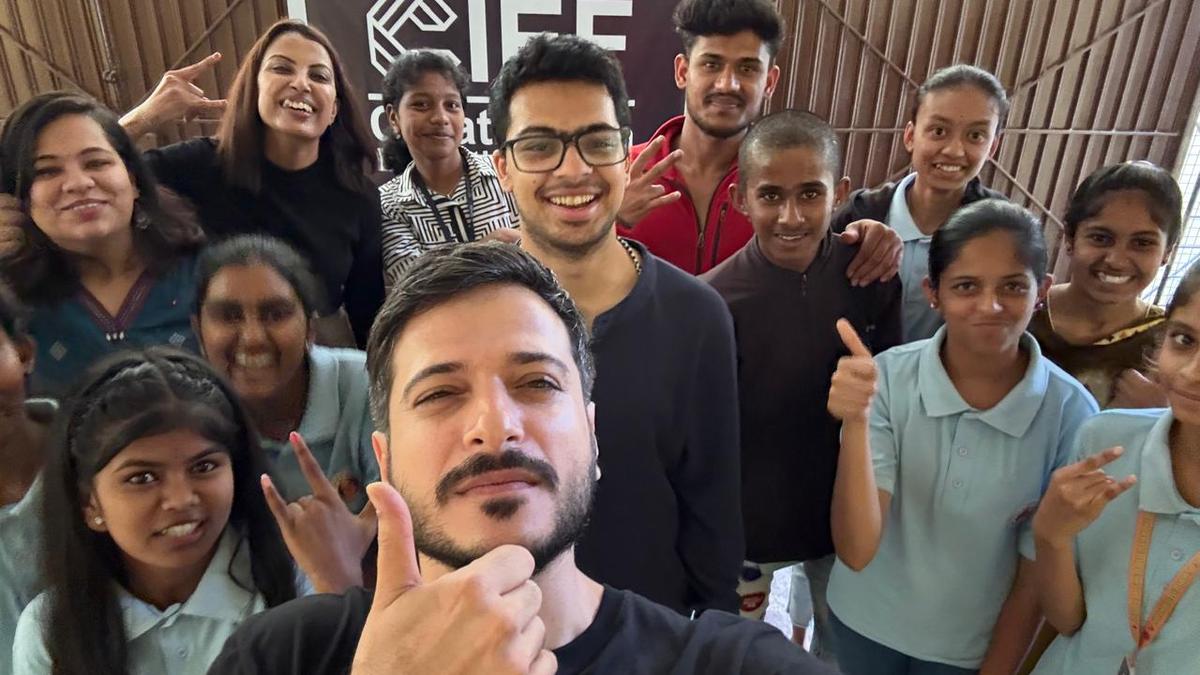
Set up off Kanakapura Road, CIEF first began offering free music classes to the students of Shree Siddaganga Pre-University College nearby. It started with a class of 300 and then, they narrowed it down over the course of a few sessions to find 30 students who wanted to learn music and 18 dance groups. It culminated in an annual day for the college, organised by CIEF, in a throwback to Lubomir’s do-it-yourself ethos as Beat Hierarchy.
They found a music retail company to sponsor the sound setup, got the college to give them a stage and soon, everyone from the rappers and dancers to bands were on stage for a showcase gig. Talking about the ground work that went into it, Lubomir says, “We brought in ukuleles, cajons, bongos and a couple of keyboards, so it generated a lot of noise. But it helped people understand what instrument they were interested in learning with us.”


Perundurai's industrial growth faces challenges of pollution, water scarcity, and healthcare, impacting residents ahead of the 2026 elections.

The Travancore Devaswom Board asserts that courts should respect community beliefs in its Supreme Court submission on Sabarimala's entry issue.

Karnataka cancels Deendayal Upadhyay event at KSOU due to protocol violations, citing inconsistency with university objectives.

Illegal pickle unit busted in Hyderabad, one arrested; unhygienic stock worth ₹3 lakh seized

Karnataka has entered a state of demographic transition where a large working-age population will no longer be enough to drive economic growth, and future gains will depend on how productively people are employed, the ‘State of Working India 2026’ report said.

Key demands in Sulur Assembly constituency include reviving the powerloom sector, addressing farmers' needs, and protecting River Noyyal.

Kodihalli urges Karnataka CM to allocate ₹10,000 crore revolving fund for seamless procurement of farm products under MSP scheme.

Kerala's political parties continue to marginalize women candidates, highlighting a troubling disconnect between gender demographics and representation.

The High Court of Karnataka on Tuesday ordered the issue of a notice to the State government on a PIL petition, which had complained about disturbances caused to people residing in the localities around the National Public School situated in Rajajinagar 5th block due to use of loudspeakers with high volume in the school and parking of school buses in residential areas.

China is extensively mapping ocean floors to enhance submarine warfare capabilities against the U.S. and allies across key oceans.

AIADMK's 2026 manifesto promises free rations, women's benefits, education reforms, and economic growth initiatives for Tamil Nadu.

The vehicle towing drive will soon resume in the city to ease traffic congestion. The Bengaluru Traffic Police (BTP), in coordination with the Greater Bengaluru Authority (GBA), is set to relaunch the vehicle towing drive across the city shortly to tackle traffic congestion and illegal parking.

Panic buying, not shortage, is leading to long queues at Hyderabad petrol pumps.