How marketing strategies and design interventions can empower tribal artisans
The Hindu
The 12-day Tribal Art Festival, taking place in Delhi until March 13, brings together more than 75 tribal artists and over 1,000 artworks representing more than 30 tribal art traditions.
Tribal art, in India, has always been an integral part of life, inseparable from seasonal changes and festivities. Paintings are found on mud walls after a harvest, etched on floors during festivals, cast in metal for rituals, woven from forest fibre, shaped from earth and bamboo. The colours used come from soil, leaves and stones; the motifs from birds, animals, crops, ancestors and everyday memory. The process is labour-intensive and deeply connected to the ecology.
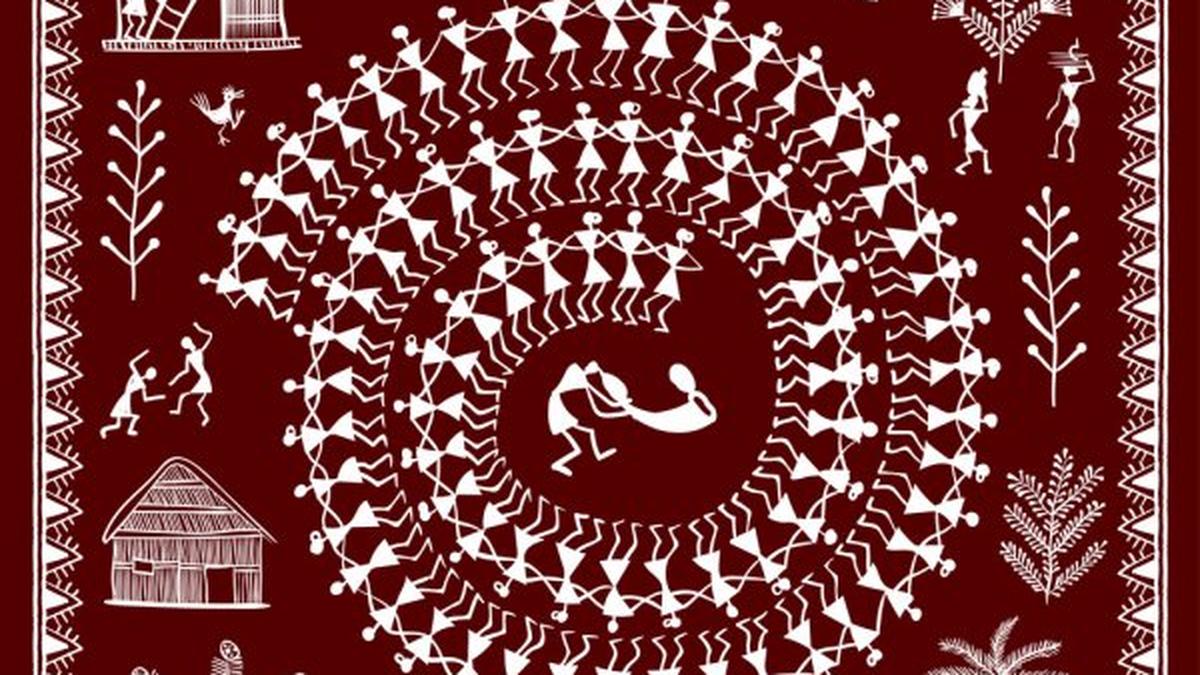
Tribal art was never meant to be decorative alone, it has always been a medium of storytelling, carrying the voices and stories of the communities. For instance, in Warli paintings (from Maharashtra), human figures are depicted in circles, symbolising agricultural cycles; Gond art from Madhya Pradesh draws from stories of forests and spirits; while Sohrai murals in Jharkhand celebrate cattle, fertility and seasonal change.
Gond art from Madhya Pradesh are drawn from stories of forests. | Photo Credit: Special Arrangement
Celebrating this diversity of tribal visual art is the ongoing Tribes Art Fest (TAF) 2026 at Travancore Palace. Organised by the Ministry of Tribal Affairs in collaboration with the Federation of Indian Chambers of Commerce & Industry (FICCI) and the National Gallery of Modern Art (NGMA), the 12-day festival brings together more than 75 tribal artists and over 1,000 artworks representing more than 30 tribal art traditions. Open to the public until mid-March, the exhibition is an exhaustive showcase of tribal visual culture.
The show presents an impressive display of artworks. Besides Warli and Gond there are Bhil works from central and western India; Dokra metal casting from West Bengal, Chhattisgarh, and Odisha, Saura paintings from Odisha, Kurumba art from Tamil Nadu, Bodo textiles from Assam and bamboo crafts from the North-East. Mandana floor designs, Godna tattoo-inspired motifs and Sohrai murals add further richness to the exhibition.
Northay Kuttan says Toda embroidery is a skill mastered mostly by women. | Photo Credit: Special Arrangement


Explore the evolution of Lodhi Art District, a decade-long experiment in public art and community engagement in Delhi.

‘The Bride!’ movie review: Jessie Buckley and Christian Bale spark a feral, fascinating chemistry, though even their undead romance struggles to animate Maggie Gyllenhaal’s unruly feminist monster mash

Join Delhi's Shriram Shankarlal Music Festival from March 6-8, celebrating Indian classical music with free entry and emerging talent.

Michelangelo was born on this day in 1475. The Hindu quiz on the Italian sculptor and painter who was one of the greatest artists of the Italian Renaissance

With a simplistic understanding of the world that extends even to its laid-back aesthetics, 'Hello Bachhon' ends up feeling more like a mouthpiece of Physics Wallah, as it merely registers its journey from a broad perspective

Varalaxmi Sarathkumar's Telugu film 'S Saraswathi' is a disappointing crime saga that fails to offer a fresh perspective on women's struggles.

Discover "Vilayath Budha: The Sandalwood Survival," an innovative open-world mobile game inspired by the Malayalam film, featuring Prithviraj.

As war escalates and political turmoil grips Iran, two filmmakers — an Iranian and an Indian — reflect on jin, jiyan, azadi (woman, life, freedom) in the war-torn country through their cinema

Season 2 of Ravi Kishan’s courtroom comedy, Maamla Legal Hai finally has a release date. The Netflix series will be released on the platform on April 3, the makers announced on Thursday, March 5, 2026.

Join our quizmaster from Madurai for a fun trivia challenge while exploring the joy of music and coffee!

Discover the tension between Hal Jordan and John Stewart in HBO’s upcoming DC series, "Lanterns," premiering in August.

Organised by MadRasana, Sandeep Narayan’s concert with Trichy Sankaran also featured V.V.S. Murari and K.V. Gopalakrishnan

French street artist Kashink's mural unveils in Chennai, showcasing feminist themes as part of Wall Art India's national initiative.