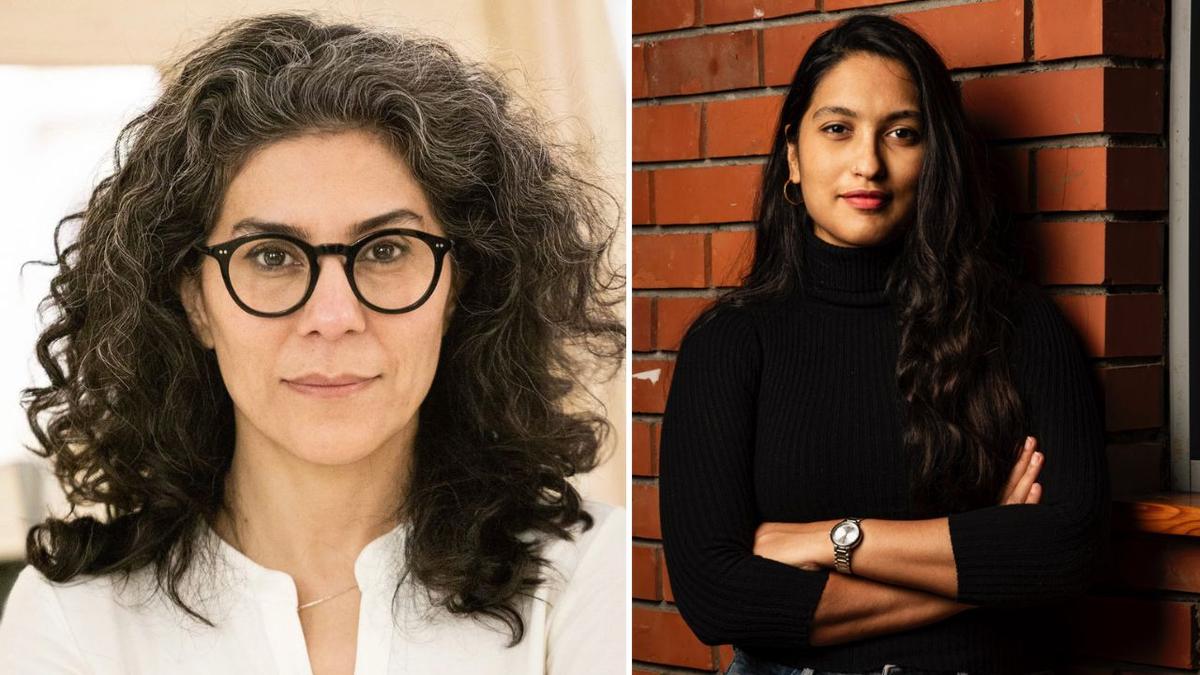
Her lens on Iran | Mahnaz Mohammadi and Sreemoyee Singh on filming hope in dark times
The Hindu
As war escalates and political turmoil grips Iran, two filmmakers — an Iranian and an Indian — reflect on jin, jiyan, azadi (woman, life, freedom) in the war-torn country through their cinema
On March 1, a day after news broke about Iran’s Supreme Leader Ayatollah Ali Khamenei’s assassination, New York-based exiled Iranian-American journalist, activist and author Masih Alinejad, 49, was one of the loudest jubilant voices. She posted an emotional video on X: “Every morning, I wake up reading that my people are being killed by Ali Khamenei. But this is the first morning in my life that I get the good news. I wanna run and shout out of joy Ali Khamenei is dead! Free Iran!”
The war escalated on February 28 with U.S.-Israel airstrikes on Iran to counter Tehran’s “alleged” nuclear influence. The conflict follows years of tension.
Alinejad left Iran in 2009 to escape imprisonment. Years later, the image of her with loose black hair became the face of her 2014 online campaign, ‘My Stealthy Freedom’, inspiring Iranian women to rail against compulsory hijab. That led to the campaign ‘White Wednesdays’, where women dressed in white, took to the streets, taking off their headscarves, in the face of abuse or arrest. “My principle is simple, I am for women’s right to choose,” she told me in 2018, around the release of her memoir, The Wind in My Hair: My Fight for Freedom in Modern Iran (Hachette), her first book in English, after four books in Persian.
Art, no matter the medium (books, music, cinema), often is political. Alinejad’s words, hair, and initiatives, for instance, also spawned #GirlsofRevolutionStreet protest and #MyCameraIsMyWeapon campaign, where women filmed and posted online their altercations with the morality police. So, this year, at the 76th Berlinale, when international jury president Wim Wenders said cinema “is the counterweight of politics… we have to do the work of people, not the work of politicians” in response to Gaza, it made headlines.
Political frame
For Iranian cinema, politics has always been its subtext. We speak to two filmmakers who reflect on jin, jiyan, azadi (woman, life, freedom) in Iran through their cinema. Iranian filmmaker Mahnaz Mohammadi, 51, lives and films there, while Indian documentary filmmaker Sreemoyee Singh, 36, went to Iran to study Persian and make a film. Both their films premiered at the Berlinale — Mohammadi’s Roya in 2026, and Singh’s Be Kucheye Khoshbakht (And, Towards Happy Alleys) in 2023, in the Panorama segment. “Everything is political; the fact that we are breathing and living in our relationship to society, that itself is political,” says Singh. Mohammadi, on the other hand, is clear she is not making political films. “Sometimes misunderstanding or misconception will happen. I can tell you, I’m not making political films. But the situation that the people are living in, I can’t ignore it. In Iran, the act of going out on the street after 6 p.m. six o’clock has become part of activism, because everywhere so many people are being arrested, killed. How can I divide it between this and that? I don’t want to make a film about that, but I want to make a film about what happens after those politics suppress the people.”


French street artist Kashink's mural unveils in Chennai, showcasing feminist themes as part of Wall Art India's national initiative.

From temple courtyards to A.R. Rahman’s ‘Wonderment Tour’: The journey of thavil artiste Amirthavarshini Manishankar

Warner Bros. is developing a Game of Thrones film with Beau Willimon as the writer, expanding the franchise beyond television.

Anand Seshadri’s Beethoven 32 Project promises to be less a series of concerts and more an evolving conversation

Mohammad Rasoulof criticizes Ayatollah Khamenei as “the most hated figure” in Iran after his death in a U.S.-Israel strike.

César Awards dismiss Jim Carrey clone rumours, say actor ‘worked on his speech in French for months’
César Awards clarify Jim Carrey's appearance, dismissing impersonation rumors and highlighting his dedication to delivering a French speech.

Discover 'Oh Butterfly,' a gripping Tamil thriller about secrets and consequences, releasing in theatres on March 6.

Directed by Geetu Mohandas and produced by KVN Productions and Monster Mind Creations, ‘Toxic: ‘A Fairy Tale for Grown-Ups’

Choreographed by Anita Guha, Anjali Hariharan’s dance included a thoughtfully curated repertoire of bhakti‑laden kirtanams, expressive varṇams to a graceful tillana.

The vampire thriller triumphed over Paul Thomas Anderson’s ‘One Battle After Another’, which was considered the top contender after earlier wins during the awards season

Malayali rapper ThirumaLi discusses his impactful music video 'Nonsense', addressing substance abuse

‘Masthishka Maranam’ movie review: Krishand’s latest offering is a wild, wild ride for sci-fi lovers
Masthishka Maranam blends humor and socio-political satire in a dystopian sci-fi adventure