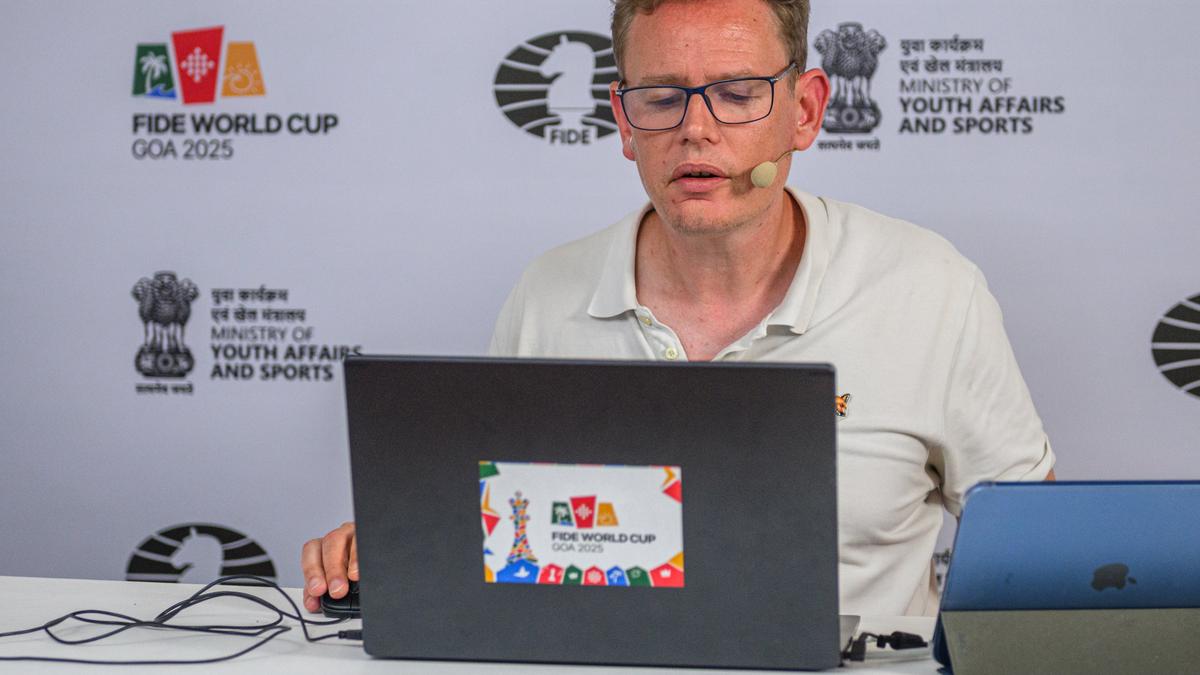
How did I become a coach and Carlsen’s second? I got too weak as a player: Jan Gustafsson
The Hindu
Grandmaster Jan Gustafsson shares insights on Magnus Carlsen, D. Gukesh, Vincent Keymer, and the 2026 Candidates tournament, along with his journey as a coach, commentator, and chess24 co-founder.
Jan Gustafsson was once ranked 85th in the world, but he has always been keen to view chess not just as a professional player. He became a coach when he was 21, he is an expert in opening theory and a widely regarded commentator, and he worked as Magnus Carlsen’s second for three successive World Championship matches. Excerpts from an interview Gustafsson gave The Hindu in Goa:
The Candidates features a German for the first time since 1991.
We in Germany are rooting for Matthias Bluebaum though he is not one of the big favourites. It will be a close tournament. The Candidates is such a nervy affair, a long tournament. I think whoever qualifies, they will already have shown their worth in the Candidates and it will be a tough match for D. Gukesh. But Gukesh has gained experience, and you can see his preparation is so much better.
German chess seems to be in good shape. Vincent Keymer, who was Gukesh’s second for his World title match against Ding Liren, is the World No. 4. And you also have men like Alexander Donchenko and Frederik Svane.
We have had this group for a couple of years. We won the European Team Championship [tied for first place with Serbia before finishing runner-up on tie-breaks in 2023], but didn’t manage to win this time around. But, yeah, the young guys are getting even stronger. So we have a good group, but it’s about making the next step. They have had some special support, so it’s good to see it’s showing fruit.
Kingmaker: Gustafsson first worked as Carlsen’s second during the 2016 World Championship. ‘Magnus is impressive in every aspect of the game. And he is a fun guy, too,’ Gustafsson says. | Photo Credit: Getty Images


Grandmaster Jan Gustafsson shares insights on Magnus Carlsen, D. Gukesh, Vincent Keymer, and the 2026 Candidates tournament, along with his journey as a coach, commentator, and chess24 co-founder.

Assembly elections 2026 live updates: Get real-time updates, full polling schedules, candidate lists and key constituency analysis as India prepares for the 4 May counting day. Follow The Hindu for more updates.

Rajasthan wins a national award for successfully completing its first irrigation census, showcasing effective water resource management.

Gulf tensions spark caution among Indian investors, impacting Dubai's real estate market after years of rapid growth and stability.

Karnataka High Court dismisses land encroachment FIR against Sri Ravi Shankar, citing lack of allegations or evidence.

Delhi Assembly passes ₹1.03-lakh-crore budget for 2026-27, emphasizing accountability and project completion under CM Rekha Gupta's leadership.

Thirumavalavan announces successful negotiations with DMK for VCK's eight constituencies ahead of the T.N. Assembly elections.

The Hindu Morning Digest gives a select list of stories to start the day. Read the top news today on March 28, 2026

Kerala's 2026 Assembly elections focus on wildlife conflicts as farmers seek solutions and challenge political leaders in key constituencies.

AIADMK nominates newcomer V.B. Prabhu against veteran K.A. Sengottaiyan in Gobichettipalayam for the upcoming Assembly election.

Experience spiritual ecstasy at Tirupati's Sri Rama Navami festivities, featuring special rituals and vibrant celebrations across historic temples.

Musi Riverfront Development Project: With the Telangana government ready to implement the project in Hyderabad, residents along the river are facing possible displacement and uncertainty over compensation. Once seasonal streams, the Moosa and Esi tributaries now flow with sewage and industrial effluents, raising questions about ecological restoration.

AIADMK announces second candidate list for 2026 Tamil Nadu Assembly elections, retaining 25 MLAs and including 16 women.