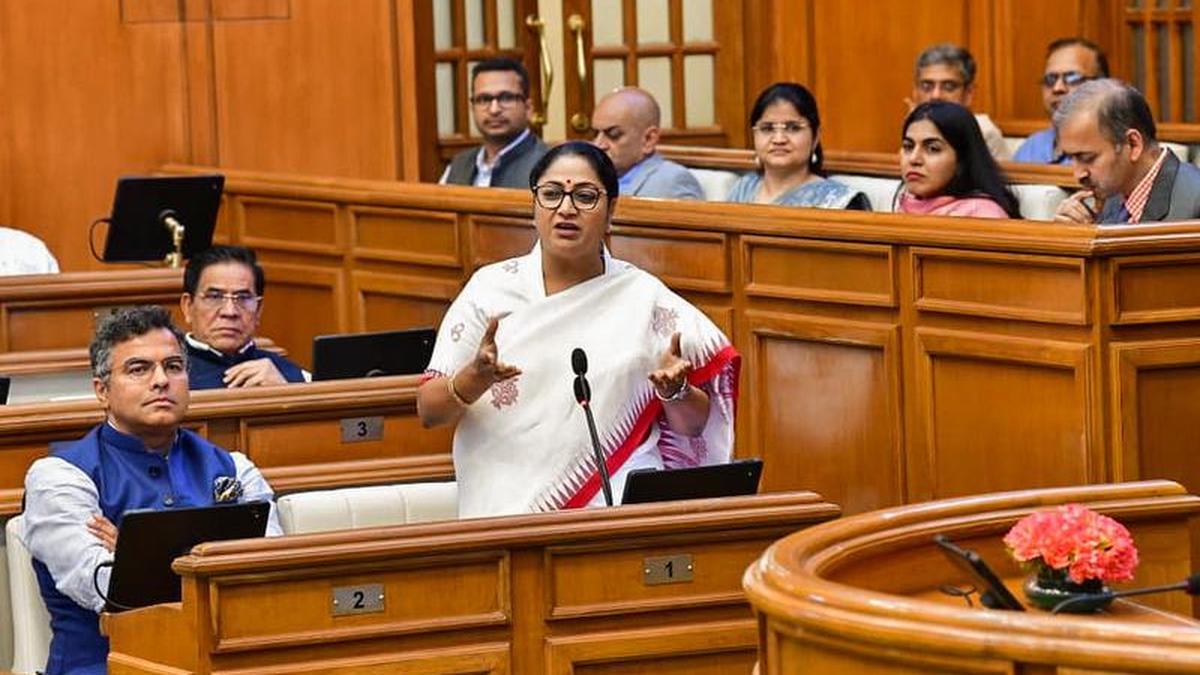
Assembly approves budget 2026-27; Delhi will now run on results, not excuses: CM
The Hindu
Delhi Assembly passes ₹1.03-lakh-crore budget for 2026-27, emphasizing accountability and project completion under CM Rekha Gupta's leadership.
The Delhi Assembly on Friday passed by voice vote the ₹1.03-lakh-crore budget for 2026-27, which was tabled by Chief Minister Rekha Gupta on Tuesday, marking the end of the Budget Session.
Speaking on the motion of thanks over the budget, Ms. Gupta said, “Every rupee will be accounted for and every pending project will be completed. Delhi will now run on results, not excuses.”
She said the government has launched the CM Pragati Portal to track projects, enforce timelines, and strengthen accountability. She said the government has begun clearing long-pending dues left by the previous governments.
“AAP (Aam Aadmi Party government)left behind debt exceeding ₹47,000 crore, with ₹27,547 crore still outstanding. Several key infrastructure projects were left incomplete, creating significant financial liabilities,” she said.
The Assembly also passed the Societies Registration (Delhi Amendment) Bill, 2026. After holding a discussion on the Comptroller and Auditor General (CAG) reports tabled on Monday, the House referred them to the Public Accounts Committee (PAC) for detailed examination. A separate CAG report on the functioning of the Delhi Jal Board was referred to the Committee on Government Undertakings.
Speaker Vijendra Gupta issued a warning to former CM Arvind Kejriwal, his former deputy Manish Sisodia, former Speaker Ram Niwas Goyal, and former Deputy Speaker Rakhi Birla for “contempt of the House” and propagating a “manufactured and baseless narrative” with regard to opening a ‘phansi-ghar (execution room)’ on the Assembly premises.


Grandmaster Jan Gustafsson shares insights on Magnus Carlsen, D. Gukesh, Vincent Keymer, and the 2026 Candidates tournament, along with his journey as a coach, commentator, and chess24 co-founder.

Assembly elections 2026 live updates: Get real-time updates, full polling schedules, candidate lists and key constituency analysis as India prepares for the 4 May counting day. Follow The Hindu for more updates.

Rajasthan wins a national award for successfully completing its first irrigation census, showcasing effective water resource management.

Gulf tensions spark caution among Indian investors, impacting Dubai's real estate market after years of rapid growth and stability.

Karnataka High Court dismisses land encroachment FIR against Sri Ravi Shankar, citing lack of allegations or evidence.

Delhi Assembly passes ₹1.03-lakh-crore budget for 2026-27, emphasizing accountability and project completion under CM Rekha Gupta's leadership.

Thirumavalavan announces successful negotiations with DMK for VCK's eight constituencies ahead of the T.N. Assembly elections.

The Hindu Morning Digest gives a select list of stories to start the day. Read the top news today on March 28, 2026

Kerala's 2026 Assembly elections focus on wildlife conflicts as farmers seek solutions and challenge political leaders in key constituencies.

AIADMK nominates newcomer V.B. Prabhu against veteran K.A. Sengottaiyan in Gobichettipalayam for the upcoming Assembly election.

Experience spiritual ecstasy at Tirupati's Sri Rama Navami festivities, featuring special rituals and vibrant celebrations across historic temples.

Musi Riverfront Development Project: With the Telangana government ready to implement the project in Hyderabad, residents along the river are facing possible displacement and uncertainty over compensation. Once seasonal streams, the Moosa and Esi tributaries now flow with sewage and industrial effluents, raising questions about ecological restoration.

AIADMK announces second candidate list for 2026 Tamil Nadu Assembly elections, retaining 25 MLAs and including 16 women.