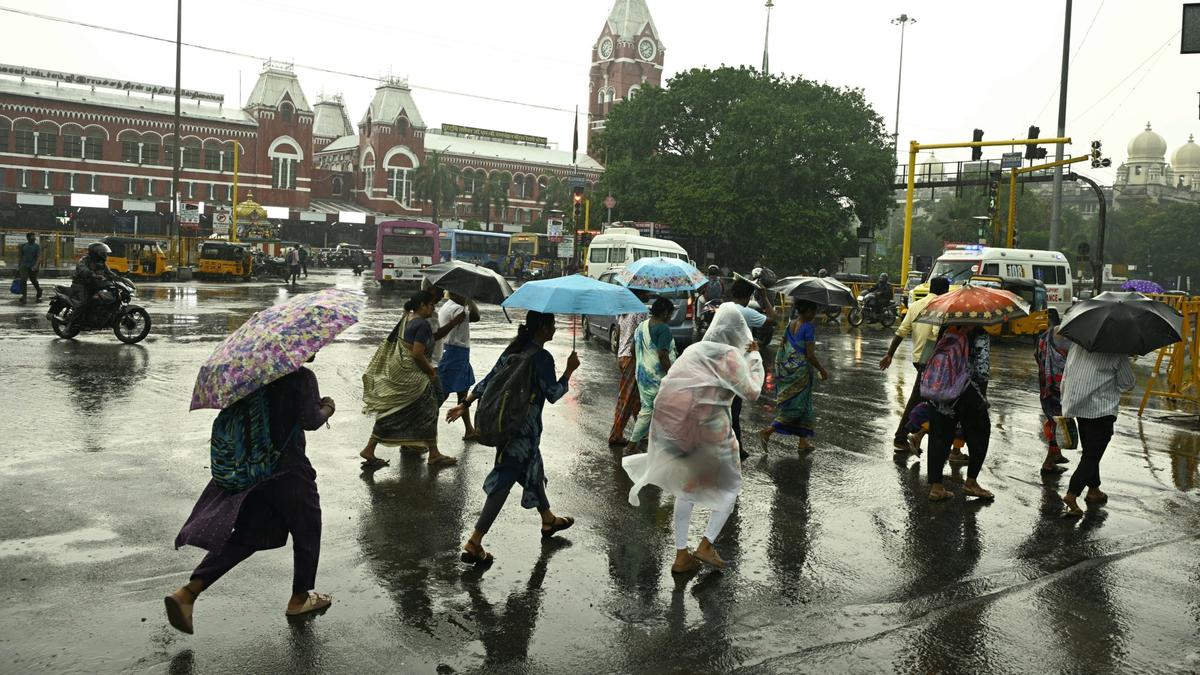
Health officers instructed to initiate monsoon preparedness efforts in T.N.
The Hindu
Health officers instructed to initiate monsoon preparedness efforts in T.N.
In view of the Southwest monsoon, the Directorate of Public Health (DPH) and Preventive Medicine has instructed all health officers to take up measures to keep healthcare teams and facilities prepared for the season.
Issuing instructions to all District Health Officers, City Health Officers, and Municipal Health Officers, T.S. Selvavinayagam, Director of Public Health, said that an adequate number of health personnel should be available round the clock when cyclone/heavy rains are forecast. They must ensure the presence of Rapid Response Teams, consisting of medical officers, staff nurses, village health nurses, and health inspectors, with essential medicines for flood-prone, high risk/vulnerable low-lying areas, as well as medical teams in all cyclone rescue shelters. Ambulance services with sufficient stock of fuel should be present at high risk/vulnerable areas.
At the hospital-level, a well-defined mass-casualty triage protocol should be in place. The availability and supply of emergency medicines, intravenous fluids, vaccines, and beds in hospitals must be ensured. Adequate surge capacity in terms of manpower and medicines to meet the increased demand for clinical care should also be ensured. There should be 24x7 electricity supply in hospitals by having backup generators with adequate fuel.
For hospitals in low-lying areas, the health officers should take measures to ensure that medicines and supplies are kept in elevated places. Pregnant women, who are nearing their delivery dates, in flood-prone areas should be identified and admitted in nearby centres prior to the occurrence of the event.
The health officers were also instructed to ensure safe drinking water and sanitation in relief centres.
Last week, Health Secretary P. Senthilkumar had issued instructions to officials to check and alert all hospitals, including private facilities, for preparedness to prevent incidents arising out of power outages, break in the supply of oxygen, fault in life-saving and critical equipment such as ventilators, and availability of essential drugs, anti-snake venom, and anti-rabies vaccines. They should coordinate with electricity board authorities to ensure uninterrupted power supply for medical institutions, particularly for the intensive care units, critical care units, neonatal intensive care units, operation theatres, and cold chain equipment.
As part of the preparedness, boats should be pre-positioned at hospitals in low-lying areas. Some hospitals, such as Rasipuram Government Hospital (GH), Tambaram GH, and a few primary health centres, face perennial inundation during heavy rains. Action should be initiated to prevent waterlogging in hospitals located in low-lying areas.


Perundurai's industrial growth faces challenges of pollution, water scarcity, and healthcare, impacting residents ahead of the 2026 elections.

The Travancore Devaswom Board asserts that courts should respect community beliefs in its Supreme Court submission on Sabarimala's entry issue.

Karnataka cancels Deendayal Upadhyay event at KSOU due to protocol violations, citing inconsistency with university objectives.

Illegal pickle unit busted in Hyderabad, one arrested; unhygienic stock worth ₹3 lakh seized

Karnataka has entered a state of demographic transition where a large working-age population will no longer be enough to drive economic growth, and future gains will depend on how productively people are employed, the ‘State of Working India 2026’ report said.

Key demands in Sulur Assembly constituency include reviving the powerloom sector, addressing farmers' needs, and protecting River Noyyal.

Kodihalli urges Karnataka CM to allocate ₹10,000 crore revolving fund for seamless procurement of farm products under MSP scheme.

Kerala's political parties continue to marginalize women candidates, highlighting a troubling disconnect between gender demographics and representation.

The High Court of Karnataka on Tuesday ordered the issue of a notice to the State government on a PIL petition, which had complained about disturbances caused to people residing in the localities around the National Public School situated in Rajajinagar 5th block due to use of loudspeakers with high volume in the school and parking of school buses in residential areas.

China is extensively mapping ocean floors to enhance submarine warfare capabilities against the U.S. and allies across key oceans.

AIADMK's 2026 manifesto promises free rations, women's benefits, education reforms, and economic growth initiatives for Tamil Nadu.

The vehicle towing drive will soon resume in the city to ease traffic congestion. The Bengaluru Traffic Police (BTP), in coordination with the Greater Bengaluru Authority (GBA), is set to relaunch the vehicle towing drive across the city shortly to tackle traffic congestion and illegal parking.

Panic buying, not shortage, is leading to long queues at Hyderabad petrol pumps.