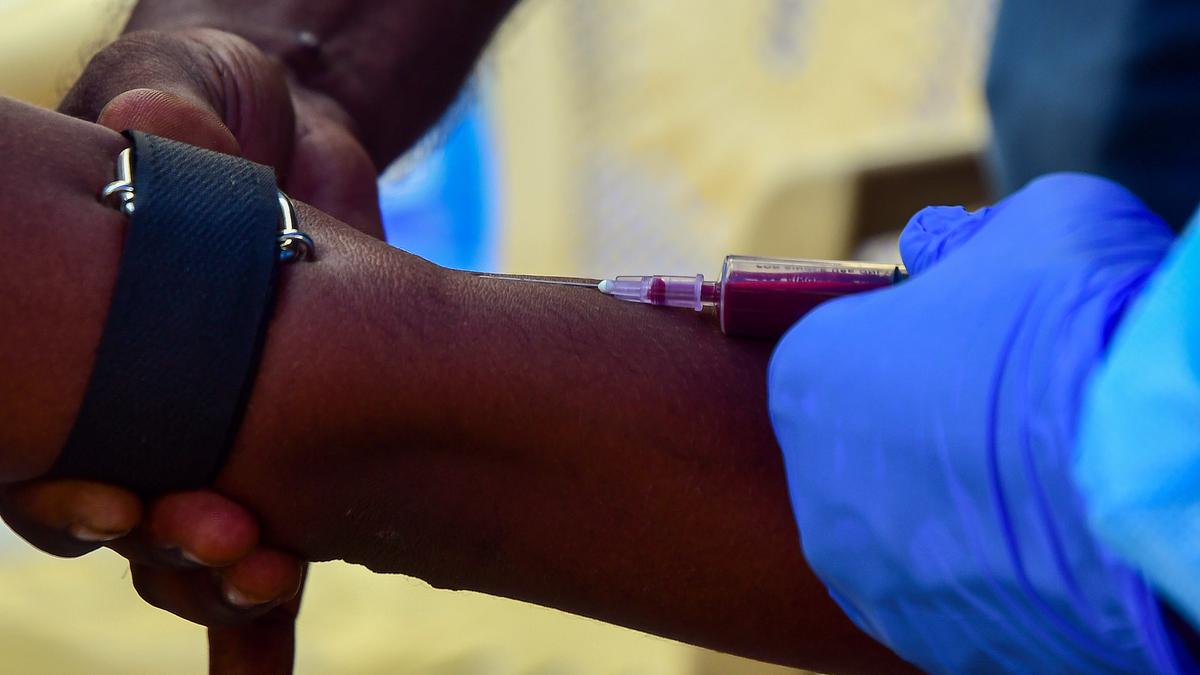
Health Ministry supports 2017 guidelines that exclude transgender persons, MSM, and female sex workers from donating blood
The Hindu
Ministry tells Supreme Court that they are ‘at risk’ population groups for Transfusion Transmissible Infections and sometimes, the public health perspective must trump individual rights
The Union Health Ministry has in the Supreme Court supported its 2017 guidelines, which excludes transgender persons, men having sex with men (MSM) and female sex workers from donating blood, saying they are “at risk” category population groups and sometimes, the public health perspective must trump individual rights.
The Ministry was responding to a petition by Thangjam Santa Singh, represented by advocate Anindita Pujari, who sought the striking down of clauses in the Blood Donor Selection Criteria of the Guidelines for Blood Donor Selection and Blood Donor Referral, 2017, which excludes transgender persons, MSM, and female sex workers from being blood donors. The 2017 guidelines permanently defer these population groups from being blood donors on account of being at risk of HIV and Hepatitis infections or Transfusion Transmissible Infections (TTI).
The petitioner argued that the guidelines to this extent violated the fundamental right to equality, the right to non-discrimination, and the right to life and dignity of these communities.
“The issue should be judged from the lens of a public health perspective rather than that of an individual rights perspective… Even on the balance of individual rights of the blood donor versus the rights of the recipient, the right of the recipient to receive a safe blood transfusion far outweighs the right of an individual to donate blood,” the Ministry responded.
It said a “robust” blood transfusion system (BTS) was an essential feature of any country’s healthcare system without which quality medical care was impossible. Every effort had to be made to strengthen the integrity of India’s BTS so as to instill confidence in the people who had little option but to use the BTS in what may be perhaps the most difficult situation in their lives.
ALSO READ | Over 87,000 people donated blood: Centre
“It is imperative that both the donor and the recipient at the opposite ends of the BTS have complete faith that the system functions in a manner that is safe, minimising all possible risk of unsafe blood transfusion,” the Ministry argued.


Explore the legacies of Toni Morrison and Nina Simone, examining race, memory, and the complexities of Black womanhood in America.

Discover how Limbuguda, a tribal hamlet in Telangana, is transforming through AI-assisted education and holistic welfare initiatives.

Scientists in Kashmir develop early-maturing wheat varieties to enhance crop cycles and boost food production for local farmers.

Karnataka to introduce 10% women’s quota in firefighter recruitment, promoting gender neutrality in the Fire and Emergency Services Department.

Venezuela's legislature approves an amnesty bill, potentially releasing hundreds detained for political reasons amid ongoing human rights concerns.

Explore the challenges and potential revival of India's sandalwood industry amidst high demand and economic shifts.

Here are the top news for the day from The Hindu's Morning Digest, on February 20, 2026

Student groups demand Delhi University reverse its protest ban, calling it undemocratic and harmful to campus dialogue.

Supreme Court questions a pharma firm over cough syrup deaths, highlighting significant damage to India's image and legal violations.

Discover captivating mysteries and haunting tales in February 2026's top book recommendations for thrilling reads this month.

Explore Udhagamandalam's Charing Cross, its historical significance, and the amusing London connection that confuses visitors.

Kishtwar's regulation of Ramadan charity sparks criticism from political leaders, citing concerns over religious freedom and government interference.

PSMO College hosts a historic reunion of 57 alumni serving as political leaders, celebrating their contributions to public service.