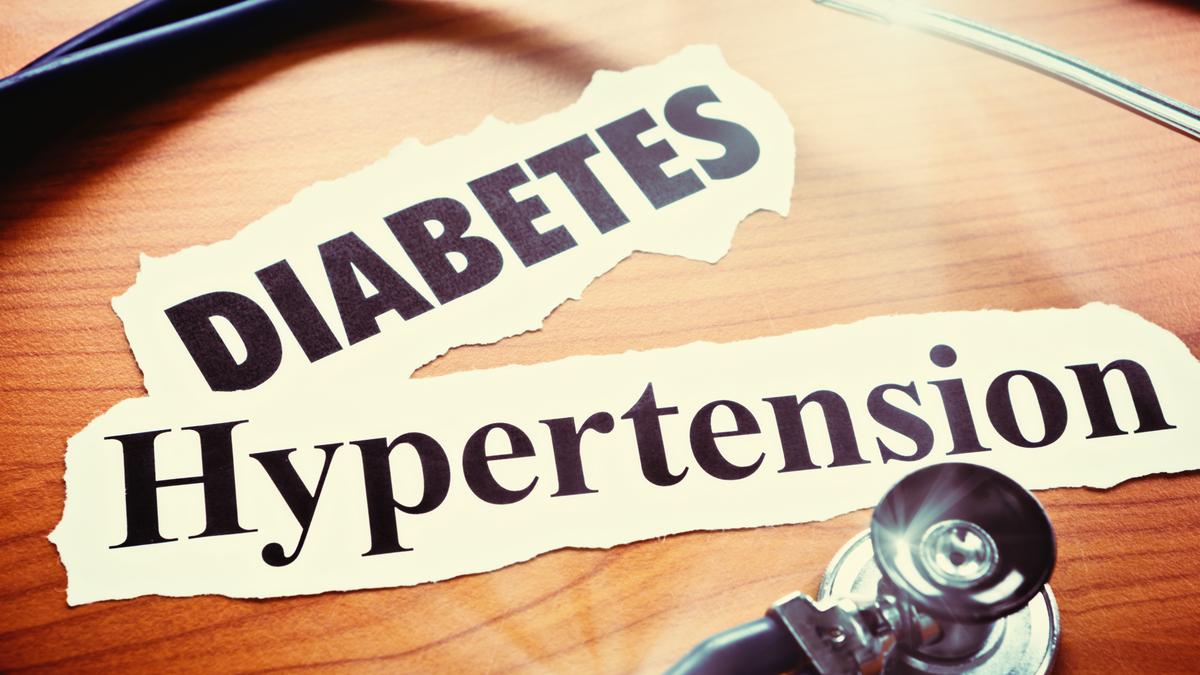
Health facilities are still not functioning at full capacity to manage diabetes and hypertension, study finds
The Hindu
Study by ICMR-NCDIR finds public PHCs better prepared for diabetes and hypertension care than other health facilities in India.
Public Primary Health Centres (PHCs) are better prepared for diabetes and hypertension care than Sub-Centres, Community Health Centres (CHCs), and Sub-District Hospitals, a study undertaken by the Indian Council of Medical Research-National Centre for Disease Informatics and Research (ICMR-NCDIR), Bengaluru has found.
A cross-sectional survey of health facilities was conducted in 19 districts of seven States in India, which included an assessment of both public and private health facilities.
India has the second highest number of adults with diabetes in the world, and more than one-fourth of adults have hypertension. The study was undertaken to assess “preparedness of public & private health facilities for management of diabetes & hypertension in 19 districts in India’’.
It found that the overall readiness score for providing hypertension and diabetes services was lowest for Sub-Centres (61%), and CHCs (59%), when compared with other facilities.
The readiness score for public PHCs, and private primary care facilities (level 2) was 73% and 57%, respectively. The readiness score of district hospitals, government private medical colleges, and other private tertiary care facilities was above 70%, and they were considered prepared for services.
The study found that out of the 415 health facilities covered in the survey, 75.7% were public facilities. More than half (57.6%) were primary care facilities, and 53.3% of them were situated in rural areas.
Experts have now recommended ensuring the availability of adequate human resources, uninterrupted supply of essential medicines, and programme managers for all public health facilities, to ensure full utilisation of healthcare centres for diabetes and hypertension care.


Tiruchi's Smart City projects face underutilisation despite completion, raising concerns about planning, execution, and revenue generation.

Election Observer Anubha Shrivatsava inspects polling booths in Western Ghats, ensuring smooth arrangements amid challenging conditions.

A.P. Minister announces ₹9.8 crore development of Barashaheed Dargah and ₹20 crore international school for minorities in Nellore.

Vice-President Radhakrishnan advocates for modern university syllabi to enhance employability and skill development in today's evolving job market.

A poignant protest at Palakkad Medical College highlights ongoing developmental challenges, initiated by a symbolic wreath-laying by a young girl.

A three-year-old girl was tragically killed by a truck while walking with her mother near Bengaluru.

Iran's President calls for U.S.-Israeli aggression cessation and urges BRICS to ensure regional peace and security.

Harish Rao accuses govt. of cancelling ₹1,070 cr. work sanctioned to Siddipet

Panelists highlight emerging engineering roles and skills in AI, assuring future success for engineers at VIT webinar.

Industries in Bengaluru report LPG shortages affecting operations, while exploring alternatives like piped natural gas to mitigate disruptions.

Bengaluru plans more biogas plants to enhance wet waste processing, boosting renewable energy and sustainable waste management efforts.

BRS to move private member bill on six Cong. guarantees in ongoing session

Parliamentary committee urges Election Commission to ensure no genuine voters are removed during electoral roll revisions, emphasizing fairness and safeguards.