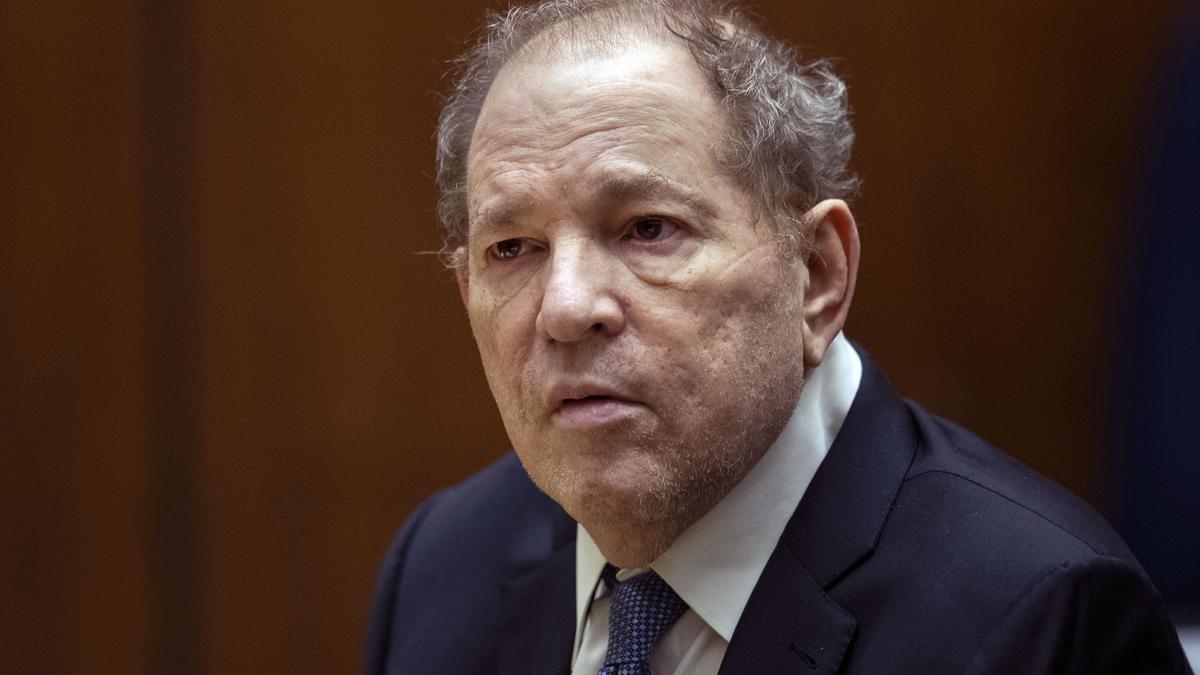
Harvey Weinstein’s 2020 rape case | New York appeals court overturns conviction from landmark #MeToo trial
The Hindu
New York's highest court overturns Harvey Weinstein's 2020 rape conviction due to prejudiced judge, ordering a new trial.
New York’s highest court on April 25 overturned Harvey Weinstein’s 2020 rape conviction, finding the judge at the landmark #MeToo trial prejudiced the ex-movie mogul with “egregious” improper rulings, including a decision to let women testify about allegations that weren’t part of the case.
“We conclude that the trial court erroneously admitted testimony of uncharged, alleged prior sexual acts against persons other than the complainants of the underlying crimes," the court's 4-3 decision said. “The remedy for these egregious errors is a new trial.”
The state Court of Appeals ruling reopens a painful chapter in America’s reckoning with sexual misconduct by powerful figures — an era that began in 2017 with a flood of allegations against Weinstein. His accusers could again be forced to relive their traumas on the witness stand.
The court's majority said “it is an abuse of judicial discretion to permit untested allegations of nothing more than bad behaviour that destroys a defendant’s character but sheds no light on their credibility as related to the criminal charges lodged against them.”
“The majority’s determination perpetuates outdated notions of sexual violence and allows predators to escape accountability,” Singas wrote.
Weinstein, 72, has been serving a 23-year sentence in a New York prison following his conviction on charges of criminal sex act for forcibly performing oral sex on a TV and film production assistant in 2006 and rape in the third degree for an attack on an aspiring actress in 2013.
He will remain imprisoned because he was convicted in Los Angeles in 2022 of another rape and sentenced to 16 years in prison. Weinstein was acquitted in Los Angeles on charges involving one of the women who testified in New York.


Sean Penn skips the Oscars to meet Ukraine's Zelenskyy, who praises him as a "true friend" amid the war.

The teaser of Tamil star Suriya’s much-awaited film with director Venky Atluri, titled Vishwanath and Sons, was unveiled by the makers on Monday

A 'Golden' moment for a K-pop track at the Oscars.

Parvathi Nayar’s new exhibition, The Primordial, in Mumbai, traces oceans, pepper and climate change
Opened on March 12, the exhibition marks the artist’s first solo show in Mumbai in nearly two decades. Known for her intricate graphite drawings and multidisciplinary practice spanning installation, photography, video, and climate change, her artistic journey has long engaged with the themes of ecology, climate change and the natural world. In this ongoing exhibition, these strands converge through a series of works centred on water, salt, and pepper — materials that carry natural and historic weight across centuries.

Explore the highlights and key winners of the 98th Academy Awards, featuring memorable moments and historic achievements from Oscars 2026.

Spring season celebrated at Ramakrishna Mission Institute, Kolkata, with ‘Evening of Basant’

The Spirit of the Land, a solo show by artist Shivakumar Sunagar, is a vista of Nature-inspired emotions

Tal Fry is all set for an exciting new performance season

Netflix is making a bold move by snagging InterPositive, the AI filmmaking company founded by Ben Affleck, in a deal that could hit $600 million

Watch the eerie trailer for 'Hokum,' where Adam Scott faces a witch haunting in a mysterious Irish inn.

Oscars 2026 security heightened amid FBI warnings of a potential Iranian drone threat ahead of the Hollywood ceremony.

Directed by Rahul Pandey, the series also stars Naila Grewal, Nidhi Bisht, Anant Joshi, Anjum Batra and Kusha Kapila

A tribute to the versatile actor and comedian V.K. Ramasamy in his birth centenary year.