Ground report: IRCTC diktat on induction stoves finds few takers amid logistical issues
India Today
The IRTC on Tuesday asked kitchens across railway stations to cook using microwave ovens and induction stoves instead of LPG cylinders. However, India Today reporters found that the latest directive has had limited impact so far.
The LPG crisis triggered by the conflict in the Middle East has now hit railway passengers in India. The Indian Railway Catering and Tourism Corporation (IRTC), which provides catering, ticketing and tourism services to the Indian Railways, on Tuesday asked kitchens across railway stations to cook using microwave ovens and induction stoves instead of LPG cylinders. However, India Today TV reporters found that the latest directive has had limited impact so far. While many canteens were unable to fully switch to induction stoves, some argued about the feasibility of shifting to a new system of cooking.
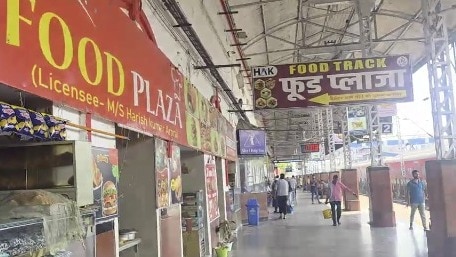
The Pandit Deendayal Upadhyay Junction in Chandauli is one of the busiest railway stations on the Delhi-Howrah line. India Today found that the food was still being cooked using LPG cylinders. A manager of the food plaza at the station said that they were using an old stock of LPG cylinders, which could run out in the next couple of days.
"An order for ovens and induction stoves has been placed as per IRCTC's instructions. As long as we have our stock of LPG cylinders, we will be cooking on them. However, when our LPG supply runs out, we will switch to ovens and induction stoves as per IRCTC's instructions," said Sandeep Yadav, the food court's manager.
Yadav also expressed concern that it will be difficult to cook and supply food using ovens and induction stoves since Pandit Deendayal Upadhyay Junction is a large station with high passenger traffic. "So, we urge the government to supply us with LPG cylinders as per our requirement," he told India Today.
IRCTC kitchens in Jaipur Railway Station have closed down, with vendors telling India Today that it will not be possible for them to cook food on induction stoves and microwaves.
Due to the unavailability of gas cylinders, the food supply at the railway station had already declined to just one-third by Wednesday evening. Moreover, IRCTC managers rejected induction stoves and microwaves, arguing that large quantities of food cannot be cooked on them. In fact, they requested the government to designate IRCTC canteens as emergency services and provide LPG cylinders.


The victim, identified as Naitik Kumar, allegedly rammed his speeding Bullet motorcycle into a scooter near Janeshwar Mishra Park in Lucknow, triggering a crash that left him dead and two others injured.

RJD MLA who skipped Bihar Rajya Sabha poll voting cites mother's illness

West Bengal Chief Minister Mamata Banerjee led a protest march in Kolkata against the alleged LPG shortage, accusing the PM Narendra Modi-led Centre of failing to ensure adequate supply.

Himayani Puri, daughter of Union Minister Hardeep Singh Puri, has moved the Delhi High Court over "false and malicious" reports linking her to convicted sex offender Jeffrey Epstein.

The family, a resident of Thyagaraju Street in Punganur town, had recently repaired the engine of their two-wheeler vehicle. A local mechanic advised the family to keep the engine running overnight to "set" the newly installed parts. However, this turned out to be fatal for the family.

The Supreme Court closed criminal proceedings against Ashoka University professor Ali Khan Mahmudabad after the Haryana government said it would not grant sanction to prosecute him over social media posts related to Operation Sindoor.

Three Congress MLAs in Bihar are reportedly out of contact as voting for five Rajya Sabha seats is underway, with the INDIA bloc and the BJP-led NDA locked in a tight contest for the fifth seat that could hinge on cross-voting.

Bunty Solanki stabbed his wife to death following a quarrel at their residence in Vadodara's Bakrawadi area. Rita died on the spot.

The girl's family members were angered over the friendship, and as a result, they called Jadhav last Saturday evening and allegedly beat him.

External Affairs Minister S Jaishankar has said that direct talks with Iran to restore shipping through the war-hit Strait of Hormuz have yielded results, stressing that direct engagement with Tehran is the most effective way to address the disruption.

This moment comes days after the Supreme Court allowed Harish Rana to die with dignity – a historic first court-ordered case of passive euthanasia in India. The court acknowledged the medical opinion that Rana will never recover and that the tubes that feed him and keep him alive are only prolonging his pain.


Ground videos from Shopian showed snow-draped pine trees as the weather brought joy for tourists. Speaking to reporters, a tourist from Bihar said she was unable to contain her happiness over the unexpected snowfall.