Grassroots initiative in Pune district records over 350 wildlife sightings in six months
The Hindu
Local volunteers in Pune district document wildlife sightings, bridging gap between researchers, NGOs, and wildlife managers for conservation efforts.
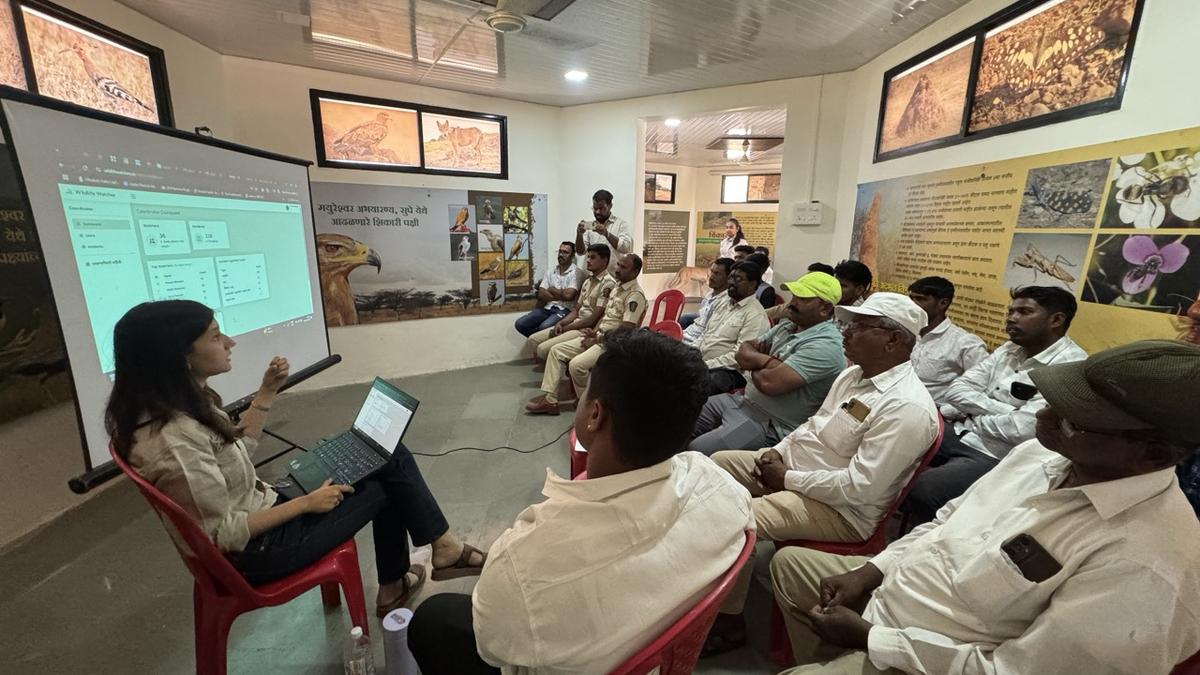
To assist wildlife scientists, researchers, and non-governmental organisations in studying and documenting species inhabiting non-protected grassland and scrubland ecosystems, forty residents from Saswad and Morgaon in Purandar taluk of Pune district have begun systematically recording the presence of wildlife in their vicinity.
Referred to as Wildlife Watchers by the researchers, these local volunteers have reported over 350 verified sightings and incidents involving wildlife. Their efforts are helping bridge a critical gap between NGOs, distant researchers, and wildlife managers, bringing them closer to the habitats they seek to conserve. The participants, primarily farmers and herders, have traditionally co-existed with wildlife in these grasslands.
The grasslands around Pune are said to be the only known region in the country where three large carnivores—the Indian grey wolf, striped hyena, and leopard—roam freely across human-dominated landscapes. Experts believe that Pune serves as a crucial case study for demonstrating the potential for coexistence, especially in light of its growing urban footprint.
Mihir Godbole, founder and president of The Grassland Trust, a Pune-based charitable trust working towards biodiversity conservation, observes that India’s savanna grasslands and dry scrub habitats are among the most misunderstood and neglected ecosystems. Often misclassified as “wastelands” or “degraded forests,” he says these landscapes are, in fact, ancient, biodiverse, and ecologically significant.
“Yet, long-standing perceptions and policy gaps have left them vulnerable to urbanisation, infrastructure projects, and shifting land use. Species like the Indian grey wolf, striped hyena, and Indian gazelle, specially adapted to these open habitats, are rarely included in mainstream monitoring efforts—rendering both the species and their ecosystems largely invisible in conservation planning,” says Mr. Godbole.
To address this gap, The Grassland Trust, with support from Bengaluru-based Ashreya Hastha Trust, launched the ‘Wildlife Watchers’ initiative. The programme seeks to empower residents familiar with these landscapes to participate in the documentation and monitoring of wildlife.
According to Prerana Sethiya, head of strategy and partnerships at The Grassland Trust, each volunteer under the programme is equipped with a basic field kit consisting of a sack, shirt, cap, water bottle, torch, shoes, and a simple field guide. The volunteers submit their observations through a custom-built Wildlife Watcher mobile application, offering a cost-effective, non-invasive alternative to techniques such as radio-collaring.


Lorry owners in Andhra Pradesh reject government proposal to reduce vehicle fitness test fees by up to 50%.

Watch the thrilling trailer for 'Dune: Part Three,' showcasing epic battles and Paul Atreides' struggle with power and resistance.

TMC announces candidates for 2026 Bengal Assembly elections, contesting 291 seats; BGPM to handle three Darjeeling hill seats.

DMK finalizes a seat-sharing deal with CPI for Tamil Nadu elections, allotting five seats amid ongoing discussions with CPI(M).

Parliament Budget Session LIVE: Follow The Hindu's latest updates on the Parliament Budget Session on March 18, 2026.

Severe storms cause over 1,100 flight cancellations and 7,300 delays across the U.S., exacerbating travel chaos amid a government shutdown.

Three MBBS students tragically died in a scooter accident in Kozhikode, Kerala, early Wednesday morning.

Microsoft said on Tuesday it is reorganising its Copilot teams by unifying its commercial and consumer versions, as the tech giant rushes to improve its artificial intelligence assistant to drive better adoption.

Poco has launched the new X8 Pro series smartphones in India, consisting three phones: the Poco X8 Pro Max, Poco X8 Pro, and the special edition Poco X8 Pro Iron Man Edition

Morocco is crowned African football champion after Senegal forfeits the final due to a controversial walk-off protest.

Israeli tank fire reportedly hit a U.N. base in Lebanon, wounding Ghanaian peacekeepers amid rising tensions with Hezbollah.

LPG shortages in India force schools to revert to firewood, increasing burdens on women workers in mid-day meal schemes.

Discover the dramatic history and significance behind Tamil Nadu's name change from Madras on January 14, 1969.