From millets to mistrust, a harvest gone sour Premium
The Hindu
DDS transformed Dalit women's lives in Telangana, but now faces allegations of missing savings and transparency issues.
Draped in a blue pattu sari, gold chains around her neck and ears heavy with jewellery, 60-year-old Rangamma of Hothi B. village in Telangana’s Medak district still carries the quiet dignity of a woman who once believed she had a stake in change. Seated on the low wall of a village well, she opens her lunch box, tears a piece of jonna rotte (jowar roti) and eats it with mango pickle under the noonday sun.
“We are innocent, illiterate women,” she says, recalling how they were once drawn into a new world of sanghams (voluntary village-level associations) and savings. “They told us we could save, take loans, stand on our feet. So we believed and started saving — first ₹1 a week, then ₹5,” adds the mother of four.
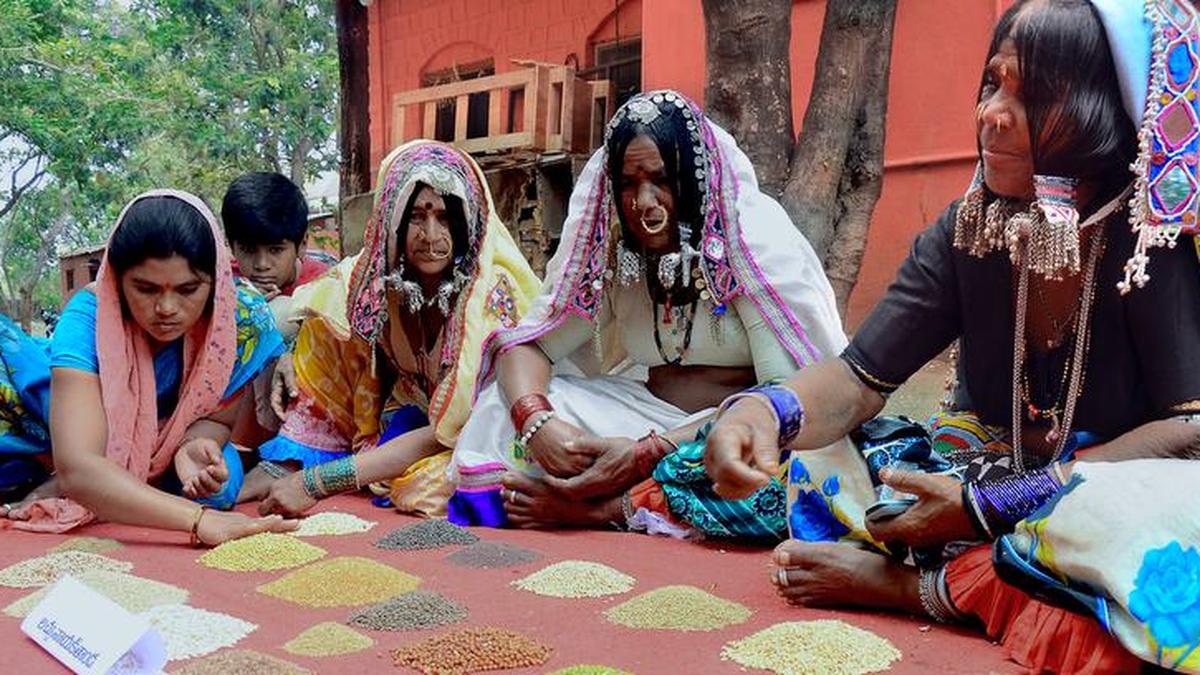
For over four decades, the Deccan Development Society (DDS) helped transform the lives of Dalit women across Telangana’s arid Zaheerabad mandal (Medak). The agri-based voluntary organisation turned fallow land into food, built homes, created seed banks, ran alternative public distribution systems and drew global recognition for its community-led model. It was a story of transformation, and pride. But now, that pride has curdled into pain and suspicion. Women like Rangamma who helped build the movement are raising difficult questions — about missing savings, land deals and the lack of transparency in the very institution they helped build.
Beyond the spanking wide roads of western Hyderabad, beyond the skyscrapers of the Indian Institute of Technology-Hyderabad, and beside the Bidar-Hyderabad road is a green oasis — Pastapur village in Zaheerabad mandal. Speckled with two-storey houses, gabled roofs and farmlands, the village is just another prosperous settlement in Telangana. But beneath its serene surface lies a story of struggle, solidarity and simmering doubt.
On a bright, sunny day, shaded by tamarind and neem trees near the village well, a group of women chat about sanghams, sorghum and sustainable farming — terms that have been part of their lives since the 1980s. This is the land of the DDS, in the drought-prone Zaheerabad region.
“The movement of sanghams started in Bardipur,” says B. Jayappa (65), a resident of Medak and one of the initial joinees of the savings scheme. “I reached out to G.S. Gopal after the foundation of our homes was wrecked by the upper castes in 1982. They blamed us for eating peddakura (beef) and did not want us to build homes close to the temple.”
At the time, Gopal was part of the IDL Rural Development Trust, a subsidiary of industrial explosives manufacturing unit IDL Industries Limited. He would putter around on a scooter, working on development projects in Medak — then the constituency of Indira Gandhi, who had just won the Lok Sabha seat. IDL had stepped into the picture as the Centre had allowed 100% tax exemptions to corporates.


Assembly protest ends in arrests as BJP targets Government over guarantees

Andhra Pradesh accelerates city gas distribution with streamlined approvals, enhancing access to cleaner energy and supporting sustainable urban development.

Sattankulam father-son custodial deaths case: Trial court convicts all nine accused police personnel
Nine police personnel convicted in Sattankulam custodial deaths; sentencing to be announced on March 30.

Minister Laxmi Hebbalkar supports local protests against a solid waste management plant in Turmuri, addressing residents' concerns.

Sattankulam father-son custodial deaths case: Trial court convicts all nine accused police personnel
Nine police personnel convicted in Sattankulam custodial deaths; sentencing to be announced on March 30.

Erode district conducts first EVM randomisation for April 23 Assembly elections, ensuring transparency and fairness in allocation.

TNCC conducts public consultation in Erode to gather community input for its upcoming election manifesto.

CID to investigate sexual assault allegations against suspended Moodbidri Police Inspector P.G. Sandesh, reveals Home Minister Parameshwara.

A 50-year-old woman was found dead in southwest Bengaluru’s Kengeri in the early hours of Monday, the police said.

Papanasam dam's water level reaches 66.15 feet, with inflow at 76 cusecs and discharge at 300 cusecs.

Development without impact: Coastal residents of Kanniyakumari and Nagercoil constituencies voice discontent

Rampant encroachments in Tiruchi threaten pedestrian safety and traffic flow, undermining smart pavement initiatives and exacerbating congestion.

Discover Kerala's electoral history in 'Vottarivu,' a 201-page booklet released ahead of the 2026 Assembly elections.