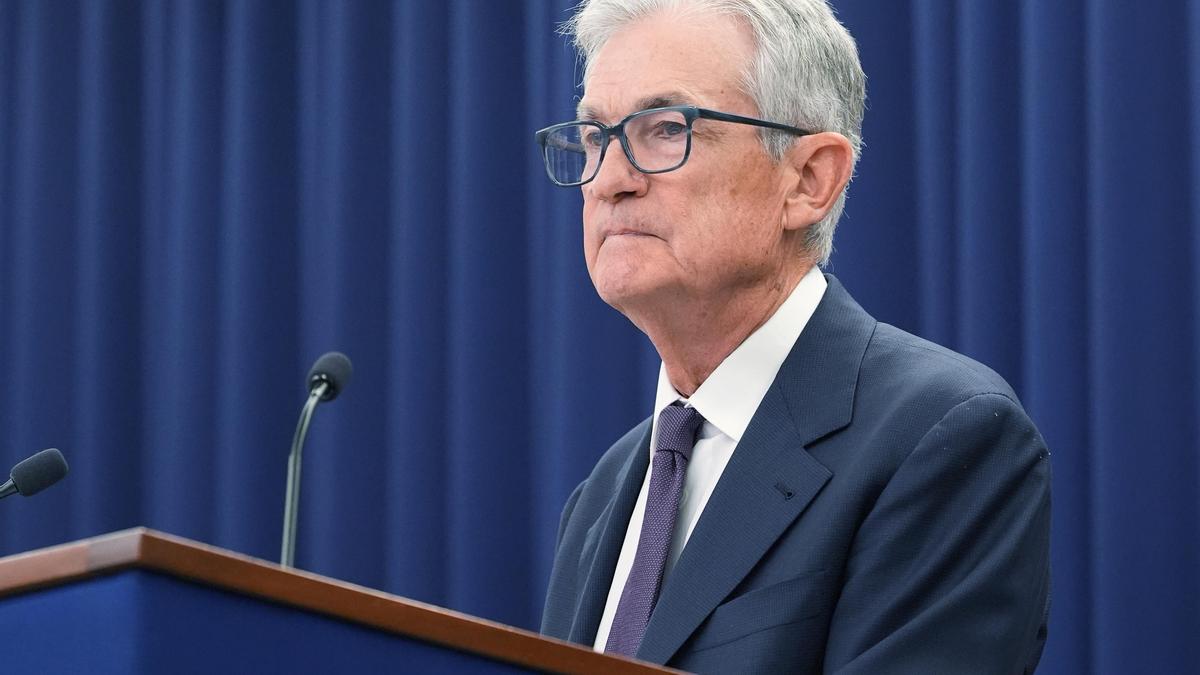
Federal Reserve keeps interest rates unchanged even as Trump continues to insist they be lowered
The Hindu
The Federal Reserve maintains current interest rates amid internal divisions, while Trump pressures for cuts to boost hiring.
The Federal Reserve pushed the pause button on its interest rate cuts on Wednesday (January 28, 2026), leaving its key rate unchanged at about 3.6% after lowering it three times last year.
Chair Jerome Powell said at a news conference that the economy’s outlook “has clearly improved since the last meeting” in December, a development that should boost hiring over time. The Central Bank, in a statement, said there were signs the job market is stabilising.
With the economy growing at a healthy pace and the unemployment rate appearing to level off, Fed officials likely see little reason to rush any further rate cuts. While most policymakers do expect to reduce borrowing costs further this year, many want to see evidence that stubbornly elevated inflation is moving closer to the central bank’s target of 2%. According to the Fed’s preferred measure, inflation was 2.8% in November, slightly higher than a year ago.
Two officials dissented from the decision, with Governors Stephen Miran and Christopher Waller preferring another quarter-point reduction. President Donald Trump appointed Mr. Miran in September, and he had dissented at the three previous meetings in favour of a half-point cut. Mr. Waller is under consideration by the White House to replace Mr. Powell, whose term ends in May.
The Fed’s decision to stand pat will likely fuel further criticism from Mr. Trump, who has relentlessly assailed Mr. Powell for not sharply cutting short-term rates. A reduction in the Fed’s key rate tends to lower borrowing costs for things like mortgages, car loans, and business borrowing, though those rates are also influenced by market forces.
A key issue facing the Fed is how long it will remain on hold. The rate-setting committee remains split between those officials opposed to further cuts until inflation comes down and those who want to lower rates to further support hiring.


Stock markets recover as Sensex and Nifty bounce back following a three-day slump, driven by value-buying in blue-chip stocks.

U.S. President Donald Trump’s administration is set to receive a roughly $10 billion fee from investors in the recently completed deal to take control of TikTok’s U.S. business, the Wall Street Journal reported

Meta is planning sweeping layoffs that could affect 20% or more of the company, three sources familiar with the matter told Reuters

Learn how to choose the best personal loan lender by evaluating eligibility, interest rates, and borrowing experience.

Discover why pension planning is essential in modern India to ensure financial security and peace during retirement.

The U.S. has launched two investigations under Section 301 of the Trade Act of 1974 against India and other economies to examine practices that may be ‘unreasonable or discriminatory and burden or restrict U.S. commerce’. One probe examines whether countries, including India, are using excess manufacturing capacity to export to the U.S. in a manner that hurts American businesses, while another looks at whether countries have taken ‘sufficient steps’ to prohibit imports of goods produced with forced labour.

NHAI raises annual pass fee to ₹3,075 from April 1, 2026, streamlining toll payments for FASTag users.

The U.S. probes forced labour in global supply chains, scrutinizing China and India's exports, warns the Global Trade Research Initiative.

The Hindu collection of images of the LPG crisis: War lights a kitchen fire

The company, which launched its IPO in 2020, is now listed on the National Stock Exchange as well as the Bombay Stock Exchange.

Explore the Essential Commodities Act's role in addressing India's gas crisis and its impact on various sectors.

Star Health Insurance plans to boost AI-driven claim settlements from 20% to 50% within two years, investing heavily in technology.

The iron ore production has increased by nearly two-thirds since 2015