Explained | How is India addressing sickle cell anaemia? Premium
The Hindu
What has the Finance Minister announced with respect to eliminating sickle cell disease? Is the genetic blood disorder more common in tribal communities? Is there a cure?
The story so far: Sickle cell anaemia (SCA), a genetic blood disorder, found mention in the Budget this year. Finance Minister Nirmala Sitharaman said that the government will work in “mission mode” to eliminate the condition by 2047. India is the second-worst affected country in terms of predicted births with SCA — i.e. chances of being born with the condition.
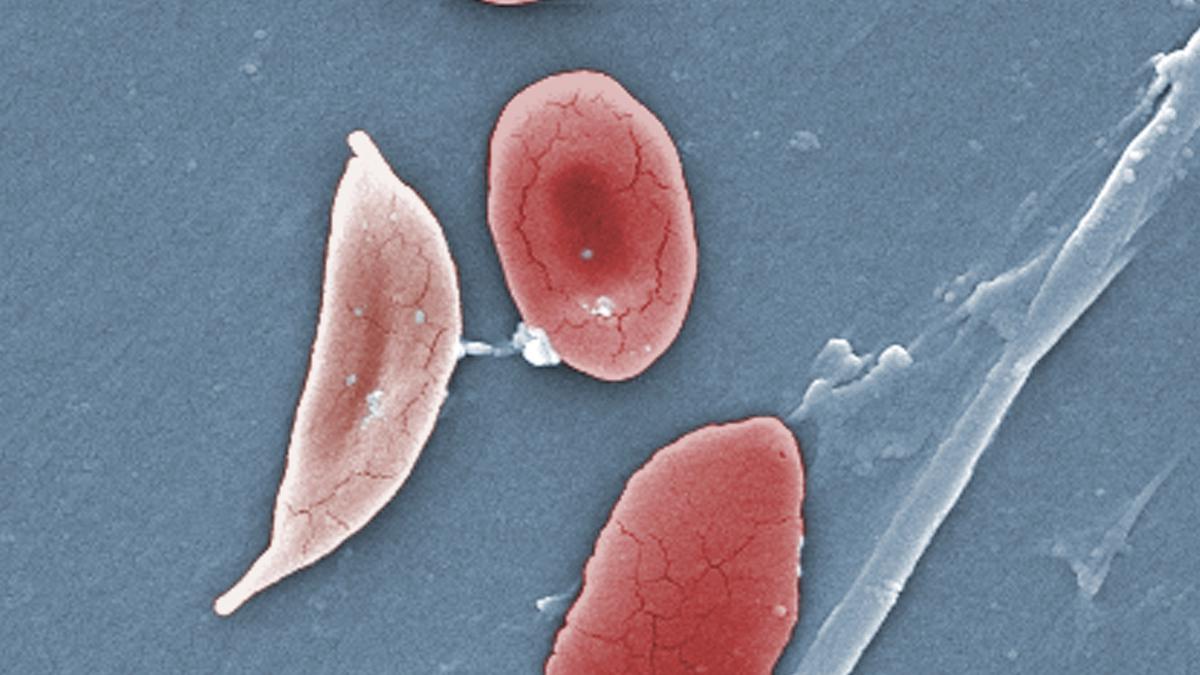
In 1910, a physician named James Herrick wrote of discovering unusual red blood cells in an anaemic student from Granada, Spain. Unusual, because unlike their usual globular structure with an indented center – like a doughnut with a hole – these blood cells were shaped like a sickle, similar to the letter C. This was the first description of sickle cell anaemia in western medical literature.
Haemoglobin which is tasked with carrying oxygen to all parts of the body has four protein subunits — two alpha and two beta. In some people, mutations in the gene that creates the beta subunits impact the shape of the blood cell and distort it to look like a sickle. A round red blood cell can move easily through blood vessels because of its shape but sickle red blood cells end up slowing and even blocking, the blood flow. Moreover, sickle cells die early, resulting in a shortage of red blood cells that deprive the body of oxygen. These obstructions and shortages may cause chronic anaemia, pain, fatigue, acute chest syndrome, stroke, and a host of other serious health complications. Without treatment, quality of life is compromised and severe cases can become fatal in the initial years of life.
In India, first descriptions of SCD came around 1952, when researchers H. Lehmann and Marie Cutbush were studying tribal populations in the Nilgiri hills. The presence of the sickle haemoglobin was also reported around this time in tea garden workers of Upper Assam – labourers who had migrated from tribal groups in Bihar and Odisha. Research and screening programmes have found that the prevalence of haemoglobinopathies — disorders of the blood — is more common among tribal populations than non-tribal communities in India.
Research has shown that SCA is prevalent in communities residing in areas where malaria is endemic. Around the middle 1940s, doctors found that those with sickle red blood cells were more likely to survive malaria. Those with the trait in some African countries were found to be potentially resistant to lethal forms of malaria and had a survival advantage. The sickle cell trait thus gave an evolutionary advantage, offering immunity to some people during malaria epidemics. In India, States and UTs with tribal populations contribute a significant malaria caseload. Additionally, the documented prevalence of SCA is higher in communities that practice endogamy, as the chances of having two parents with sickle cell trait is higher.
Sickle cell anaemia is a genetic disorder, making complete “elimination” a challenge that requires a major scientific breakthrough. The only cure comes in the form of gene therapy and stem cell transplants — both costly and still in developmental stages. In gene therapy, the DNA inside the haemoglobin gene is edited to stop the disease while in stem cell transplants, the bone marrow affected by sickle cell anaemia is replaced with healthy bone marrow from a donor. Both interventions are currently being tested in clinical trials globally. Blood transfusion, wherein red blood cells are removed from donated blood and given to a patient, is also a trusted treatment in the absence of permanent cures. But challenges include a scarcity of donors, fears around safe supply of blood, risk of infection etc.
The Indian Council of Medical Research and the National Rural Health Mission in different States are undertaking outreach programmes for better management and control of the disease. The Ministry of Tribal Affairs launched a portal wherein people can register themselves if they have the disease or the trait, in order to collate all information related to SCA among tribal groups.


76-year-old Kurian Jacob from Kerala triumphs with seven medals, including five golds, at the Open Masters Games in Abu Dhabi.

Can nations unite to protect the endangered Hudsonian godwit and address the challenges of climate change and habitat loss?

Discover the Minor Planet Centre, the key hub for tracking and verifying observations of small solar system bodies.

Discover the Minor Planet Centre, the key hub for tracking and verifying observations of small solar system bodies.

In this week's Science for All newsletter, XX explains

Test your knowledge with the quiz on Science films at the Oscars through history

Set between the Siwalik hills and the plains, Butwal offers travellers a mix of regional cuisine, pilgrimage trails to Lumbini and the comfort of Hyatt’s new hospitality landmark

Explore 2026's wallpaper trends in India, highlighting botanicals and handmade designs that enhance modern homes with nature-inspired aesthetics.

Mercedes-Benz CLA 250+ with EQ Technology review: design, performance, range and features explained. Discover how the new electric CLA combines advanced AI, long range, fast charging and futuristic styling for the next generation of luxury EVs.

AI tool for sparrow conservation

BTS’s comeback with ‘Arirang’ marks a major global music event. When does the album release, and where can you watch their concert live stream? We have all the details

The 2026 U.S. cholesterol guidelines urge starting screening and treatment at 30 to prevent cardiovascular disease effectively.

Olam Festival 2026 in Thiruvananthapuram returns March 27-29 with 120+ vendors, music, art, and cultural zones.