Why tiger enthusiasts should give Tadoba and Gothangaon a chance
The Hindu
Wildlife enthusiasts at The Bamboo Forest Experience explain how the Tadoba-Andhari Tiger Reserve and the Umred Pauni Karhandla Wildlife Sanctuary are becoming hotspots for tiger enthusiasts
When cricketing legend Sachin Tendulkar first saw tigress Junabai in the buffer zone of Madnapur at the Tadoba-Andhari Tiger Reserve in Maharashtra, Sunil Mehta told the ‘god of cricket’ that he had “just licked the opium”. When a puzzled Sachin asked why Sunil, pioneer of the COCOON community-based Nature conservancy model, replied, “When you go back to your busy schedule in Mumbai, you will start missing it here. You will come back again, and again, and again. That’s the power of the tiger.” Evidently, Sachin has frequently visited Tadoba and Gothangaon for tiger safaris, most recently in November 2024, to commemorate the 10th anniversary celebrations of Sunil’s The Bamboo Forest safari lodge in Tadoba.
If comparing the thrill of tiger safaris with an opioid high seems like a stretch, it only takes an afternoon at the Umred Pauni Karhandla Wildlife Sanctuary, Maharashtra, to understand the pull.Minutes after you reach the sanctuary’s Gothangaon gate, the guide announces loudly, “Tiger sighting has started. Please hold on,” as he hops onto your safari vehicle — it is also a signal to the driver to gear up. For the next 20 minutes, you hold onto dear life as you are propelled through the thick wilderness on a vehicle moving at a speed only trained safari drivers are allowed to drive. The rocky terrain might throw you up and down in the air, big spiders from the webs you drive through might fall on you, while a skewed-off twine might slap you across the face — “it’s all part of the experience,” you are assured.
But the safaris are not just about high-speed Jumanji rides. The real thrill comes when you try to be as still as the forest on a windless sunny day; it is in staking out, keeping your eyes peeled to spot orange hide or just about anything that moves through the outgrowth, and allowing naturalists and wildlife guides to track the movements of the big cats. As Arjun Manjunath, associate director, The Bamboo Forest Nature Conservancy, puts it, “The thrill is in what happens before you see a tiger.” Unlike African safaris — where there are open savannas, and animals can be seen from kilometres away — here, you need to search for a tiger, he adds.
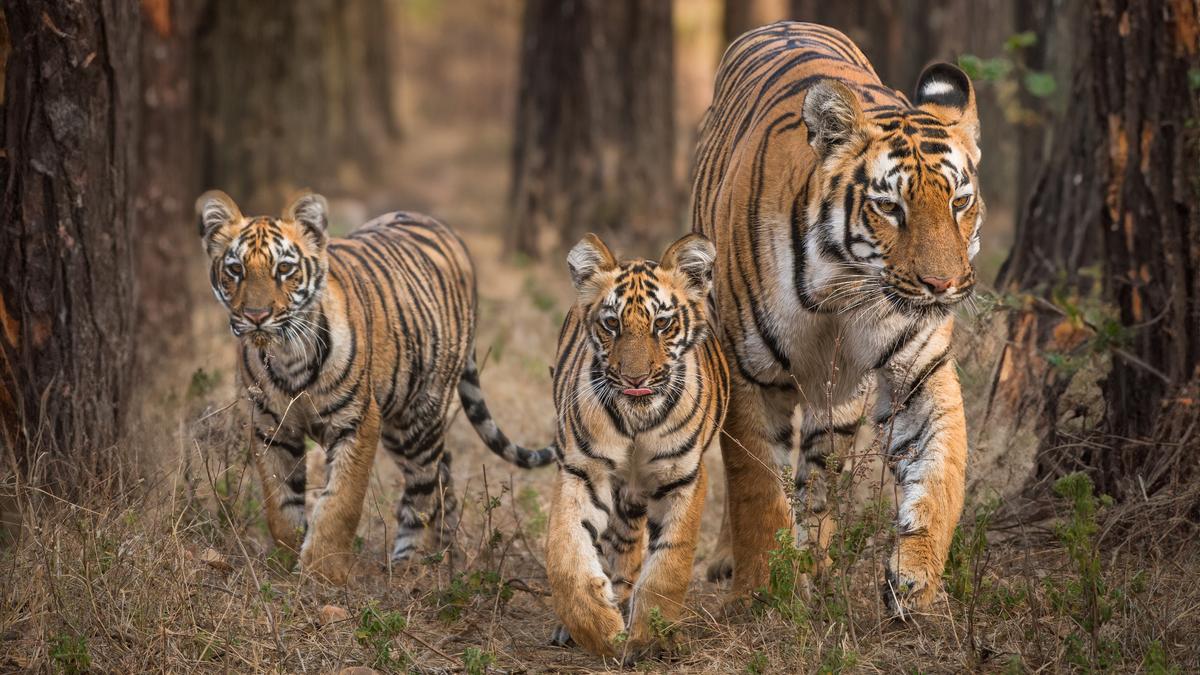
Cubs of tigress Bubbly | Photo Credit: Sharath UG
During the safari, guides and naturalists use pugmarks on the soil and animal calls — animals like spotted deer and monkeys give out distress calls when they see a tiger — to track the tiger. “When an apex predator moves through the jungle, from the smallest bird to the largest elephant, every species announces the presence of this powerful animal. This ensures you keep all your eyes, ears, and senses open,” says Arjun.
He also advises you to lend an ear to what your naturalist has to say about it — be it the animal’s behaviour, its features, or just about anything fascinating about tiger ecology.


In this week's Science for All newsletter, XX explains

Test your knowledge with the quiz on Science films at the Oscars through history

Set between the Siwalik hills and the plains, Butwal offers travellers a mix of regional cuisine, pilgrimage trails to Lumbini and the comfort of Hyatt’s new hospitality landmark

Explore 2026's wallpaper trends in India, highlighting botanicals and handmade designs that enhance modern homes with nature-inspired aesthetics.

Mercedes-Benz CLA 250+ with EQ Technology review: design, performance, range and features explained. Discover how the new electric CLA combines advanced AI, long range, fast charging and futuristic styling for the next generation of luxury EVs.

AI tool for sparrow conservation

BTS’s comeback with ‘Arirang’ marks a major global music event. When does the album release, and where can you watch their concert live stream? We have all the details

The 2026 U.S. cholesterol guidelines urge starting screening and treatment at 30 to prevent cardiovascular disease effectively.

Olam Festival 2026 in Thiruvananthapuram returns March 27-29 with 120+ vendors, music, art, and cultural zones.

A few storytellers in Thiruvananthapuram share their journeys, challenges, and evolving methods on World Storytelling Day, inspiring young minds.

76-year-old Kurian Jacob from Kerala triumphs with seven medals, including five golds, at the Open Masters Games in Abu Dhabi.

Explore the nature of the human mind as an emergent property of brain activity and complex neural interactions.

CERN's Large Hadron Collider discovers the Xi-cc-plus particle, enhancing understanding of quantum mechanics and baryon behavior.