Life-saving numbers: what the 2026 U.S. cholesterol guidelines mean for everyone Premium
The Hindu
The 2026 U.S. cholesterol guidelines urge starting screening and treatment at 30 to prevent cardiovascular disease effectively.
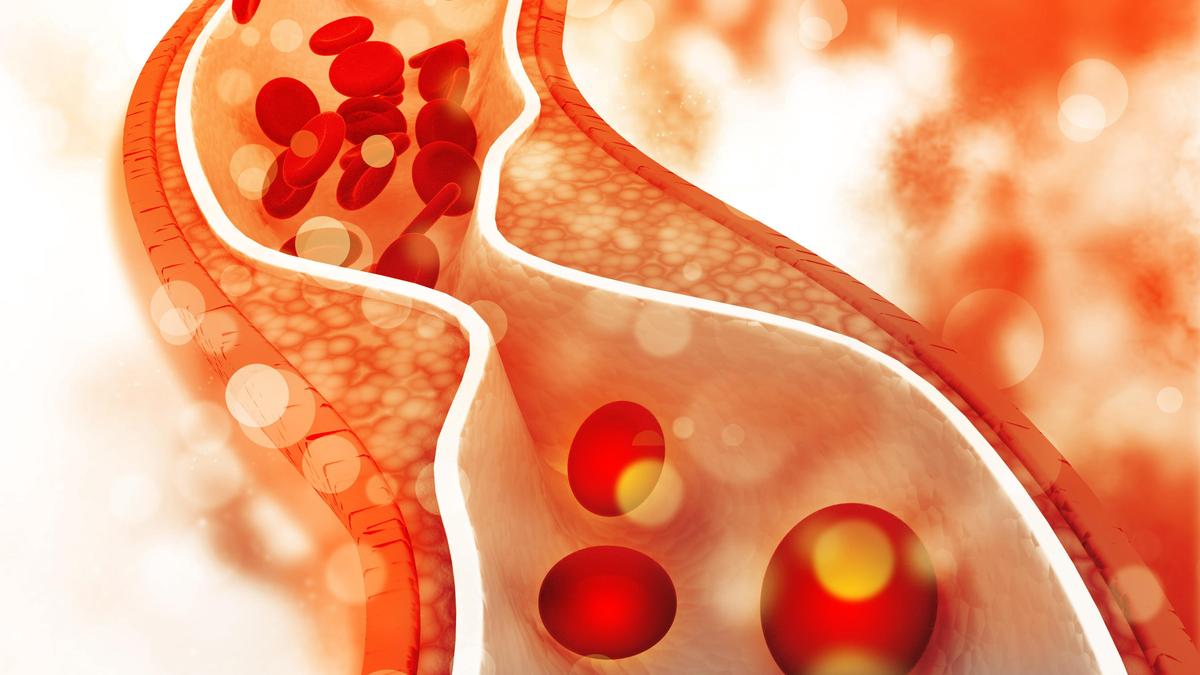
The call woke me from a dead sleep. The ER physician uttered the words STEMI, short for ST elevation myocardial infarction. She didn’t need to say more: I was out of bed as she narrated the rest. A STEMI occurs when a ruptured cholesterol plaque triggers a cascade of clot formations, sealing the artery shut. No blood flow. No oxygen. The heart is dying by the minute.
The team had rushed in and were already draping the 58-year-old man, who was writhing as I walked in and scrubbed. We threaded a wire across the occlusion, inflated a balloon to crush the plaque, and deployed a drug-eluting stent. The blood roared back into the starved heart muscle. His chest pain vanished. He stopped moaning and mustered a weak smile, blinking under the cath lab lights, asking when he could eat.
He survived. But he never should have been there in the first place.
I had seen him two years earlier in the clinic. His LDL cholesterol was 168 mg/dL, and his risk profile warranted statin therapy. I recommended it. He refused. He had read online that statins were poison, that cholesterol was a myth concocted by the pharmaceutical industry. He cited a podcast, a retired surgeon on social media—everything except the 70 years of clinical evidence I laid out between us.
Now, lying in the recovery bay with a fresh stent in his coronary artery along with the metallic taste of mortality still on his tongue, he looked at me and said, “Doc, I’ll take the statin.” A near-death experience cuts through disinformation.
His conversion could not have come at a more fitting time. On March 13, 2026, the American College of Cardiology and the American Heart Association, joined by nine other medical societies, released the most sweeping cholesterol guideline update in nearly a decade. The 2026 Guideline on the Management of Dyslipidaemia restores clear, numerical LDL targets based on risk. For patients like mine with established disease at very high risk, the target is below 55 mg/dL. For high-risk patients, below 70. For primary prevention, below 100. These numbers are drawn from decades of randomised trial data showing that lower LDL levels, sustained over time, are associated with fewer heart attacks, fewer strokes, and fewer deaths.


Ashdeen’s Spring 2026 collection features saris inspired by the designer’s Parsi gara archive

Red ochre burials, ritual markings and myths across cultures show that red repeatedly marks liminal thresholds such as puberty, sacrifice and death; anthropologists argue that the colour functions as a technology of collective ritual and value, binding communities through shared symbolic acts

India approves 23 institutions for quantum labs under the National Quantum Mission, aiming to advance quantum technology and research.

India approves 23 institutions for quantum labs under the National Quantum Mission, aiming to advance quantum technology and research.

The Gaza conflict exacerbates environmental damage, emitting millions of tonnes of CO2 and threatening climate stability in West Asia.

Chefs and cookery experts share smart kitchen hacks, hybrid cooking methods and appliance tips to help households reduce LPG use without compromising on food

Discover groundbreaking research on Titan's lakes, bat vaccinations, and the unique aroma of ripening bananas in just one minute.

IRSO's NavIC system faces challenges as the last atomic clock fails, reducing operational satellites for navigation services.

Discover efficient pressure cooking techniques to save up to 50% on fuel. OPOS B Ramakrishnan tells you how

Mercedes-Benz CLA 250+ with EQ Technology review: design, performance, range and features explained. Discover how the new electric CLA combines advanced AI, long range, fast charging and futuristic styling for the next generation of luxury EVs.

Pi Day is celebrated every year on March 14, honouring the significance of the mathematical constant π and its applications in mathematics.

Discover how sculptural interior design transforms modern spaces, blending creativity and functionality to evoke emotion and identity.

A study reveals that certain antibiotics can cause long-lasting changes in gut microbiome diversity for up to eight years.