Ahead of Chandrayaan-4, IIT and PRL team decodes moon’s titanium-rich rocks Premium
The Hindu
IIT and PRL researchers unveil insights on titanium-rich lunar rocks, aiding ISRO's Chandrayaan-4 mission to select landing sites.
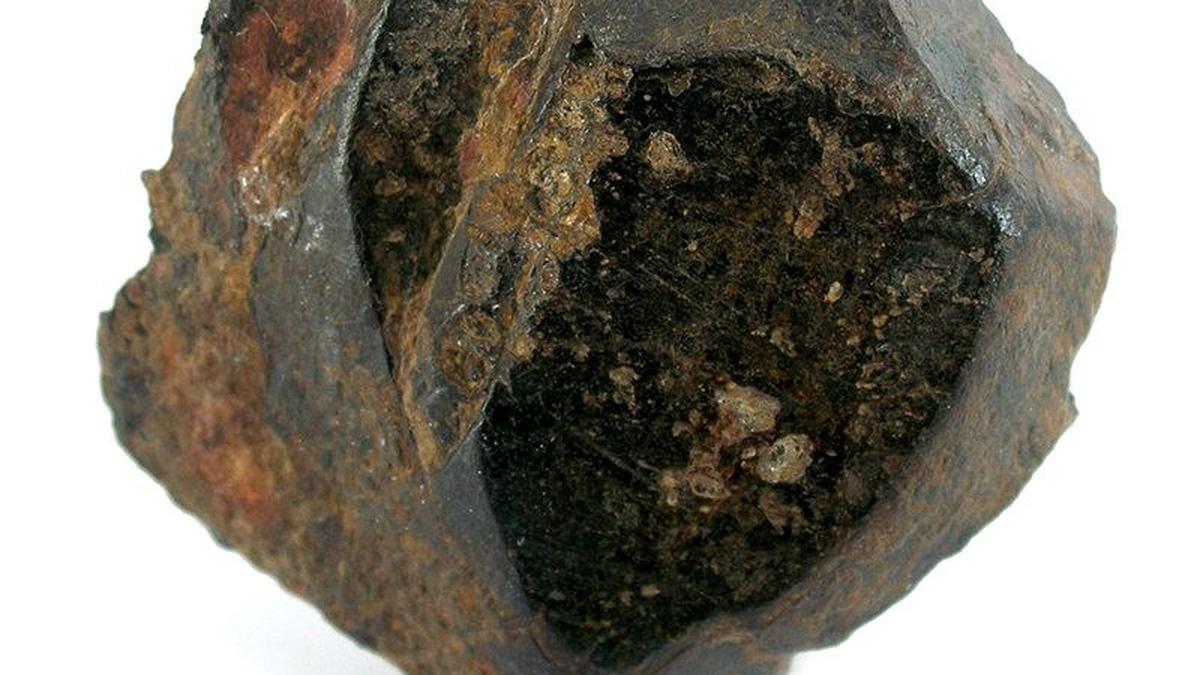
The moon’s surface is covered by ancient lava flows that are often different from those found on the earth. While volcanic rocks on the earth rarely contain more than 2% titanium dioxide (TiO2), some lunar basalts — common volcanic rocks — carry up to 18%, a fact that planetary scientists have struggled to explain for decades.
A new study by researchers from IIT-Kharagpur and the Physical Research Laboratory (PRL), Ahmedabad, published in Geochimica et Cosmochimica Acta, has now offered an experimental account of how these titanium-rich basalts could have formed.
The study’s authors were Himela Moitra, Sujoy Ghosh, Tamalkanti Mukherjee, Saibal Gupta, and Kuljeet Kaur Marhas.
The Chandrayaan-4 mission, which the Indian Space Research Organisation (ISRO) has planned for 2028, aims to collect rock samples from the moon and return them to the earth, making the choice of landing site critical. The study’s findings could help inform that decision.
Prof. Ghosh, one of the lead authors and associate professor at IIT-Kharagpur, said, “Regions near the lunar south pole, such as those being evaluated for Chandrayaan-4, including areas near Shiv Shakti region, have been studied in detail using data from Chandrayaan-2, NASA’s Lunar Reconnaissance Orbiter, and other missions. What our work adds is a deep interior perspective.”
According to the study’s first author Himela Moitra, “High-resolution microscopic cameras on landers can help identify minerals in lunar rocks, while instruments such as X-ray fluorescence and X-ray diffraction can determine their chemical composition before collection.”


Set between the Siwalik hills and the plains, Butwal offers travellers a mix of regional cuisine, pilgrimage trails to Lumbini and the comfort of Hyatt’s new hospitality landmark

Explore 2026's wallpaper trends in India, highlighting botanicals and handmade designs that enhance modern homes with nature-inspired aesthetics.

Mercedes-Benz CLA 250+ with EQ Technology review: design, performance, range and features explained. Discover how the new electric CLA combines advanced AI, long range, fast charging and futuristic styling for the next generation of luxury EVs.

AI tool for sparrow conservation

BTS’s comeback with ‘Arirang’ marks a major global music event. When does the album release, and where can you watch their concert live stream? We have all the details

The 2026 U.S. cholesterol guidelines urge starting screening and treatment at 30 to prevent cardiovascular disease effectively.

Olam Festival 2026 in Thiruvananthapuram returns March 27-29 with 120+ vendors, music, art, and cultural zones.

A few storytellers in Thiruvananthapuram share their journeys, challenges, and evolving methods on World Storytelling Day, inspiring young minds.

76-year-old Kurian Jacob from Kerala triumphs with seven medals, including five golds, at the Open Masters Games in Abu Dhabi.

Explore the nature of the human mind as an emergent property of brain activity and complex neural interactions.

CERN's Large Hadron Collider discovers the Xi-cc-plus particle, enhancing understanding of quantum mechanics and baryon behavior.

Vibha Batra’s latest book, Spotless (Hachette India) is a novel in verse for young adults

In its first edition, the Madras Art Salon spotlights the works of journalist and artist Narayan Lakshman at The Botanical Club, a social space in the British Deputy High Commission, Chennai