West Asia war: how finding oil changed the Persian Gulf’s ecology
The Hindu
Explore how oil discovery reshaped the Persian Gulf's ecology and sparked geopolitical tensions, impacting fragile marine ecosystems.
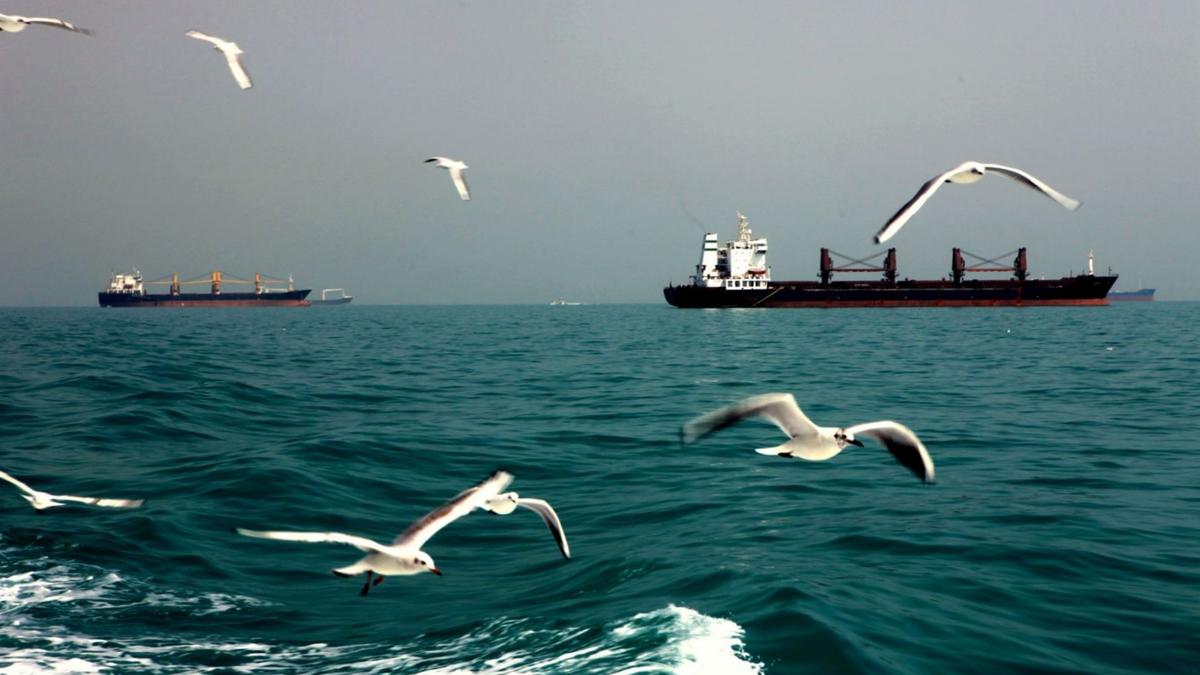
Military ships and oil tankers dominate how we imagine the Persian Gulf today. Yet beyond this familiar imagery of geopolitics and petroleum lies a mosaic of vulnerable ecosystems.
It wasn’t always this way. Just six decades ago, these waters were busy not with warships but fishing boats, and the glittering megacities that now line the coast were then little more than fishing villages.
The Gulf coastline is remarkably young. Formed 3,000 to 6,000 years ago as the sea flooded the Arabian basin through the Strait of Hormuz, it is today a shallow, semi-enclosed sea spanning about 226,000 sq. km, with an average depth of just 30 m.
Its shallowness and limited water exchange with the open waters of the Arabian sea drive its extreme conditions. The summer temperatures regularly exceed 35 °C while the high rate of evaporation keeps the water salty to the tune of 44-70 parts per thousand — almost twice as salty as open sea water.
Yet life persists.
At the boundary of land and sea lies the intertidal zone — shaped by cycles of exposure and submergence to heat and hypersalinity.


Can nations unite to protect the endangered Hudsonian godwit and address the challenges of climate change and habitat loss?

Discover the Minor Planet Centre, the key hub for tracking and verifying observations of small solar system bodies.

Discover the Minor Planet Centre, the key hub for tracking and verifying observations of small solar system bodies.

In this week's Science for All newsletter, XX explains

Test your knowledge with the quiz on Science films at the Oscars through history

Set between the Siwalik hills and the plains, Butwal offers travellers a mix of regional cuisine, pilgrimage trails to Lumbini and the comfort of Hyatt’s new hospitality landmark

Explore 2026's wallpaper trends in India, highlighting botanicals and handmade designs that enhance modern homes with nature-inspired aesthetics.

Mercedes-Benz CLA 250+ with EQ Technology review: design, performance, range and features explained. Discover how the new electric CLA combines advanced AI, long range, fast charging and futuristic styling for the next generation of luxury EVs.

AI tool for sparrow conservation

BTS’s comeback with ‘Arirang’ marks a major global music event. When does the album release, and where can you watch their concert live stream? We have all the details

The 2026 U.S. cholesterol guidelines urge starting screening and treatment at 30 to prevent cardiovascular disease effectively.

Olam Festival 2026 in Thiruvananthapuram returns March 27-29 with 120+ vendors, music, art, and cultural zones.

A few storytellers in Thiruvananthapuram share their journeys, challenges, and evolving methods on World Storytelling Day, inspiring young minds.