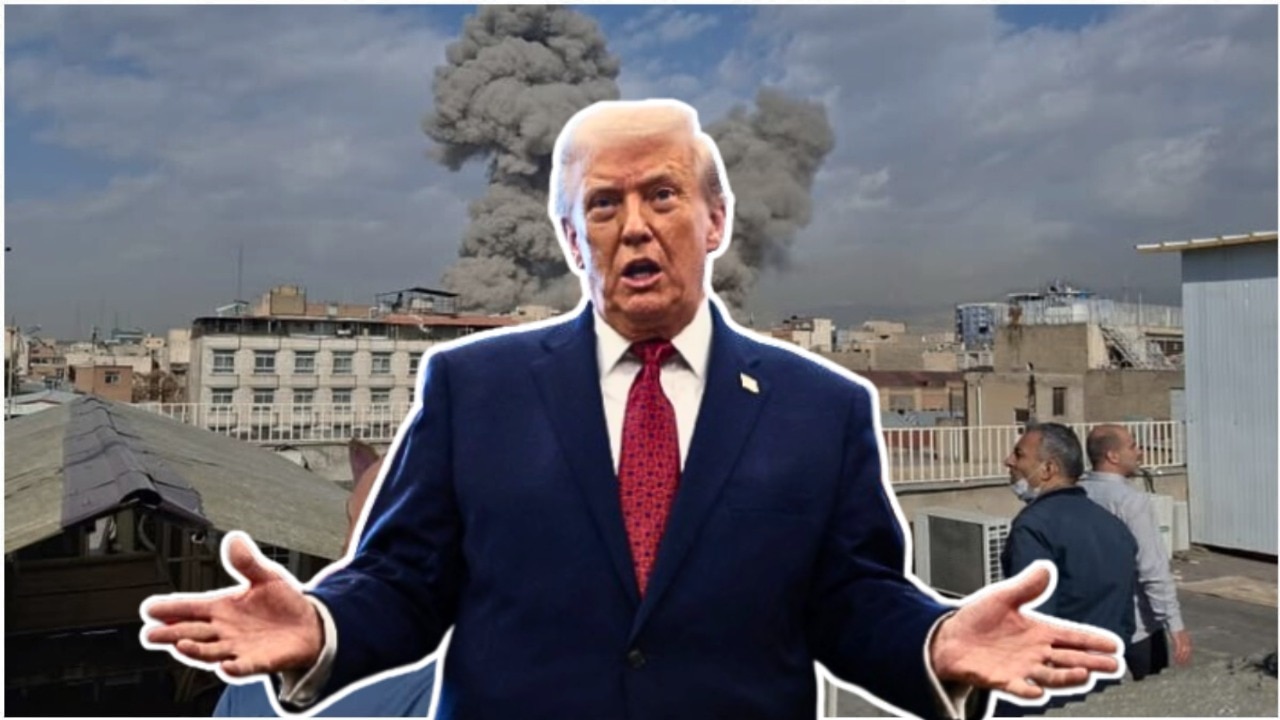
Does President Trump have enough missiles to win the war against Iran
India Today
Trump finally has his war. But between carrier shortages, depleted missile stockpiles and factories that cannot keep pace with a battlefield, the world's most powerful military may be fighting on borrowed time.
America owns eleven aircraft carriers. That number sounds imperial. It sounds like dominance on water, like a superpower that answers to nobody. But here is the number that actually matters: three. On any given day, roughly three of those carriers are at sea. The rest sit in port, locked in cycles of maintenance, refuelling, and repair. Crew fatigue does not care about presidential ambition. Steel does not bend to political will.
That gap between the headline figure and the operational reality sits at the heart of America's Iran problem. President Donald Trump has assembled the largest US military buildup in the Middle East since 2003. Two carrier strike groups crowd the region. US and Israeli forces struck Iran. Iran fired back across Bahrain, Qatar, the UAE, Kuwait and Jordan. Hundreds of projectiles filled the skies. Interceptors rose to meet them. And with every launch, America's inventory shrank.
This is not a war that arrived without warning. Iran has spent years preparing for precisely this moment. It has amassed between 1,500 and 2,000 ballistic missiles. It has built extensive drone networks. It has cultivated proxy forces across the region. It understands attrition far better than it is given credit for. It counts launches. It watches for fatigue. It knows that even the most advanced military in human history cannot defy mathematics forever.
The mathematics, right now, are uncomfortable for Washington.
During the June 2025 Iran and Israel conflict, US forces fired more than 150 THAAD interceptors in just eleven days. That represented roughly a quarter of the entire global inventory. Eight hundred million dollars worth of defence capability, gone in under a fortnight. Replenishment takes more than a year. Patriot missiles roll off production lines at around 600 to 650 per year, with ambitions to reach 1,100 by 2027. Iran's arsenal counts in the thousands.


A video from Kolkata showed a chaotic interaction between a man and a cop after he hurled stones at his vehicle, which left social media users jaw-dropped.

On March 18, Israel struck a gas field in Iran. Tehran responded in a matter of hours, striking refineries in several Gulf countries. What explains this sharp, quick counter-attack capability of a country whose military infrastructure has supposedly been severely degraded? The answer lies in a cheap drone and a dispersed military.

The truck, loaded with straw beyond its capacity, began swerving dangerously while moving towards the temple stretch. Eyewitness visuals show the vehicle tilting and rolling sideways on the road as bystanders shouted for it to stop.

How Benjamin Netanyahu handed Donald Trump a war and a bill he may never stop paying

A video showed a man calmly eating popcorn while a heated argument broke out outside a screening of Dhurandhar The Revenge, with his reaction stealing the spotlight online.

From Eli Cohen to AI-driven espionage, Israel has turned infiltration into its sharpest weapon. For Iran, the real threat isn't missiles at its borders, but invisible enemies within, quietly mapping targets and striking with precision.

A Gurgaon housing society decided to publicly name maintenance defaulters on a board at the main gate. They also plan to block services like domestic help and deliveries, sparking debate over strict recovery measures.

Canada had previously accused India of interference and transnational repression, including threats and alleged killings. RCMP Commissioner Mike Duheme now says current probes no longer support that conclusion.

A man from Florida has clarified that he is not Jeffrey Epstein after a video went viral last week in which viewers claimed he resembled the late sex offender.


Australian PM Anthony Albanese and Home Affairs Minister Tony Burke were attending an event marking the end of Ramadan at Sydney's Lakemba mosque when some worshippers loudly protested against their presence.

At a crucial Senate hearing, US intelligence contradictions and careful wordplay expose deep divisions, raising serious doubts over the White House's justification for the Iran war

A French sailor accidentally compromised the location of the aircraft carrier Charles de Gaulle by logging his workout on the fitness app Strava. The app's geolocation feature allowed real-time tracking of the carrier and its fleet.