Data | Parliament functioning registers a new low Premium
The Hindu
The 17th Lok Sabha could be the shortest full-term Lok Sabha since 1952
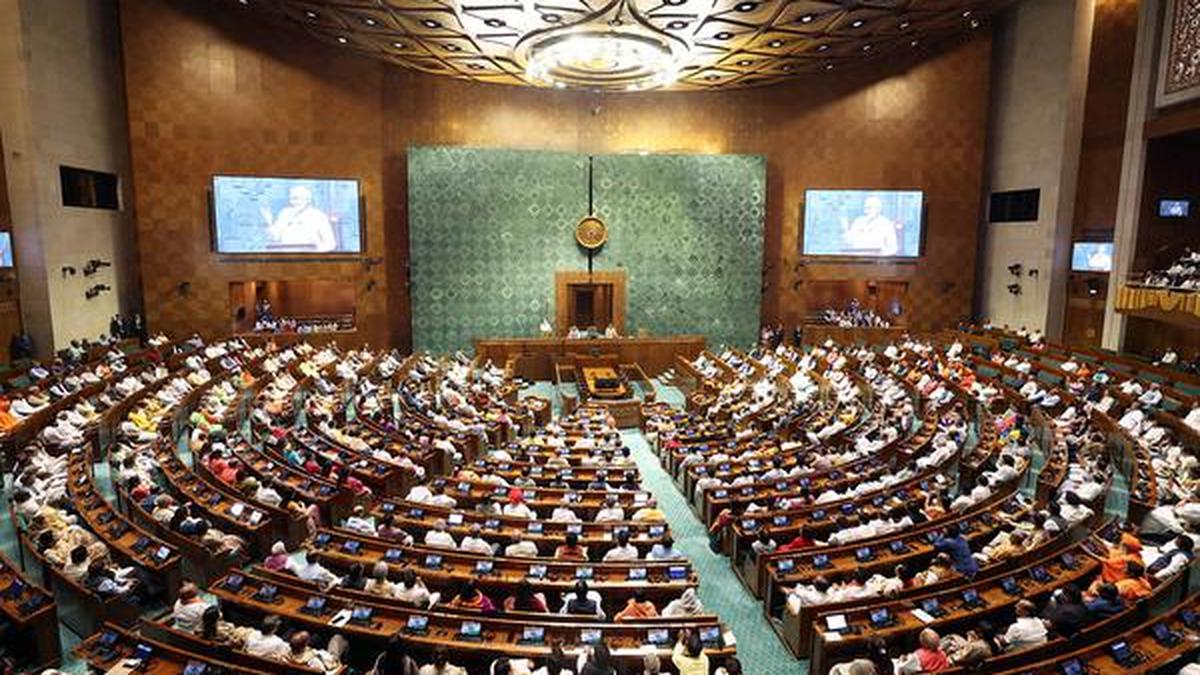
On Sunday, Prime Minister Narendra Modi inaugurated India’s new Parliament building. “It is not only a building. It is a reflection of the aspirations and dreams of 140 crore Indians. This is the temple of our democracy giving the message of India’s determination to the world,” he said. The Congress-led Opposition boycotted the inauguration.
With the new building coming into use from the next Parliament session, this is a review of the performance of the MPs in the old building. The 17th Lok Sabha, entering its final year, has functioned for 230 sitting days so far. Of all the Lok Sabhas that completed the full five-year term, the 16th Lok Sabha had the lowest number of sitting days (331). With one more year remaining, and 58 average sitting days a year, the 17th Lok Sabha is unlikely to sit for more than 331 days. This could make it the shortest full-term Lok Sabha since 1952.
Chart 1 | The chart shows the number of sittings in the last 17 Lok Sabhas, including the ongoing term
Charts appear incomplete? Click to remove AMP mode
The terms of the fourth, sixth, ninth, eleventh and twelfth Lok Sabha were shorter than five years and so the number of sittings was fewer. Among those terms which lasted for at least five years, the 17th Lok Sabha may end up being the shortest. The term of the fifth Lok Sabha was extended for six years.
The Parliamentary Standing Committees were created in 1993 to assist Parliament in its legislative and financial business. Since 2004, of the total Bills introduced in Parliament, only 45% have been referred to Committees. The decline has been more in recent years with the 16th Lok Sabha and 17th (ongoing) Lok Sabha seeing fewer Bills being sent to Committees.
Chart 2 | The chart shows the % of Bills referred to the Parliamentary Standing Committees


Watch the thrilling trailer for 'Dune: Part Three,' showcasing epic battles and Paul Atreides' struggle with power and resistance.

TMC announces candidates for 2026 Bengal Assembly elections, contesting 291 seats; BGPM to handle three Darjeeling hill seats.

DMK finalizes a seat-sharing deal with CPI for Tamil Nadu elections, allotting five seats amid ongoing discussions with CPI(M).

Parliament Budget Session LIVE: Follow The Hindu's latest updates on the Parliament Budget Session on March 18, 2026.

Severe storms cause over 1,100 flight cancellations and 7,300 delays across the U.S., exacerbating travel chaos amid a government shutdown.

Three MBBS students tragically died in a scooter accident in Kozhikode, Kerala, early Wednesday morning.

Microsoft said on Tuesday it is reorganising its Copilot teams by unifying its commercial and consumer versions, as the tech giant rushes to improve its artificial intelligence assistant to drive better adoption.

Poco has launched the new X8 Pro series smartphones in India, consisting three phones: the Poco X8 Pro Max, Poco X8 Pro, and the special edition Poco X8 Pro Iron Man Edition

Morocco is crowned African football champion after Senegal forfeits the final due to a controversial walk-off protest.

Israeli tank fire reportedly hit a U.N. base in Lebanon, wounding Ghanaian peacekeepers amid rising tensions with Hezbollah.

LPG shortages in India force schools to revert to firewood, increasing burdens on women workers in mid-day meal schemes.

Discover the dramatic history and significance behind Tamil Nadu's name change from Madras on January 14, 1969.

Researchers found that interbreeding between Neanderthals and early modern humans favoured male Neanderthals mating with female modern humans.