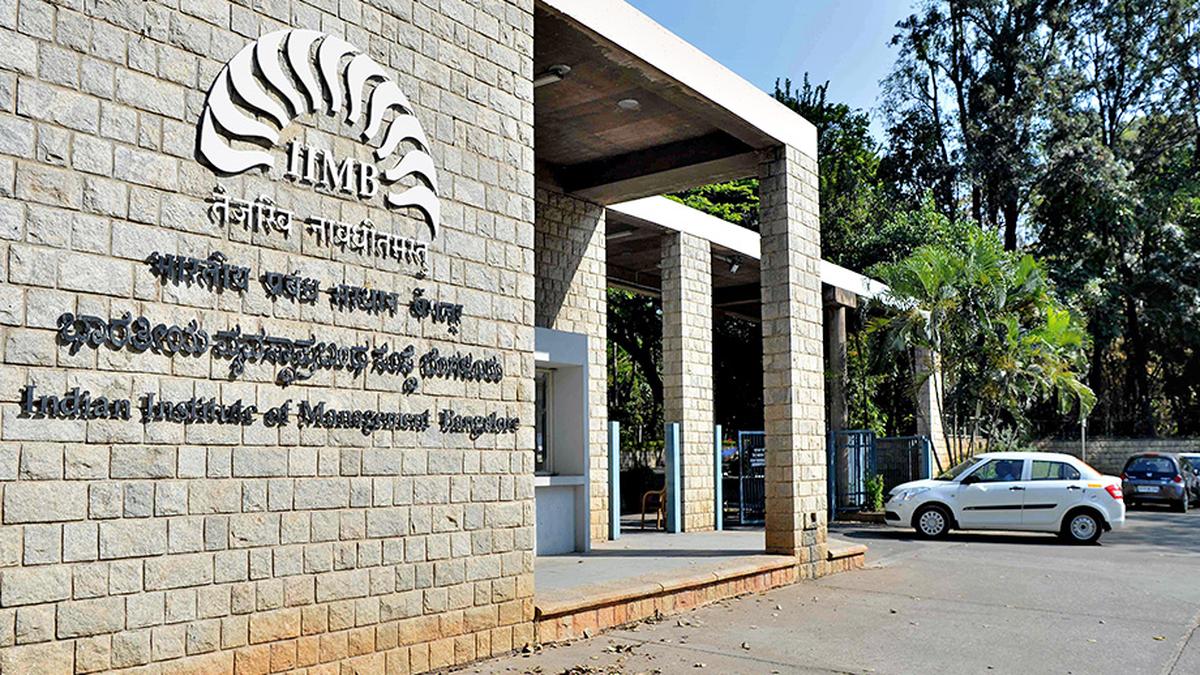
Dalit business owners experience income gap of 16% when compared to other disadvantaged groups, finds study
The Hindu
Dalit business owners in India face a significant income gap of around 16% when compared to other structurally disadvantaged groups with similar attributes, according to a study.
Dalit business owners in India face a significant income gap of around 16% when compared to other structurally disadvantaged groups with similar attributes, according to a study.
‘It’s not who you know, but who you are: Explaining income gaps of stigmatized-caste business owners in India’, published in PLOS One journal on Wednesday, was authored by Prateek Raj, a faculty of the Indian Institute of Management Bangalore’s (IIMB) Department of Strategy, along with Thomas. J. Roulet from Judge Business School and King’s College, University of Cambridge, and Hari Bapuji from Department of Management and Marketing, University of Melbourne.
The study uses data from the India Human Development Survey (IHDS) of 2011, a nationally representative survey that was a collaborative project between three universities in the U.S. and the National Council of Applied Economic Research (NCAER) of India. IHDS had surveyed 42,000 households in different demographic groups across 373 districts in India.
The paper is the culmination of Prof. Raj’s research into caste and income disparity, which he began in 2019. The study examined if caste identities have a direct impact on business incomes and found that even when compared with business owners of other disadvantaged groups like OBCs, STs, and Muslims, Dalits, who are institutionally stigmatised, have higher income gaps.
The study describes “institutional stigma” involving negative public perceptions about and adverse expectations from social groups who get devalued in a particular social context.
“Dalit business owners face unique stigma-related disadvantages that cannot be equated with other forms of identity-based challenges, such as gender, race, or ethnicity,” Prof. Raj said.
The study also notes that even with higher levels of social capital, the income gap for Dalit business owners not only persists, but rather increases when compared with other groups. The size of the social capital of the households was indicated by the number of personal acquaintances they had across professions of 10 categories (including elected officers, government employees, doctors and teachers).


Watch the thrilling trailer for 'Dune: Part Three,' showcasing epic battles and Paul Atreides' struggle with power and resistance.

TMC announces candidates for 2026 Bengal Assembly elections, contesting 291 seats; BGPM to handle three Darjeeling hill seats.

DMK finalizes a seat-sharing deal with CPI for Tamil Nadu elections, allotting five seats amid ongoing discussions with CPI(M).

Parliament Budget Session LIVE: Follow The Hindu's latest updates on the Parliament Budget Session on March 18, 2026.

Severe storms cause over 1,100 flight cancellations and 7,300 delays across the U.S., exacerbating travel chaos amid a government shutdown.

Three MBBS students tragically died in a scooter accident in Kozhikode, Kerala, early Wednesday morning.

Microsoft said on Tuesday it is reorganising its Copilot teams by unifying its commercial and consumer versions, as the tech giant rushes to improve its artificial intelligence assistant to drive better adoption.

Poco has launched the new X8 Pro series smartphones in India, consisting three phones: the Poco X8 Pro Max, Poco X8 Pro, and the special edition Poco X8 Pro Iron Man Edition

Morocco is crowned African football champion after Senegal forfeits the final due to a controversial walk-off protest.

Israeli tank fire reportedly hit a U.N. base in Lebanon, wounding Ghanaian peacekeepers amid rising tensions with Hezbollah.

LPG shortages in India force schools to revert to firewood, increasing burdens on women workers in mid-day meal schemes.

Discover the dramatic history and significance behind Tamil Nadu's name change from Madras on January 14, 1969.

Researchers found that interbreeding between Neanderthals and early modern humans favoured male Neanderthals mating with female modern humans.