Commentary: How do we escape the air-conditioning trap?
CNA
Expecting people to give up air-conditioning is unrealistic, which means we must find ways to ensure that cooling our spaces does not warm the planet further, says NUS’ Khoo Teng Chye.
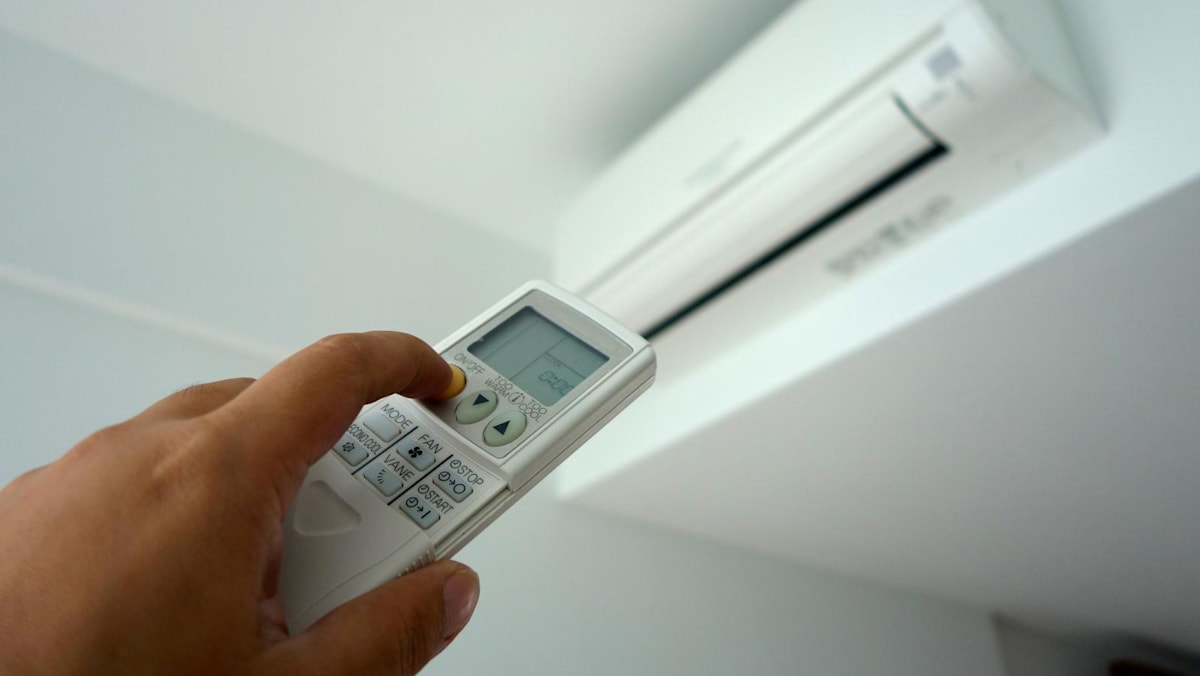
SINGAPORE: Each time a sweltering day comes around, the most common response is to crank up the air-conditioner. But what is perhaps the easiest and most convenient way to beat the heat has increasingly been referred to as a climate felon.
For one, air-conditioners are energy guzzlers and emitters of greenhouse gases responsible for about four per cent of global emissions. This might go up further given how global demand for air-conditioning could more than triple by 2050, according to a United Nations Environment Programme report published last November.
Unfortunately, this forms the irony of an air-conditioning trap – warmer weather leads to higher use of air-conditioners, which in turn leads to higher temperatures. With the need for climate adaptation becoming ever more urgent, change is necessary.
A conventional air-conditioning system works by pulling warm air from a room, passes it over cold evaporator coils filled with refrigerant that absorbs the heat and expels it outdoors with the condensers at the aircon ledge.
In cities like Singapore, this exacerbates the urban heat island effect. Studies have shown that the temperature difference in built-up and more rural areas here can be as high as 7 degrees Celsius.


Organisations have more employee information than ever before, but still rely on out-of-date snapshots and reductive metrics, say academics.

The three-year programme supports mothers, caregivers and women with health challenges to grow viable home businesses and regain confidence.

Mediacorp artiste Zoe Tay shares why Louis Vuitton remains her forever brand, from the first Keepall she bought with her Star Search prize money to monogram favourites and deeply sentimental bags tied to family memories.The fashion forward actress shares the stories behind her most-prized pieces from the French luxury house. In partnership with Louis Vuitton.

Amid the handwringing over Singapore’s falling birth rate, little is said about the lived reality of infertility, says CNA’s Erin Low.

The Crocs x Lego Brick Clog turns the iconic toy bricks into wearable footwear. We tried the playful collaboration to see what it’s really like to wear them.

Programmable according to your preferences, AI chatbots may seem appealing — particularly in a country where one in 10 people report not having a close friend. CNA series Besties puts AI-human friendship to the test.

Beyond pregnancy check-ups, some expectant mums are exploring chiropractic care and other holistic support to manage back pain, anxiety and postpartum recovery.

Expecting people to give up air-conditioning is unrealistic, which means we must find ways to ensure that cooling our spaces does not warm the planet further, says NUS’ Khoo Teng Chye.

A family health scare pushed Cynthea Lam to rethink food choices. Years later, she founded Super Farmers and created vegan, additive-free instant noodles.

From a tiny Kuala Lumpur studio to 20 countries and K-pop fans, Joe Chia builds a slow, independent fashion universe rooted in craft, memory and intentional growth.

Before pronouncing Singapore’s impending end, let’s re-examine whether a declining population will always result in economic catastrophe, says veteran newspaper editor Han Fook Kwang.

AWARE’s executive director, Lim Shoon Yin, on backlash against feminism, persistent inequalities and why women in Singapore still need stronger protections.

The image of a safe haven focused on economic growth in a turbulent region had been carefully nurtured over decades, says NUS Middle East Institute’s Carl Skadian.