At the Bhitarkanika National Park, set sail and spot a crocodile
The Hindu
We set sail on a luxury catamaran, and go crocodile-spotting at the Bhitarkanika National Park, India’s second largest Mangrove ecosystem
As we settle down comfortably on the sun deck of our luxury catamaran, the MV Brahmani, we hear the shouts of the boat captain from down below. “Crocodile! Crocodile relaxing!” He almost sounds too jubilant for having spotted the mostly terror-inducing, yet fascinating reptile. We look out over the waters on our right and sure enough, spot our first crocodile. Much like us, the crocodile is sunning itself on the muddy banks of the river.
The second largest mangrove system in India after the Sunderbans, the Bhitarkanika National Park, Odisha is home to many crocodiles in the creeks and estuaries of the Brahmani-Baitarani river systems, as well as migratory birds, and a host of other flora and fauna. While the park is accessible by road, we are exploring the region by water — on a luxury catamaran by Antara River Cruises.
The vessels come fully furnished with two bedrooms, bathrooms and a dining space in front, in addition to the sun deck furnished with comfortable chairs. The boats are best suited for groups of four (priced at ₹25,000 per person for two nights inclusive of meals) who can be accomodated in the two bedrooms. Locals from the area staff the fleet of four catamarans, and are only too pleased to chat about their favourite crocodile sightings. “There is one 23-foot crocodile that goes for a long morning swim. I hope all of you get to see it,” one of them cheerily informs us.
Declared a Ramsar site (a wetland of national importance) in 2002, we learn that there are around 1,700 saltwater crocodiles that were counted in the last census which took place in January 2024. The dense mangrove here comprises 82 species and host birds through the year which include purple herons, night herons, pied harriers, grey-headed lapwings, eagles and owls.
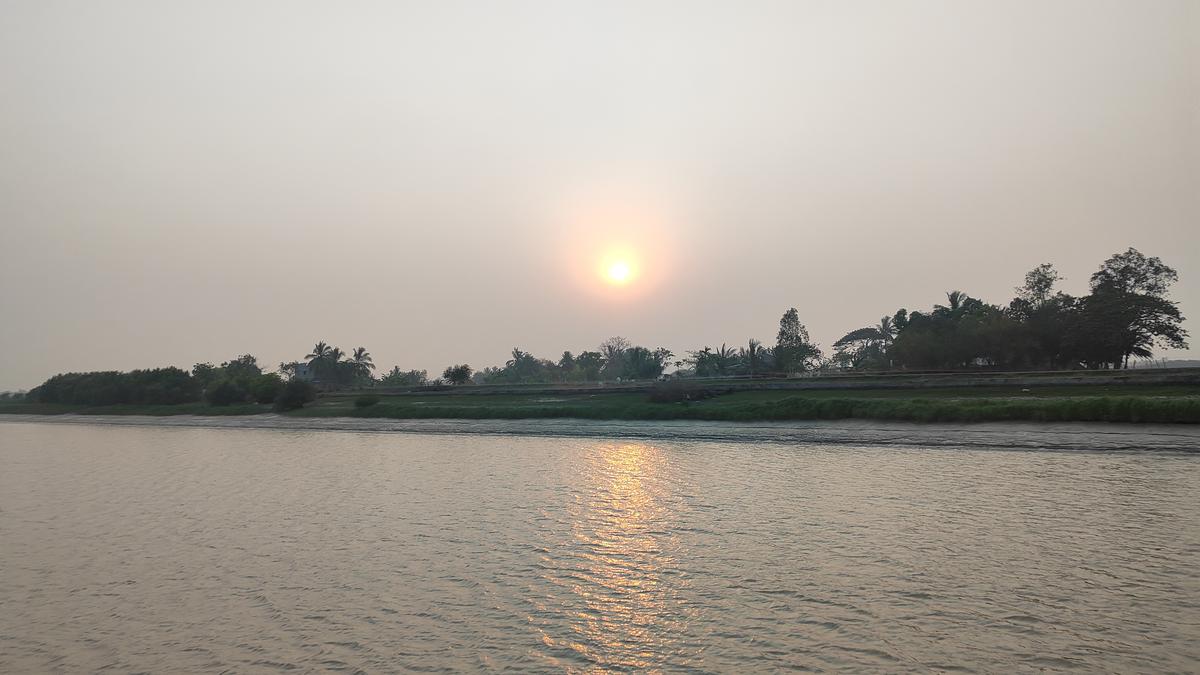
“There is something here for everyone,” says Sanghamitra Jena, who manages operations. “Whether you are here to birdwatch and take pictures, explore the wildlife, walk through the forests, or simply laze around on the catamaran and enjoy setting sail,” she says. As we take in the calm waters and orange hued skies at sunset, we remain alert, for sightings of more crocodiles on the mudflats. We also spot herds of spotted deer frolicking by the banks, while also keeping an eye out for possible otter and dolphin sightings.
When the catamaran finally anchors for the night, we are immensely thankful for two things — the air conditioning onboard given the sweltering early summer heat, and bhetki fish on the menu for dinner. Bhetki, which is barramundi or Asian sea bass, is a popular fixture on the menu and all meals onboard feature fresh catch and local delicacies, including the popular Odisha dessert chennapooda. Three meals are served onboard, at a cosy dining space in front of the rooms and the menu has the usual favourites — eggs, toast, poha, parathas for breakfast, roti, subzi, meat and vegetables for lunch as well as continental options such as grilled fish and mashed potatoes.
The prospect of spotting more crocodiles has us cautiously excited the following day, as we set sail and anchor near the entrance of the Bhitarkanika National Park which houses the Crocodile Hatchery and Rearing Programme.


CPI-M accepts DMK's five-seat offer for Tamil Nadu Assembly elections, prioritizing INDIA bloc unity over seat demands.

Ricky Rai, son of former underworld operative Muthappa Rai, on Monday appeared before the Bengaluru Traffic Police for questioning in connection with a case involving a Lamborghini performing dangerous stunts at Anil Kumble Circle on March 21.

The Dispur election heats up as 'CongBJP' defections shape a high-stakes contest between veteran candidates from BJP and Congress.

Bengaluru's M. Chinnaswamy Stadium conducts readiness drill ahead of IPL 2026, ensuring upgrades and technical preparations are complete.

First-level randomisation of EVMs completed in Nagapattinam for upcoming elections, ensuring transparency and security.

A district-level committee in Krishnagiri has been formed to assess and verify seizure claims of goods and cash.

Minister Anam Ramanarayana Reddy pledges government support for local fishermen and farmers facing challenges in Andhra Pradesh.

MP M. Sribharat urges collective efforts to revive Visakhapatnam Steel Plant, highlighting key reforms for crucial recovery and growth.

141 candidates have filed nominations for Kozhikode's Assembly elections, with scrutiny on March 24 and campaigning intensifying.

BJP's Vijayendra accuses Congress of using money to influence Bagalkot bypolls, urging voters to reject their tactics.

First randomization of electronic voting machines completed in Tirunelveli and Tenkasi districts for upcoming Assembly elections.

RPF seizes 10.12 kg of unclaimed cannabis worth ₹5.06 lakh from a train in Mangaluru.

Kolar's groundwater levels rise to 50-100 ft due to the K.C. Valley project, ensuring clean water and improved health outcomes.