As biodiversity threats mount, Forest Rights Act gives India the edge Premium
The Hindu
Conservation laws exclude IPLCs, but legal frameworks like the FRA in India recognize their rights for biodiversity conservation.
In many parts of the world, conservation laws and policies are becoming more exclusionary. They are disenfranchising local communities and indigenous people, disregarding their rights and role in conservation, and allowing the state as well as private interests to exploit resources.
Conservation science and its legal frameworks are rooted in colonial ideas, and define nature as ‘pristine’ and untouched by humans. When wielding this approach — often called the fortress model — exclusive spaces called “protected areas” are created, where conservation is implemented with centralised state control, criminalising indigenous peoples and local communities (IPLCs) as encroachers.
Researchers have found that the fortress conservation model has displaced 10 to 20 million people around the world by separating their lives, livelihoods, and cultures from landscapes cordoned off as protected areas. While global conservation legislation is fairly recent, the role of IPLCs like the Masai and Ogiek in Kenya, the Batwa in Uganda, the Ashaninka in Peru, and Adivasis in India is well-documented. Most of the world’s biodiverse regions are in places where these communities have traditionally lived and governed.
This is no coincidence: IPLCs have been custodians of local biodiversity, protecting it against being exploited and nurturing it while being nurtured in return. In turn, laws that secure IPLCs’ tenure and recognise their rights can strengthen traditional governance systems used to sustainably manage their lands.
In the prevailing global scenario, laws are crucial to facilitate conservation. The Convention on Biological Diversity (CBD) is the largest international legal instrument from which many conservation- and biodiversity-related multilateral treaties and legal frameworks have emerged. First presented at the Rio Earth Summit in 1992, 196 countries are party to the CBD today, with their national legal frameworks being guided by the CBD-framework. The CBD’s main objectives are conservation, sustainable use, and fair and equitable sharing of the benefits of biodiversity, including landscapes, species, and genetic resources.
India, one of the world’s 17 megadiverse countries, is a signatory to the CBD and has a rich history of community-led environmental protection and conservation campaigns. It enacted the Biological Diversity Act (BDA) in 2002 to implement the objectives of the CBD. The Act provides for a three-tier institutional system: the National Biodiversity Authority is at the Centre and the State Biodiversity Boards and the Biodiversity Management Committees (BMCs) operate at the local level, to promote the conservation of local plants, animals, and habitats including documenting biodiversity-related traditional knowledge.
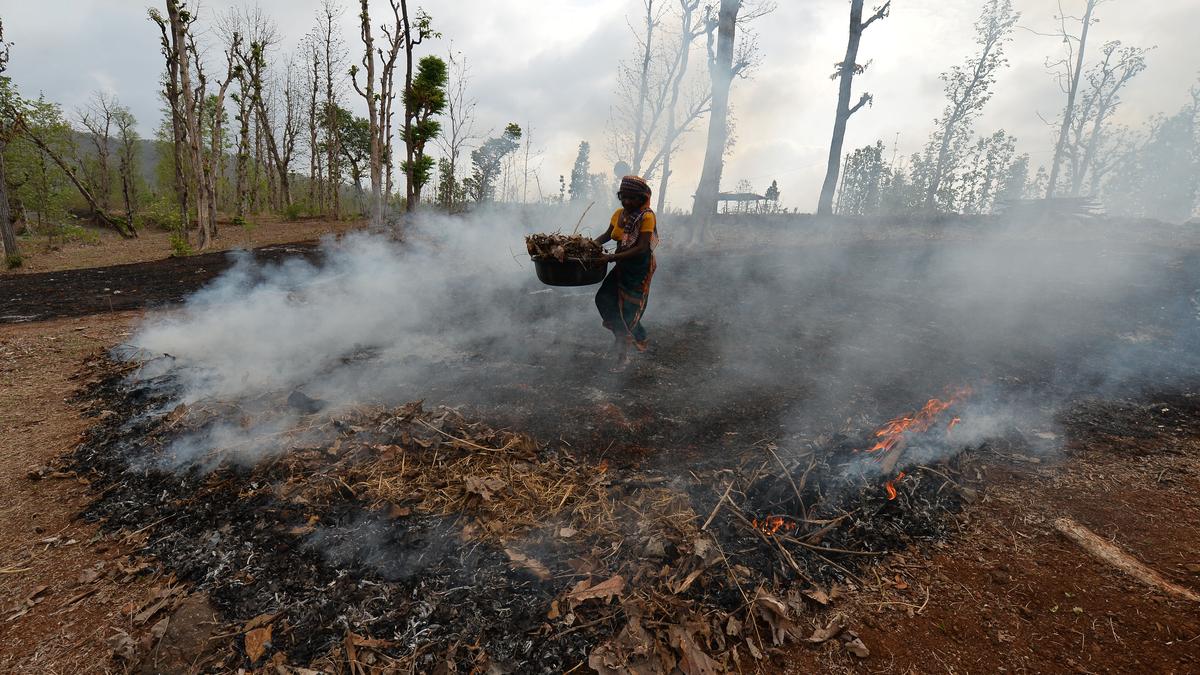
While attempts have been made to include communities in conservation through programmes such as Joint Forest Management, broader forest and resource laws have historically denied Adivasi and other traditional communities their access to forests and criminalised their rights, leading to large-scale dispossession. India formalised the protected-area model under the Wildlife Protection Act 1972 and Project Tiger in 1973. As of February 2025, the country has already notified 1,134 protected areas with 58 tiger reserves. Experts have recorded at least six lakh people displaced in this manner as a result.


Residents of Chettichavadi express concerns over deteriorating groundwater quality due to long-standing garbage dumping issues in Salem West.

Community Health Officers in Vijayawada protest for reduced workload and continued incentives amid growing dissatisfaction over salary changes.

Telangana faces 13,929 healthcare vacancies, primarily in doctors and nurses, as recruitment efforts aim to address the shortage.

For most patients with TB who are severely underweight, nutritional support is an essential and not optional part of treatment

Family of custodial death victims demands harsh punishment for nine convicted policemen to prevent future abuses of power.

Rajinikanth refutes TVK leader's claims about DMK threats preventing his political entry, expressing gratitude to supportive political figures.

CM announces Cabinet Sub-Committee on Musi rejuvenation; rehabilitation for all displaced

Ramanathapuram identifies 145 polling stations as sensitive, ensuring security with paramilitary forces ahead of assembly elections, says DEO.

BJP Puducherry president V. P Ramalingam files nomination for Raj Bhavan, joined by Union Minister Mandaviya and Khushbu Sundar.

History-sheeter 'Thoppai' Ganesh shot dead by police in Chennai after attacking officers during attempted escape.

The government plans to amend the FCRA, introducing new regulations for NGO asset management and accountability for key functionaries.

The draft policy for “Responsible Digital Use Among Students”, released on Monday by the Department of Health and Family Welfare, has recommended that parents set structured routines with clear screen-time rules and prioritise privacy, safety, and open conversation with children on digital well-being.

Police Observer Sushant Kumar Saxena conducts surprise inspection at Shencottai police station, reviewing warrants and security arrangements ahead of elections.