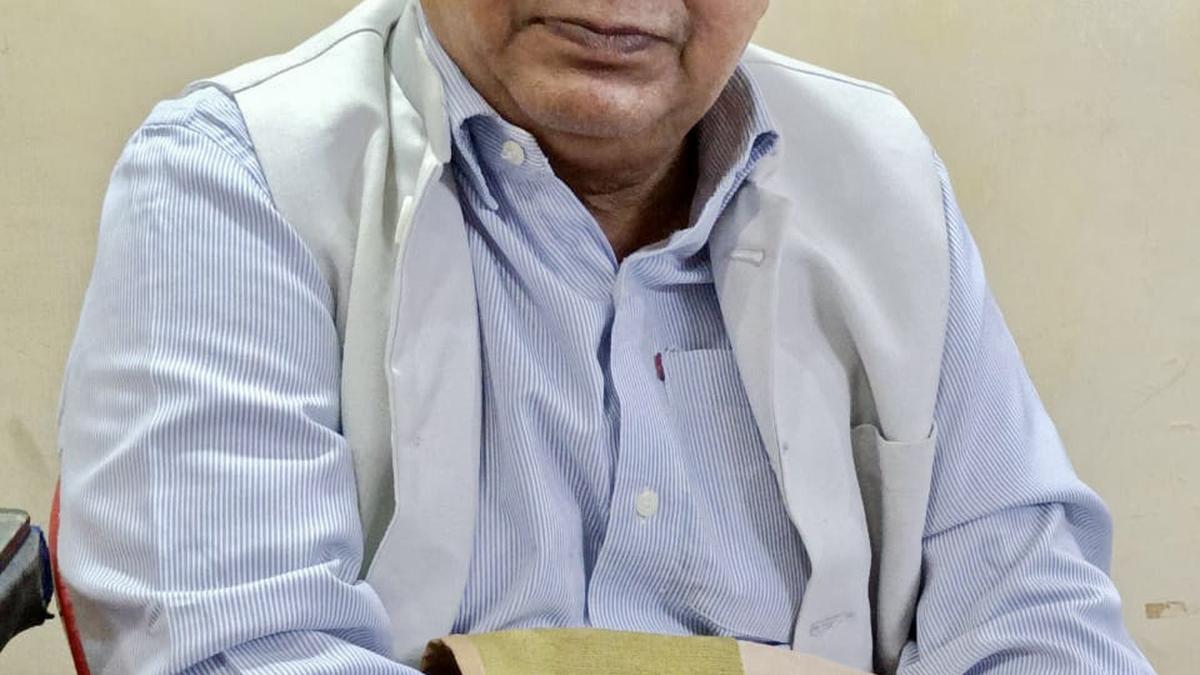
Amar Mitra’s memories of war and resistance
The Hindu
Acclaimed Bengali writer Amar Mitra reflects on war-time memories and advocates for peace amidst current geopolitical unease.
As mock drills ring out and WhatsApp groups in Kolkata buzz with anxious chatter over the spectre of conflict, acclaimed Bengali writer Amar Mitra finds himself transported to a different time - a Calcutta cloaked in blackout curtains, its people navigating war-time anxiety with stoic resilience and flashes of courage.
“I have clear memories of the 1965 war with Pakistan. Can’t believe 60 years have passed,” said Mr. Mitra, speaking to The Hindu from his residence. “I was 14 then. We lived in Belgachia, and our windowpanes were covered with paper to keep even a flicker of light from escaping. There were sirens through the night, and often, an eerie silence that followed.”
One memory stands out with the vividness of theatre lights — ironically, in total darkness. “One evening, my elder brother, Manoj-da — yes, the actor and playwright — had a play staged at a theatre in the Rabindra Sarobar area. We boarded a double-decker bus to south Kolkata. The entire city was under a blackout. I looked out of the window and saw a ghost city, dark and silent, yet somehow functioning. The bus had no lights. But the theatre was running. Life had not paused.”
Mr. Mitra’s brother, the late Manoj Mitra, a towering figure in Bengali theatre who passed away in November 2024, was staging one of his early works that evening. For the young Amar, that journey across a shadowed city became a memory seared by both fear and a fascination with the human spirit.
Six years later, in 1971, a 20-year-old Amar Mitra - now a budding writer and an employee in West Bengal’s Land Reforms Department - was moved by the plight of fellow Bengalis across the border as East Pakistan began its bloody struggle for liberation.
“I felt I had to do something,” he said, with quiet determination. “With friends from our para, we raised money, bought essentials - Dettol, cotton, benzene, biscuits, rice, tea - and headed to the border.”
They took a train to Bongaon, then walked to Petrapole, a crossing point now heavily militarised but then a porous edge of partitioned Bengal. “Indian guards stopped us, warned us of Pakistani spies. But we slipped through and reached a Mukti Bahini camp. We handed over our humble gifts.”


For most patients with TB who are severely underweight, nutritional support is an essential and not optional part of treatment

Family of custodial death victims demands harsh punishment for nine convicted policemen to prevent future abuses of power.

Rajinikanth refutes TVK leader's claims about DMK threats preventing his political entry, expressing gratitude to supportive political figures.

CM announces Cabinet Sub-Committee on Musi rejuvenation; rehabilitation for all displaced

Ramanathapuram identifies 145 polling stations as sensitive, ensuring security with paramilitary forces ahead of assembly elections, says DEO.

BJP Puducherry president V. P Ramalingam files nomination for Raj Bhavan, joined by Union Minister Mandaviya and Khushbu Sundar.

History-sheeter 'Thoppai' Ganesh shot dead by police in Chennai after attacking officers during attempted escape.

The government plans to amend the FCRA, introducing new regulations for NGO asset management and accountability for key functionaries.

The draft policy for “Responsible Digital Use Among Students”, released on Monday by the Department of Health and Family Welfare, has recommended that parents set structured routines with clear screen-time rules and prioritise privacy, safety, and open conversation with children on digital well-being.

Police Observer Sushant Kumar Saxena conducts surprise inspection at Shencottai police station, reviewing warrants and security arrangements ahead of elections.

Andhra Pradesh government to launch key projects in April, focusing on industrial growth and infrastructure development, says Nara Lokesh.

Lok Sabha refers the Corporate Laws (Amendment) Bill to a JPC amid opposition concerns over CSR provisions dilution.

SHG members in Kanniyakumari use snakes and ladders to raise election awareness and boost voter turnout.