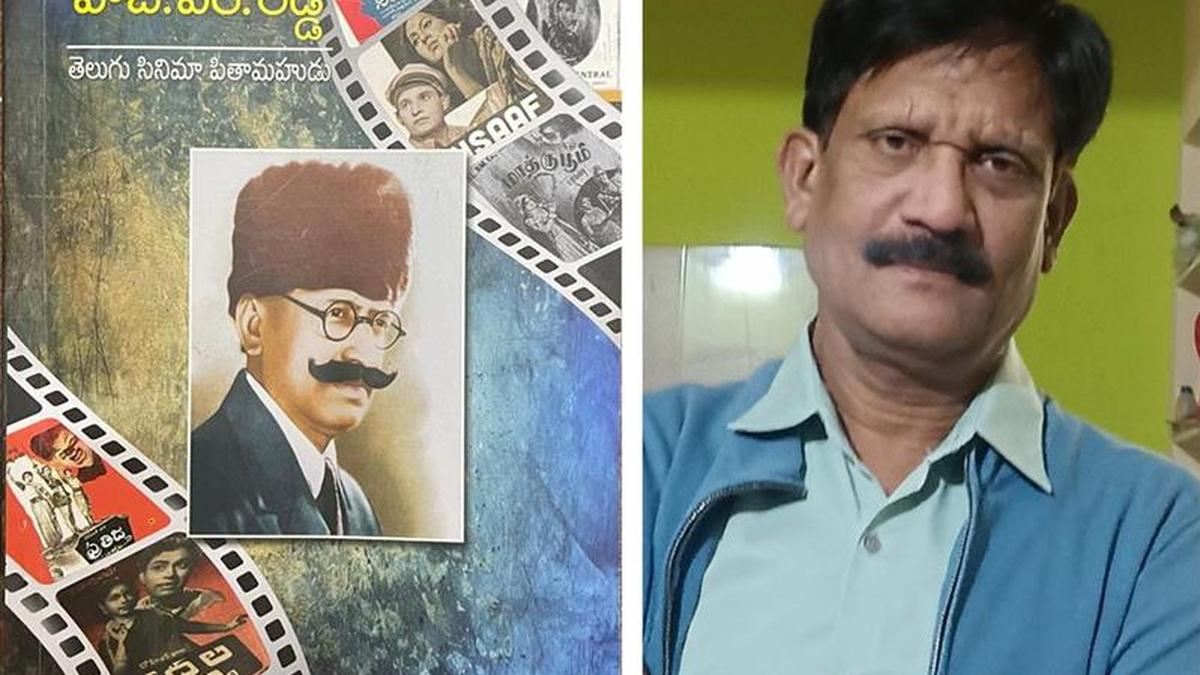
H.M. Reddy, the architect of the South Indian talkie
The Hindu
Explore H. Ramesh Babu's comprehensive biography reclaiming H.M. Reddy's pivotal role in Telugu cinema's transition to sound.
For nearly three decades, author H. Ramesh Babu has been immersed in film research. Yet, he says, one persistent question troubled him: how could the man universally hailed as the ‘godfather of the Telugu talkie’ be reduced to a handful of lines in film history?
That question led to a decade-long research project and culminated in his exhaustive Telugu book H. M. Reddy – Telugu Cinema Pitamahudu, which was released recently.
“Wherever I looked, everyone repeated the same thing,” says Ramesh Babu. “Two pages, sometimes even less. No detailed filmography or analysis. Just the same borrowed paragraphs.” Determined not to “write what everyone already knows”, he began collecting material — hundreds of newspaper clippings in Telugu and English, archival references, rare interviews and production notes. What emerged was not just a biography, but a reclamation.
Ramesh Babu argues that Reddy’s contribution was systematically overlooked, both during his lifetime and after. “He was neglected even when he was alive,” he says, attributing this partly to Reddy’s uncompromising working style.
The book reconstructs the first two decades of the talkie era — from acting styles shaped by theatre traditions to early experiments with sound recording, music integration and studio production methods.
Hanumantha Muniappa Reddy began his career in the silent era of Indian cinema, working in erstwhile Bombay when the industry was still in its formative years. Long before he became celebrated for directing the first Telugu talkie Bhakta Prahlada (1932) and the pioneering bilingual talkie Kalidas (1931) — in which characters spoke Tamil, Telugu and Hindi — he was absorbing the craft in silent film studios.


Rajya Sabha election LIVE: Follow the Hindu's LIVE updates as candidates file nomination papers on March 5, 2026, for the upcoming Rajya Sabha polls.

Explore H. Ramesh Babu's comprehensive biography reclaiming H.M. Reddy's pivotal role in Telugu cinema's transition to sound.

Revanth Reddy strengthens his influence within Congress in Telangana with Rajya Sabha nominations of Abhishek Manu Singhvi and Vem Narender Reddy.

Indulge in North Indian classics at Lazeez Affaire, Hyderabad, featuring a seasonal Ramzan menu.

Tensions rise as ships anchor in the Gulf following a missile attack on a tanker in the Strait of Hormuz.

Karnataka plans check dams in Vijayapura for water conservation and groundwater recharge, alongside Doni river dredging proposal.

The family of a Florida man who took his own life filed suit against Google on Wednesday, alleging the company's Gemini AI chatbot spent weeks manufacturing an elaborate delusional fantasy before aiding him in his suicide.

Karnataka MLAs urge CM to divide Belagavi district for better administration, says Minister Satish Jarkiholi who highlights the long-standing demand.

Ankita Raina and Zeel Desai advance in the ITF W35 Kalaburagi, while local star Soha Sadiq exits despite impressive start.

At the heart of Tamil Nadu’s successes in healthcare lies a dedicated public health system — a wide, well-distributed network of primary health centres

Kochi Comic Con's inaugural event unites over 100 cosplayers, showcasing vibrant pop culture with 20,000 enthusiastic attendees.

Arsenal tightens Premier League lead as Chelsea thrives and Man United faces defeat; top-five race intensifies.

As war and uncertainty grip Iran, three books — each from a different moment in the country’s history — revisit the Shah’s fall, the rise of the Islamic Republic, and the women-led uprising that challenged power in Tehran.