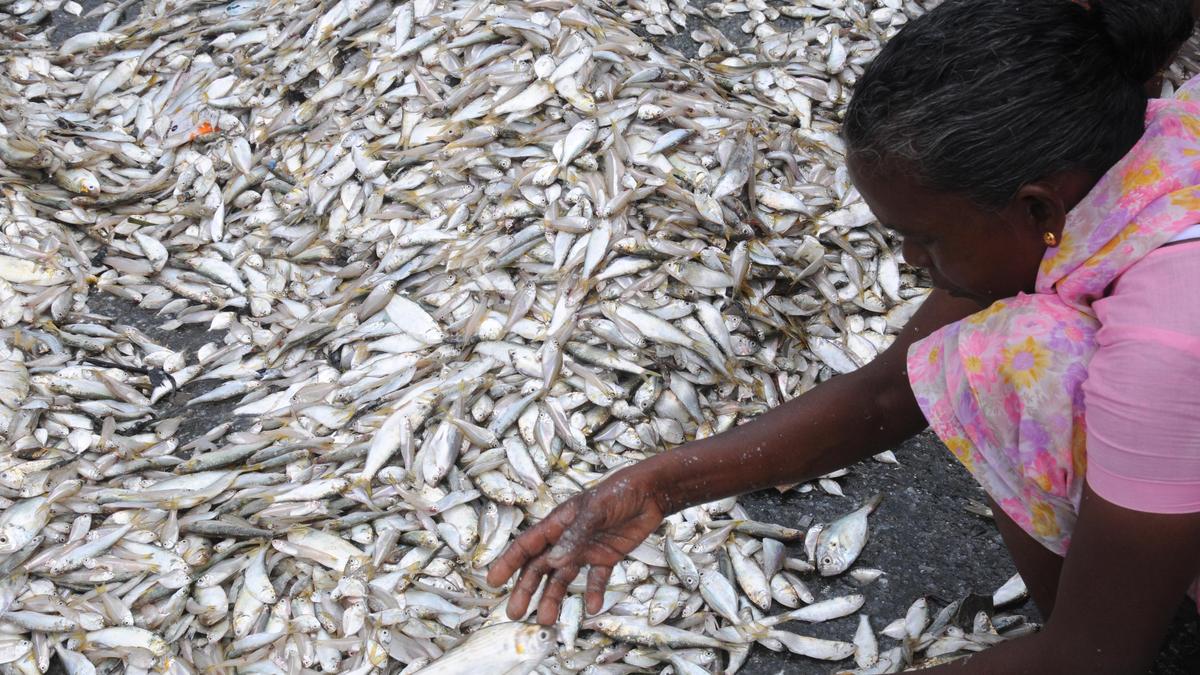
After moratorium lifted, fishermen and experts urge fishmeal makers to address sustainability
The Hindu
Indian fishmeal industry urged to prioritize sustainability as key to $7.38 billion marine food industry, amid lifting of moratorium.
Fishermen and marine scientists have called on fishmeal makers – Indian Marine Ingredients Association – to address sustainability as it is the pillar of the 7.38-billion-dollar marine food industry in the country. The call came after the fishmeal makers welcomed Marine Products Export Development Authority (MPEDA) lifting the moratorium on new factories.
The moratorium was imposed in December 2019.
“The association applauds lifting of the moratorium on opening new fishmeal and fish oil units and endorsing additional capacity. This will revitalise the industry and ensure a sustainable future for India’s fishing and aquaculture sectors,” said Mohamed Dawood Sait, president of the association here on Wednesday (August 14, 2024).
The news of lifting the ban on new fishmeal units prompted fishermen and experts to call on the fishmeal makers to look at sustainability issues and on the government to strictly implement rules against juvenile fishing.
Sunil Mohammed, veteran marine scientist who retired from the Central Marine Fisheries Research Institute in Kochi, said that sustainability is the central concern. “Without sustainability, there is no future for both the fishmeal factories and aquaculture industry,” he said.
Similar concerns were raised by Charles George, representing traditional fishermen under the independent fishermen’s union Swathanthra Matsya Thozhilali Aikya Vedi. He said the lifting of the ban on new fishmeal and fish oil factories is in keeping with the government encouraging aquaculture in the country. The move is questionable unless the government ensures that the marine fishing regulations are strictly adhered to, he added.
Mr. Sait said the concerns expressed about sustainability is also uppermost in the minds of the fishmeal makers. He said Indian fisheries have been sustainable and that over the last 150 years, no fishes have disappeared.


Palla urges NDA leaders to unite for grassroots outreach, enhancing public trust through balanced welfare and development initiatives.

Horses shone at Auroville's 2026 event, showcasing equestrian talent through dressage, derby, and show jumping competitions.

Telangana Governor Shiv Pratap Shukla attends Bihar Foundation Day celebrations in Hyderabad, honoring Bihar's historical and cultural contributions.

Samsung workers protest for the reinstatement of 27 suspended employees, citing unfulfilled promises from the Labour Minister.

The Vice-Chancellor of Rajiv Gandhi University of Health Sciences (RGUHS) B. C. Bhagavan said on Sunday that the university will soon open a research centre on Yoga and Naturopathy on 60-acre land in Bengaluru.

UT Matters: Construction of Uppar drain road overbridge in Puducherry to be completed in four months, amid traffic regulations.

Union Minister Dharmendra Pradhan highlights Bharat Innovates' aim to elevate Indian deep-tech startups to the global stage.

In an exclusive interview, DMK MLA Ezhilan discusses Tamil Nadu's 2026 elections, party structure, and local governance challenges.

Minister Satish Jarkiholi asserts confidence in retaining Davangere and Bagalkot seats in upcoming bypolls amid addressing internal discontent.

Sunil Ambekar of RSS emphasizes national unity, defending road prayer restrictions and promoting awareness of shared ancestry in India.

Opposition MPs and activists voice strong concerns against proposed amendments to the Transgender Persons Act at a Delhi hearing.

Four Assam police commandos injured in an extremist attack during a gunfight in Tinsukia district, officials report.

Campaigning intensifies in Ernakulam district as candidates engage voters ahead of the crucial Assembly polls.