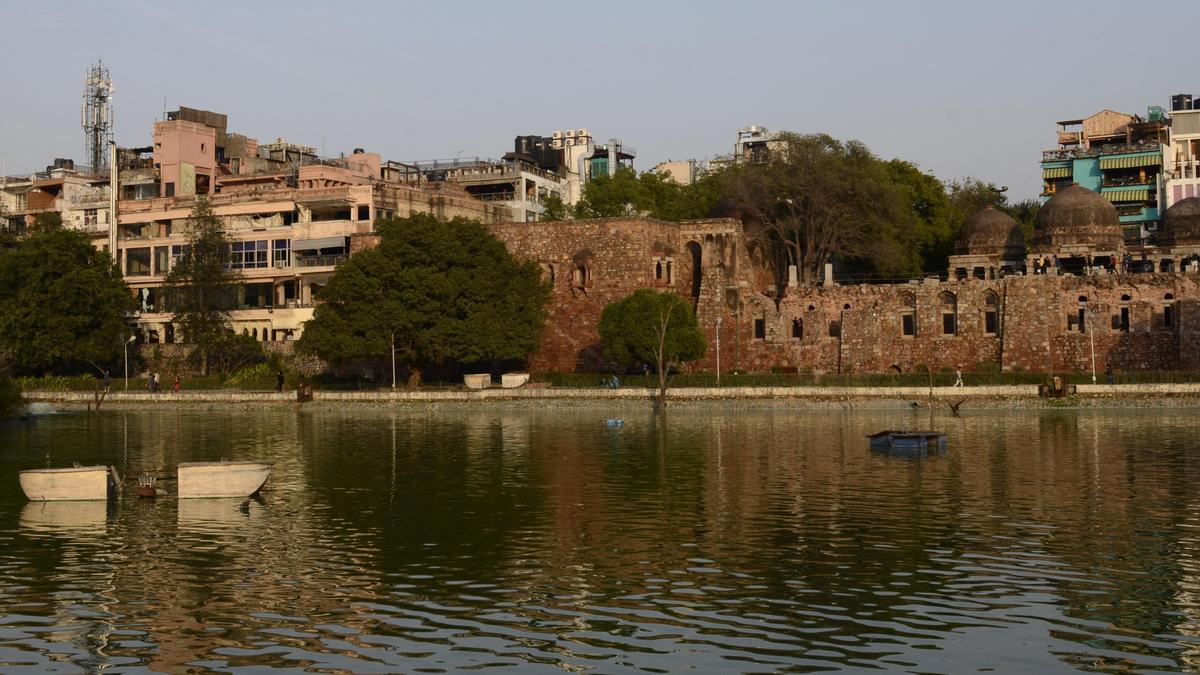
A walk through the bylanes of Hauz Khaz Village
The Hindu
Explore Hauz Khas Village's hidden monuments, revealing its rich history and architectural beauty away from trendy hotspots.
For most Delhites, Hauz Khas conjures up images of trendy cafes, rooftop bars, boutique stores and boho vibes. But scratch beneath the surface — a stroll through the deer park and the quiet lanes of Hauz Khas village reveals a layered past. Forgotten tombs, crumbling mosques and eerie towers with bloody legends tell a tale of executions, ascetics, scholars and sultans. Tucked away in green havens and offbeat lanes they offer glimpses of architectural transition from utilitarian Tughlaq forms to ornate Lodi designs and an ideal exploration for history buffs and wanderers.
Just off Aurobindo Marg, in a quiet residential lane lies a cylindrical sandstone, ‘tower of thieves’, built during Alauddin Khilji’s reign in the 13th Century dotted with 225 small holes. Legend has it that the holes once held the severed heads of convicted thieves, rebels and enemies, mounted as a warning to all who dared to defy the sultan.
Chor minar | Photo Credit: Pooja Kashyap
Hauz Khas was a major military zone during Alauddin’s time froth with fear of Mongol invasion which explains Alauddin’s rigorous centralisation of authority, military expansion, price control measures, and an exceptionally strict intelligence, policing and law enforcement system, of which Chor Minar was a product.
Idgah | Photo Credit: Pooja Kashyap
Just next to this execution monument is the Mullah Mosque, a Tughlaq era open air mosque with sturdy sloping walls made up of local quartzite stone rubble. Built by a powerful noble Mallu Iqbal Khan during Muhammad Bin Tughlaq’s reign, this spiritual structure offers perfect space for afternoon namaz and morning solitude.


Directed by Prashant Bhagia, the film stars Anupam Kher, Boman Irani, Ranvir Shorey, Parvin Dabas, Vinay Pathak, Tara Sharma and Ravi Kishan

Tamil Nadu CM Stalin urges PM Modi to release pending Jal Jeevan Mission funds and approve critical water supply projects.

Madras High Court rules deploying specialist doctors at PHCs is legal, urging Tamil Nadu to ensure transparency in postings.

Technopark IT companies in Thiruvananthapuram may shift to WFH due to LPG shortages affecting food services.

Explore Hauz Khas Village's hidden monuments, revealing its rich history and architectural beauty away from trendy hotspots.

Kozhikode faces an LPG crisis, impacting hotels, charity meal services, and auto-rickshaw drivers amid ongoing gas shortages.

An intimate Telugu Routes Ugadi lunch is set to take place in a private forest, celebrating culture, cuisine, and community on March 15.

Oracle’s Mike Sicilia is the latest software CEO to wade in to the debate on whether artificial intelligence tools that heavily automate human tasks will mean the demise of his industry.

Telangana government meets oil companies to address LPG supply issues and assess commercial cylinder shortages affecting local businesses.

Explore India's oil and gas strategy amid rising global energy prices and U.S.-Iran tensions, highlighting challenges and renewable opportunities.

Nolambur Union Road which runs along the Couum river bank, is tasked with distributing traffic from these two bridges originating at Poonamallee High Road, into the interior roads of Mogappair and Nolambur. This road can serve its calling only if attention is paid to its bottlenecks, says Nolambur resident Umanath V.

Assam CM vows to expel all illegal migrants, confirming the pushback of 12 Bangladeshi immigrants in recent operations.

A subsidiary of Tesla, Elon Musk's electric vehicle maker, has won approval to supply UK households and businesses with electricity, Britain's energy regulator said Thursday.