A real pain | Review of Hypochondria by Will Rees
The Hindu
Review of Hypochondria by John Rees
At different times and for differing periods, we all become hypochondriacs. We are often unreliable narrators of our own symptoms; at times, our stories are true but they are not believed. As Elaine Scarry, put it in The Body in Pain, “To have great pain is to have certainty; to hear that another person has pain is to have doubt.”
Hypochondriacs are the butt of jokes. The inscription on comedian Spike Milligan’s grave reads: I told you I was ill. In the end, wrote Robert Lowell in his poem Obit, “every hypochondriac is his own prophet.” Hypochondria is the only illness where the diagnosis itself is the cure, as a psychoanalyst once said.
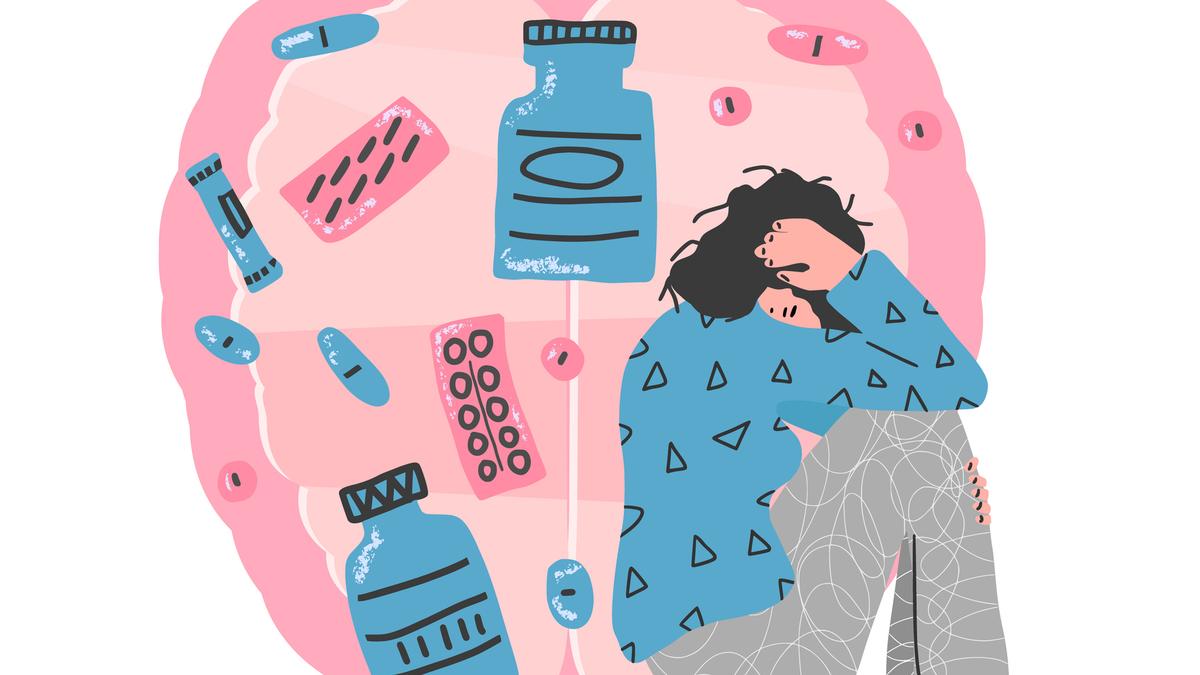
Medical research, however, has shown that hypochondria is as much a real illness as depression or post-traumatic stress disorder. It is not a character flaw. The American Psychiatric Association says three-quarters of hypochondriacs have somatic symptom disorder while the remaining, those who toil in fear with neither ache nor pain, suffer from illness anxiety disorder. Symptom-checkers on ‘Dr Google’ have given rise to a new manifestation, cyberchondria.
In Hypochondria, a recent addition to a growing number of books on the subject, Will Rees talks about ‘previvor’, a word coined for “the person who is discovered to be genetically predisposed to a disease that they do not (yet) have. Such people are not sick, they don’t have any disease, yet from the moment they become conscious of their condition it would not be exactly right to call them ‘well’.”
The nature of the condition is such that besides medical experts and psychologists, we need to read philosophers, cultural commentators and literary accounts to begin to understand it. Rees, aware of this, takes us on a tour of what Kant and Hume, Susan Sontag and Samuel Johnson, Kafka and others — many of them hypochondriacs — have said about it.
Here’s Virginia Woolf speaking of the poverty of language in describing an illness in her essay On Being Ill: “English, which can express the thoughts of Hamlet and the tragedy of Lear, has no words for the shiver and the headache. The merest schoolgirl, when she falls in love, has Shakespeare, Donne, Keats to speak her mind for her; but let a sufferer try to describe a pain in his head to a doctor and language at once runs dry. He is forced to coin words himself, and, takes his pain in one hand, and a lump of pure sound in the other so to crush them together for a brand new word that in the end drops out.”
Rees, who originally set out to write a “serious, scholarly study” settles for one where the story of the condition spreads outwards from his own struggles with it. “I was unwell, that much was certain....” he tells us in the opening paragraph, and concludes his journey five years later with the almost magical, “I felt well,” with which the book ends. He describes his book thus: “(It) covers a five-year period of my life, which began at a time when I was convinced that I had a brain tumour, and ended in my mid-twenties, by which point this had quietly morphed into the belief that I had lymphoma. These two moments, these two periods of crisis when the question of health hung darkest over my everyday, bookend Hypochondria, which also looks at the history of this condition, and at those who have attempted to understand it.”


MLC Kishore Kumar Puttur criticizes the State for poor implementation of the Centre's health scheme for senior citizens.

Karnataka's Health Minister announces redeployment of specialists to taluk hospitals to reduce neonatal mortality rates effectively.

Celebrate IPL's start and Polly Umrigar's legacy, reflecting on cricket's evolution and the enduring impact of its pioneers.

BJP accuses Congress and Rahul Gandhi of endorsing an ‘anti-India’ USCIRF report undermining India's global image.

Education Ministry proposes UGC-like funding under Shiksha Adhishthan, raising concerns about centralization and public university financing.

Shivraj Singh Chouhan defends the new rural jobs Act, dismissing opposition protests as ineffective and highlighting increased funding and worker protections.

Supreme Court questions why heirs can't access unclaimed funds of deceased depositors, urging government to develop a disclosure policy.

Karnataka High Court demands LPG supply details amid state restrictions, threatening Bengaluru's restaurants and livelihoods.

Shorts News:UN body investigating deadly strike on Iranian girls school

Moodbidri police inspector suspended pending inquiry over allegations of misbehaviour and inappropriate conduct towards women.

The State currently hosts more than 880 GCCs, up from around 500 GCCs in 2021.

Transgender and intersex activists march to Lok Bhavan, protesting the regressive Transgender Persons Bill and demanding its withdrawal.

Hyderabad's LGBTQIA+ community opposes the Transgender Amendment Bill, stressing dignity over identity verification and highlighting economic and medical concerns.