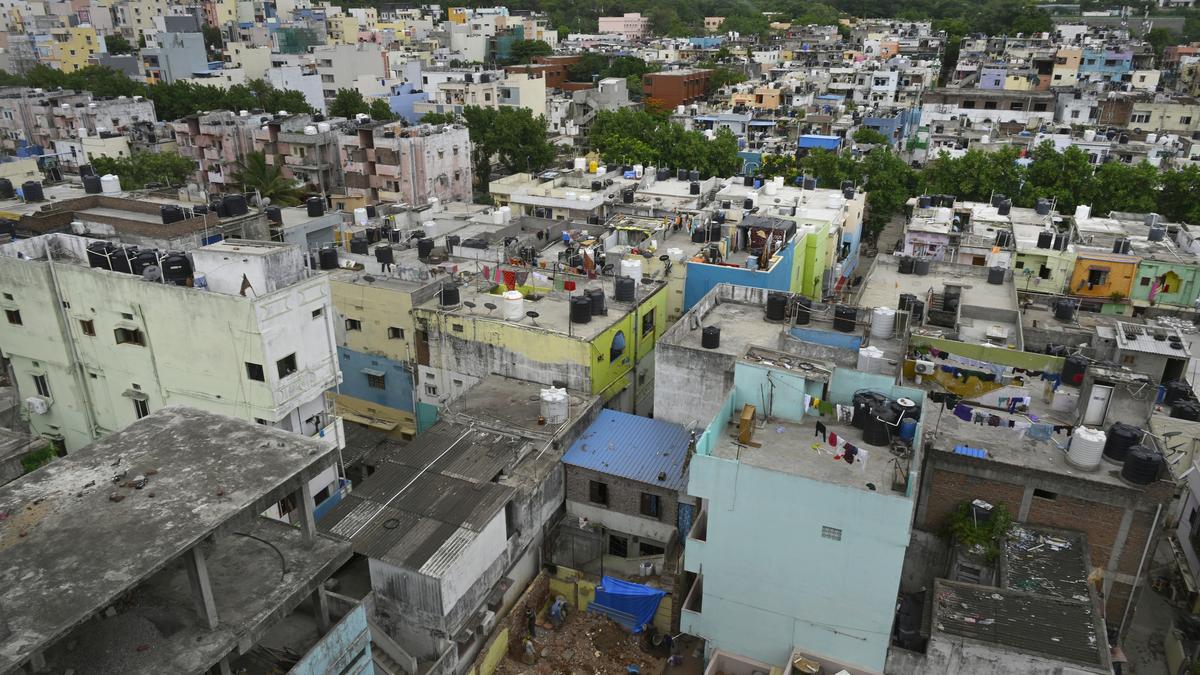
A childhood snatched, a future denied
The Hindu
Teenage mothers in Andhra Pradesh face challenges due to early marriage, poverty, and limited opportunities for education and income.
V. Haritha isn’t sure how old she was when she got married. “I was just 14, maybe,” she says, adjusting a child on her hip while two more play nearby. Now 18, she is a mother of three, living in Gangaraju Madugula, a remote village about 120 km from Visakhapatnam, nestled in the Eastern Ghats of Andhra Pradesh.
The village is home to tribal communities such as the Kondhs and Porajas, listed among India’s Particularly Vulnerable Tribal Groups (PVTGs). Access to education, healthcare and steady income remains limited in the region, and families often make difficult decisions in the face of poverty and isolation. For many girls like Haritha, that includes getting married — and becoming mothers — while still in their teens.
Standing beside her is 16-year-old S. Rupa, eight months pregnant. She married a 24-year-old man a year ago. “My father couldn’t afford to feed all of us. I am the third girl. He had no choice,” she explains with practiced calm.
Teenage girls like Haritha and Rupa, married young and already mothers, are not exceptions in Andhra Pradesh and Telangana. Their stories are part of a larger trend documented in the Round Seven of the Work and Family Lives: Young Lives Survey, released in Hyderabad on May 30 this year.
The study began in 2002 in the then-undivided Andhra Pradesh, selected as one of four global sites alongside Ethiopia, Peru and Vietnam. “The State was chosen because of its early push to economic reforms — initiatives such as Vision 2020 and privatisation made it an ideal setting to study how liberalisation impacted children over time,” says E. Revathi, director of the Centre for Economic and Social Studies and lead investigator of the study in India.
Using a longitudinal, mixed-methods approach, the study tracked 2,000 one-year-olds and 1,000 eight-year-olds across 20 sentinel sites — urban and rural clusters selected based on development indicators. Over 23 years, researchers followed these children across Andhra, Rayalaseema and Telangana, documenting how they grew up, studied, worked, got married and had children. While some indicators improved, one pattern remained stubbornly visible: the prevalence of early marriage and teenage pregnancies.
One of those tracked was Kamakshi, a girl from the Goya tribal community in Mahbubnagar, Telangana. She was just 11 when she was married off to a 16-year-old relative. Her parents, struggling with poverty and homelessness, saw marriage as a way to reduce their burden. “She was eight when we first met her in 2002,” recalls P. Prudhvikar Reddy, one of the field researchers. “By our second visit in 2006, she was already married. And by 2013, she was raising three children.”


MDMK leader Vaiko announces a movement to remove Prosopis juliflora trees in Tamil Nadu following a landmark High Court directive.

Lok Sabha Speaker Om Birla emphasizes the importance of Question Hour over meetings and urges decorum during obituary references.

Karnataka approves 300-bed Puttur Government Medical College Hospital project, enhancing healthcare in the coastal region.

Explore the court challenge to MGR's Andipatti election, focusing on the legality of his oath-taking process.

Forest, Ecology and Environment Minister Eshwar Khandre on Wednesday instructed forest department officials to ensure maintenance of elephant trenches and hanging solar fences, which have been installed in Kodagu district to control human-elephant conflict.

Humayun Kabir's Aam Janata Unnayan Party will contest 182 seats, challenging Mamata Banerjee in Bhabanipur with a Muslim candidate.

Justice Swaminathan adjourns contempt hearing until April 9, expressing frustration over manipulation in the Thirupparankundram case.

Hyderabad's LGBTQIA+ community protests against the Transgender Persons Amendment Bill, advocating for trans rights and human dignity.

Sharmila criticizes Avinash Reddy's remarks on Viveka’s murder, calling Jagan a disgrace and questioning his leadership and support.

All the three major political fronts appear to be drowned in indecision when it comes to officially declaring their candidates for the prestigious Thiruvananthapuram Assembly constituency.

BJP protests for MCC council elections, claiming mismanagement and corruption, threatens to escalate protests if demands are unmet.

Hyderabad Collector assures no LPG shortage, urges residents to avoid panic booking and trust available supplies.

Telangana to soon set up nodal agency for flood plain zoning: Irrigation Minister