With new office for 20,000 in Bengaluru, Google aims to work around H1-B Visa issues for Indian IT employees
India Today
Google's plan to scale up its Bengaluru operations shows how US visa hurdles are pushing tech giants to move more critical hiring and work to India. Here is the full story.
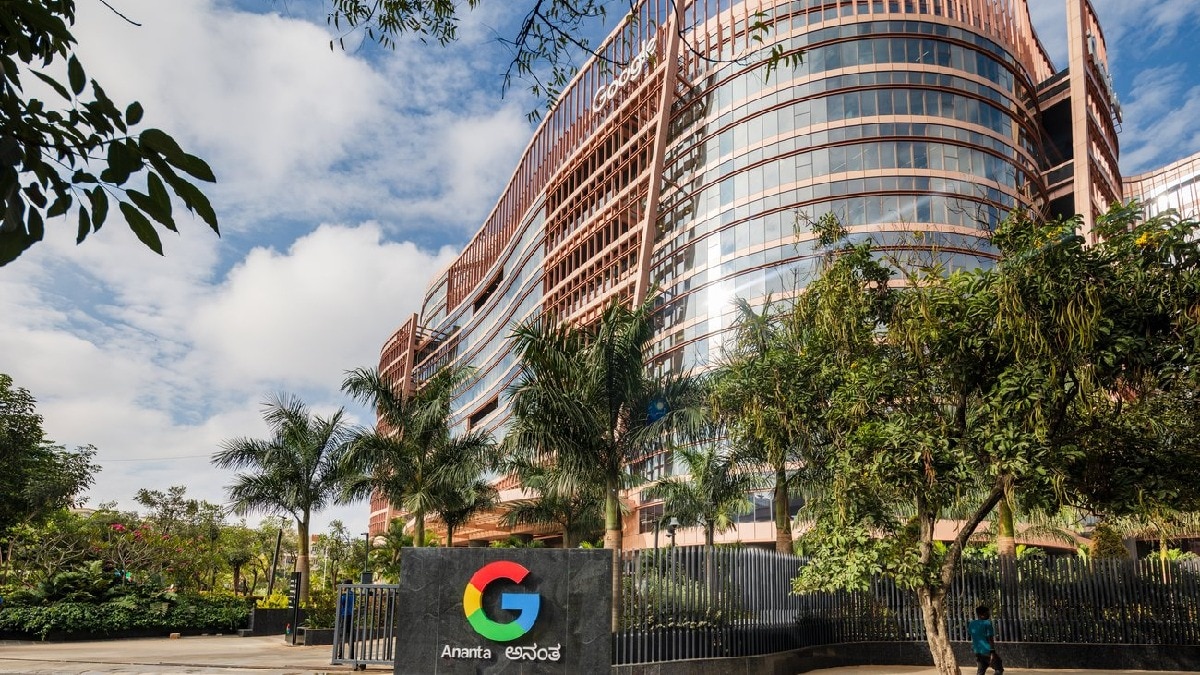
As the US makes it harder and more costly for companies to hire foreign workers on H-1 B visas, Google is quietly deciding where its future workforce will be based. Instead of waiting on visas and approvals, the tech giant is placing a bigger bet on India, starting with a massive expansion plan in Bengaluru that could eventually house as many as 20,000 employees, Bloomberg reports. At the centre of this plan is Alembic City in Whitefield, one of Bengaluru’s busiest tech corridors. Alphabet, Google’s parent company, has already leased one office tower here and secured options on two more. Together, the three towers span around 2.4 million square feet.
The report claims that the first tower, spread across roughly 6.5 lakh square feet, is set to open to employees in the coming months. Construction on the remaining two towers is scheduled to wrap up next year. While Alphabet has officially confirmed only the lease of the first building, people familiar with the plan say the full complex could accommodate up to 20,000 staff if all options are exercised.
That number is big. Google currently has around 14,000 people in India. A fully occupied Whitefield campus would more than double its local workforce, pushing India closer to the centre of Google’s global operations.
Alphabet, responding to queries from Bloomberg, said it already maintains a strong presence across multiple Indian cities, including Bengaluru, but did not comment on the additional towers or its total India headcount.
Behind this expansion lies a growing challenge for US tech companies, which is immigration. Changes under the Trump administration have made it tougher to bring skilled foreign workers into the US. Proposed hikes in H-1B visa fees, which reportedly up to $100,000 per application, have forced companies to rethink long-term hiring plans.
For Google and its peers, the answer is increasingly straightforward. Instead of moving Indian engineers to the US, build large teams in India itself. This approach avoids visa delays, cuts costs, and ensures companies do not lose access to critical talent. The report suggests that this recalibration is no longer temporary. It is becoming a core part of how global tech firms plan their workforce.


Among the fashion standouts at the Oscars 2026 were Nicole Kidman, Teyana Taylor, Priyanka Chopra, Emma Stone, Audrey Nuna, Anne Hathaway and Pedro Pascal.

Thousands of degree certificates and mark sheets have remained unclaimed in several colleges for nearly four decades. Students passed their exams but never returned to collect their documents, leaving institutions struggling to store the growing pile of academic records.

In a small classroom in Aligarh's government school, waste materials are turning into machines. A government school teacher is guiding students to build simple robots and drones using scrap, helping them understand science through hands-on learning.

Elon Musk's satellite internet service, Starlink, is now available in Kuwait. This announcement comes at a time when the country has found itself impacted by the US-Israel war with Iran.

Delhi University has rejected Rahul Gandhi's claim of caste bias in interviews. In a post on X, the university said the Leader of the Opposition should verify facts before making such statements.

Apple is rumoured to be making its debut in the foldable smartphone market this year with the iPhone fold. From the design to the features, and the expected price, here is everything you need to know about the first-ever foldable iPhone.

The Central Board of Secondary Education, CBSE, has cancelled the Class 12 board examinations in several Middle Eastern countries due to the ongoing US-Israel-Iran war. The board also confirmed that the mechanism for announcing results for affected students will be announced at a later stage.

Chinese giant ByteDance has reportedly suspended its plans to release its latest AI video generation model, SeeDance 2.0, after major Hollywood studios raised disputes over copyright violations.

Bidyut Innovation MD Rahul Shah spoke during the India Today Conclave 2026. Shah reckoned that India could soon have its own robots competing those from other countries, perhaps at a fraction of the cost.

Alpha High School, an AI-driven education institute is rolling out a new course with a promise – earn $1 million by the time you graduate or you get a full refund. Here is how it works.

Devendra Singh Chaplot, an IIT Bombay alum has joined xAI to build super intelligence. His arrival was welcomed by xAI chief Elon Musk. Here is everything you need to know about xAI's latest Indian origin member.

Blending heritage with modern technology, Royal Enfield is preparing to enter the electric motorcycle space with the upcoming Royal Enfield Flying Flea C6, expected to debut in India around mid-2026.

IIT Madras and the Delhi government have signed an MoU to study 'smog-eating' surfaces to help tackle air pollution in the capital.