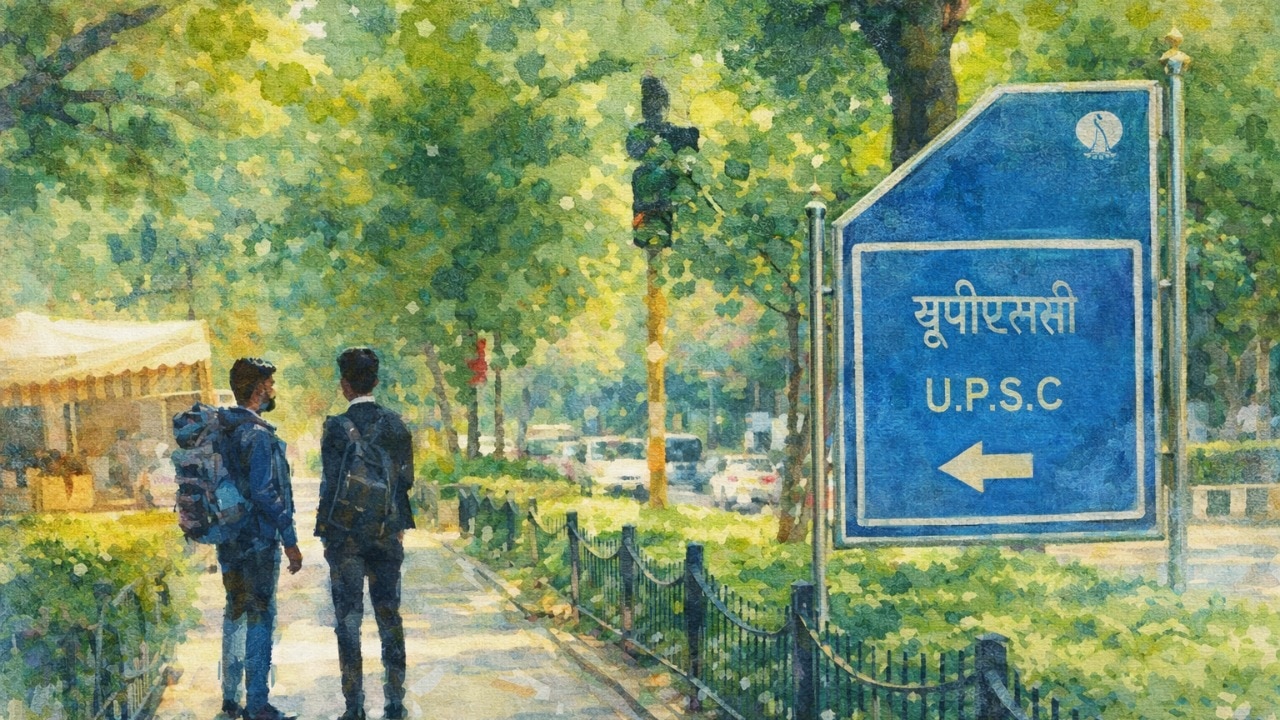
Why UPSC's red line on repeat attempts is a tough reform
India Today
For years, the UPSC allowed already-selected officers to reappear in the Civil Service Examination. While they sought "better" services, seats for fresh aspirants shrunk. This drained public resources too. The UPSC, with the new rule, is trying to curb the practice. There are some inter-services power dynamics, too, at play in the story.
In Delhi's Mukherjee Nagar, 22-year-old Puneet Kumar is preparing for the Union Public Service Commission (UPSC) Civil Services Examination 2026 with renewed optimism after the notification released last week. His excitement is a result of a structural shift taken by the government's top recruiting body. The UPSC has capped repeat Civil Service Exam attempts for some of the already-serving officers. It is an intervention that aspirants like Puneet believe could create a balance in the competition. UPSC mentors are calling it a big and timely intervention.
For example, serving IAS or IFS officers can now appear for exam again only after resigning from their services. If a candidate is selected as an IPS officer or allocated a Group A Central Service, only one improvement attempt will be allowed. Beyond that, resignation from some of the services is now mandatory for reappearance, according to the latest UPSC notification.
For Puneet, who is set to make his third attempt after clearing the Mains twice, the change is consequential. "I am not saying that reappearing officers definitely stopped me from clearing the exam... But maybe they did... The move improves my chances. Perhaps this time, I will reach the interview stage," Puneet tells India Today Digital.
He also has the Puja Khedkars in his mind. Probationary IAS officer Puja Khedkar's case in 2024 was just one of the many aspirants using EWS, OBC non-creamy and disability quotas to exploit loopholes in the system to clear the Civil Services Exam (CSE), commonly referred to as the "Civils". The UPSC later cancelled Khedkar's candidature and barred her from future exams.
The UPSC's recent move has been praised. Like aspirants, UPSC mentors underline that the move is an important procedural tweak and was a long-overdue correction in how India recruits to build its bureaucratic steel frame.
The UPSC is a constitutional body established under Article 315 of the Constitution. Its most significant responsibility is conducting the annual Civil Services Examination (CSE), through which officers for the Indian Administrative Service (IAS), Indian Police Service (IPS), Indian Foreign Service (IFS), and other Group A and B services are recruited.


Two LPG tankers tracked by India Today's OSINT team have taken the new route via Larak-Qeshm to cross the Strait of Hormuz.

What began as an abuse complaint has snowballed into a massive scandal involving rape allegations, hidden camera evidence, fraud and even murder claims, as more victims come forward against a Nashik godman.

From April 2026, the Delhi government is planning to recover over Rs 38,000 crore in dues to discoms.

The bill could increase total Lok Sabha seats to 816, reserving 273 for women, marking a major push to enhance female representation in Parliament based on the 2011 census.

Students told the Mahila Congress that the LPG shortage had disrupted their daily meals. They said the hostel administration had altered the menu, reduced one meal and discontinued evening tea in recent days.

India's consumer courts promise quick justice, but rising backlogs and staff shortages tell a different story. As cases pile up, the gap between what the system offers and what it delivers is widening.

A second patient died within 72 hours at RG Kar Hospital, with his family alleging that a lack of stretcher and basic facilities forced the critically ill man to walk 100 metres, leading to his death.

As Parliament prepares to bring amendments to the Transgender Act, activists warn the proposed changes risk rolling back years of hard-won rights.

A high-speed boat crash in the Maldives has left two Indians missing, including a celebrated rally figure, even as Gautam Singhania returns home. Search teams continue efforts amid mounting concern and unanswered questions.

A prominent seer, Pranavananda Swamiji, alleged that mutts backing Karnataka Deputy Chief Minister DK Shivakumar to take over the top post were denied any allocation in the state budget presented by Chief Minister Siddaramaiah. He reiterated his support for Shivakumar to take over as the chief minister.

India's original Dhurandhar, Ravindra Kaushik, rose from acting at college theatres, to infiltrating the Pakistan Army as a RAW Agent. He provided critical intelligence on Pakistani troop movements and the country's nuclear programme, but died a lonely death after his betrayal and subsequent capture by the ISI.


According to the police, 19-year-old Sachin Dharmendrabhai Chaudhary, who works as a labourer, had borrowed the money before expressing his inability to repay it immediately, police said. He was allegedly threatened with his life over the delay in repayment. Fearing for his life, Sachin immediately alerted the police.