Erasure, not inclusion: Why activists are opposing amendments to Transgender Act
India Today
As Parliament prepares to bring amendments to the Transgender Act, activists warn the proposed changes risk rolling back years of hard-won rights.
As Parliament prepares to take up the proposed amendments to the Transgender Persons (Protection of Rights) Act, transgender rights activists have sounded a strong warning, arguing that the changes could roll back key protections by undermining self-identification and narrowing the legal definition of transgender persons, effectively erasing large sections of the community.
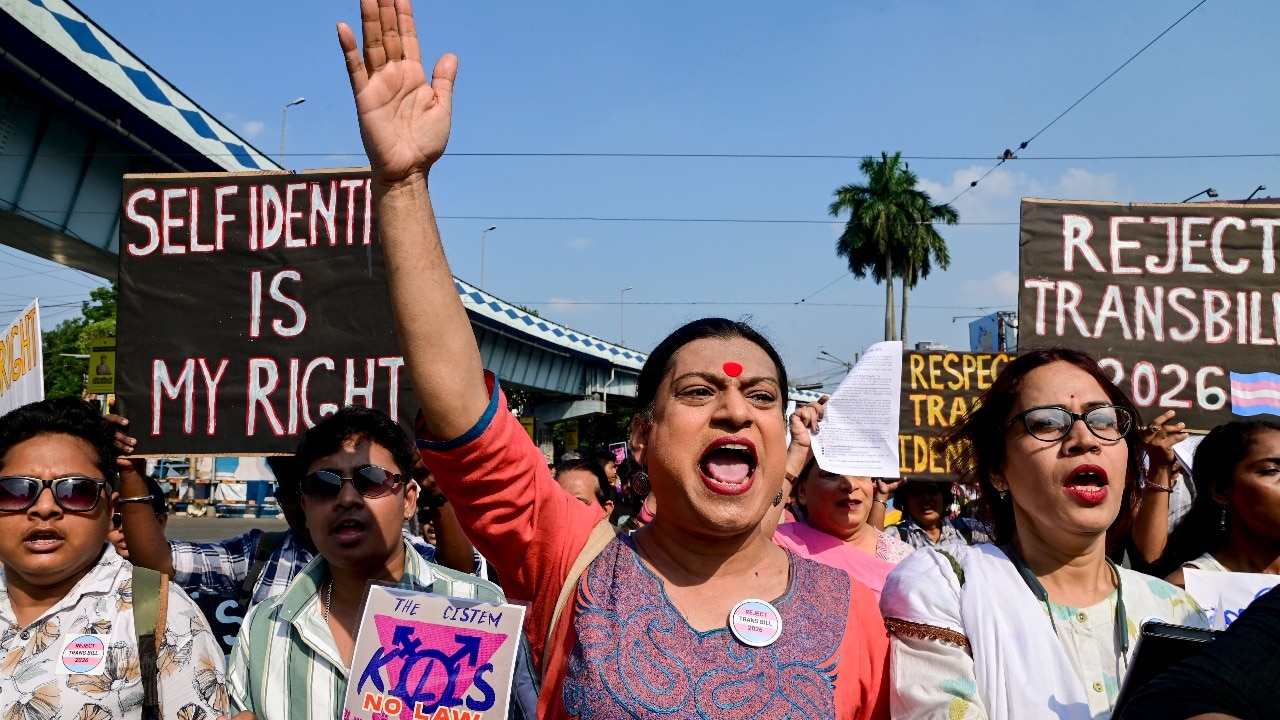
The activists, along with Members of Parliament from several Opposition parties, held a public meeting on Sunday to protest the amendments, which are scheduled for consideration and passage in Parliament on Monday.
At the heart of the opposition is the proposed shift towards requiring “medical proof” of gender identity, effectively undermining the principle of self-identification. Activists say this marks a departure from the 2019 law, which defined a transgender person as someone whose gender does not match the one assigned at birth and recognised a broad spectrum of identities.
The amendments seek to remove this inclusive definition and replace it with a restricted list of categories, excluding many individuals who were previously covered.
The Bill also states that it "shall not include or shall never have included" persons with diverse sexual orientations and self-perceived sexual identities -- an approach activists say conflates gender identity with sexual orientation, despite the Supreme Court’s 2014 NALSA (National Legal Services Authority) judgment clearly distinguishing between the two. People from the LGBTQ+ community take part in a rally over Transgender (Amendment) Bill in Kolkata on Sunday. (Photo: PTI)
Speaking to India Today, lawyer and activist Raghavi, who is herself a trans woman, said the amendments ignore ground realities, pointing out that not all trans persons have the financial means to undergo surgery to align with their identified gender.


From a Kashmiri widow parting with her late husband's cherished jewellery to children emptying their piggy banks, a wave of generosity is emerging across India as citizens step up to support people affected by the escalating conflict in Iran.

Uttar Pradesh CM Yogi Adityanath conducted an on-site review of preparations at Noida International Airport ahead of its March 28 inauguration by PM Narendra Modi, directing officials to ensure seamless arrangements, robust security and world-class execution.

Arvind Kejriwal criticised the Centre for removing domestic airfare caps, warning prices may surge beyond middle-class reach.

A 36-year-old woman plotted to murder her mother-in-law with the help of her 21-year-old lover. The murder plot was exposed by CCTV installed inside the house.

PM Narendra Modi chaired a high-level meeting to review India's energy and fertiliser supply amid the ongoing West Asia conflict, focusing on uninterrupted supply and stable logistics.

A murder-for-hire plot took a shocking turn when the hired killer turned on his own employer. What began as a family feud over property ended in a cold-blooded killing — and a five-year chase.

Flash floods in Oman killed two Kerala natives, while another woman from the state remains missing after their vehicle was swept away in Al Batinah.

Further arrests deepen probe into Pakistan-linked Ghaziabad espionage network

Tragedy strikes during Navratri at Chhattisgarh's Khallari Mata temple as ropeway cable snaps causing casualties

A young doctor's death has left many shaken, with a seemingly small disagreement at home taking a tragic turn. What unfolded in the days leading up to the incident raises deeper, unsettling questions.

India Today's reporter, Himanshu Mishra, unfolds the series of events that took place in Mathura on the day of Eid, following the death of a cow vigilante, in this ground report.

In the video, Mallikarjunaiah blamed Krishnappa for his decision to end his life. The police have booked Krishnappa under Section 108 of the Bharatiya Nyaya Sanhita for abetment of suicide.
