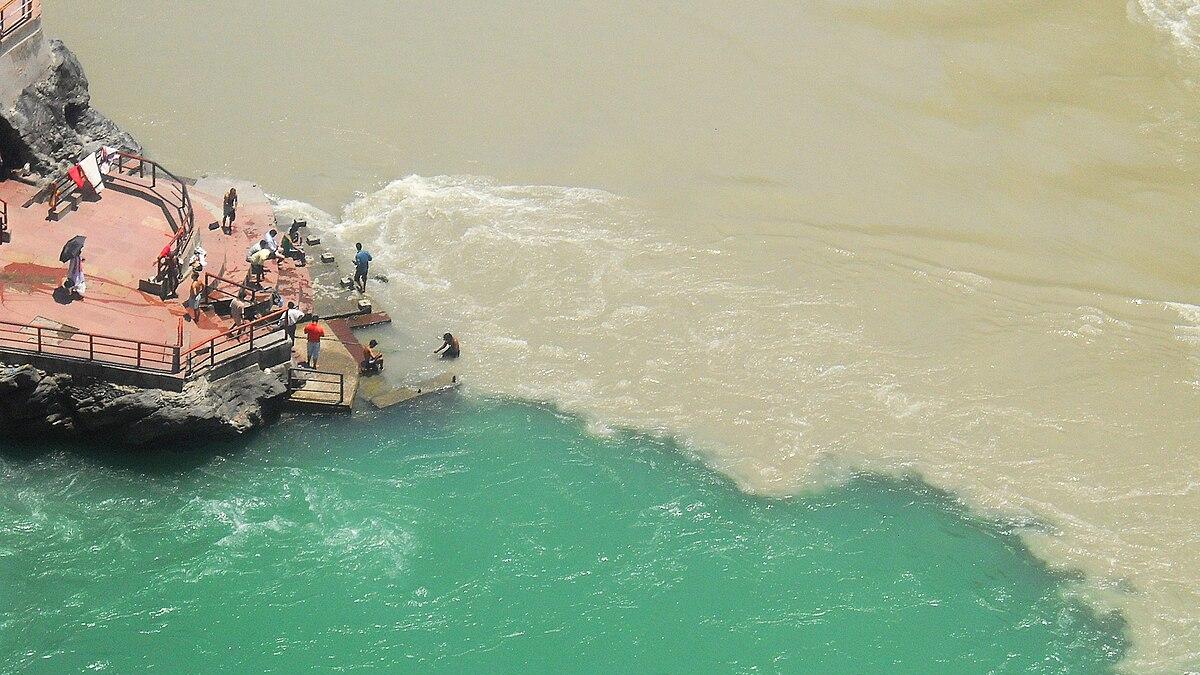
Why some rivers refuse to mix
The Hindu
Explore the science behind rivers that refuse to mix, revealing nature's invisible boundaries shaped by temperature, density, and sediment.
Two rivers meet, and yet, they do not become one.
They run side by side, different in colour and texture, divided by a sharp, visible line that seems to defy everything we know about water.
After all, place two droplets together and they merge instantly. So how can two massive, fast-moving rivers touch, and still refuse to blend?
What looks like pure magic is, in fact, fascinating science at work.
In India, one of the most striking examples appears at Devprayag in Uttarakhand. Here, the Alaknanda and the Bhagirathi rivers meet to form the Ganga —yet for a short stretch, they flow side by side without fully mixing. One runs clearer, the other darker, creating a visible seam where two identities briefly remain separate before becoming one.
This phenomenon isn’t unique to India. Halfway across the world, in the Amazon rainforest, the Rio Negro and the Solimões rivers travel together for nearly six kilometres without blending. The contrast is dramatic: the inky-black waters of the Rio Negro alongside the muddy brown Solimões, divided by a line so sharp it looks almost drawn.


Set between the Siwalik hills and the plains, Butwal offers travellers a mix of regional cuisine, pilgrimage trails to Lumbini and the comfort of Hyatt’s new hospitality landmark

Explore 2026's wallpaper trends in India, highlighting botanicals and handmade designs that enhance modern homes with nature-inspired aesthetics.

Mercedes-Benz CLA 250+ with EQ Technology review: design, performance, range and features explained. Discover how the new electric CLA combines advanced AI, long range, fast charging and futuristic styling for the next generation of luxury EVs.

AI tool for sparrow conservation

BTS’s comeback with ‘Arirang’ marks a major global music event. When does the album release, and where can you watch their concert live stream? We have all the details

The 2026 U.S. cholesterol guidelines urge starting screening and treatment at 30 to prevent cardiovascular disease effectively.

Olam Festival 2026 in Thiruvananthapuram returns March 27-29 with 120+ vendors, music, art, and cultural zones.

A few storytellers in Thiruvananthapuram share their journeys, challenges, and evolving methods on World Storytelling Day, inspiring young minds.

76-year-old Kurian Jacob from Kerala triumphs with seven medals, including five golds, at the Open Masters Games in Abu Dhabi.

Explore the nature of the human mind as an emergent property of brain activity and complex neural interactions.

CERN's Large Hadron Collider discovers the Xi-cc-plus particle, enhancing understanding of quantum mechanics and baryon behavior.

Vibha Batra’s latest book, Spotless (Hachette India) is a novel in verse for young adults

In its first edition, the Madras Art Salon spotlights the works of journalist and artist Narayan Lakshman at The Botanical Club, a social space in the British Deputy High Commission, Chennai