Economic Survey 2026: FinMin may be okay with flat space budget, NSIL could pick up slack Premium
The Hindu
Private sector calls for anchor contracts as India's Department of Space faces funding challenges and operational hurdles, according to the Economic Survey.
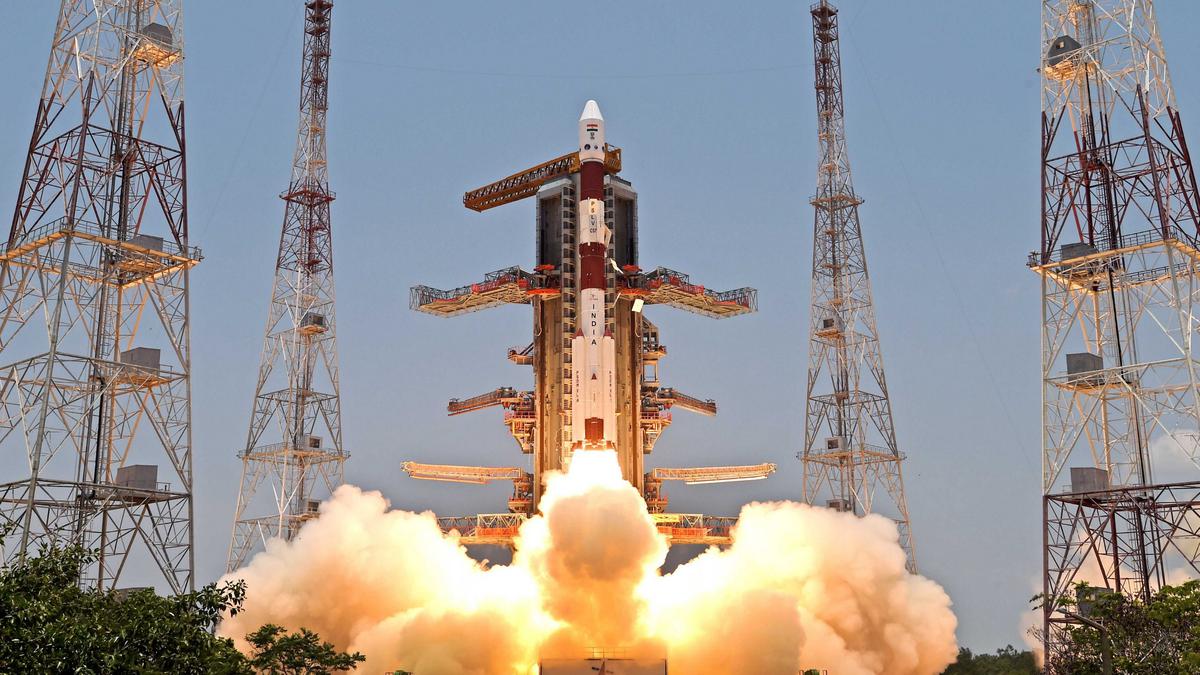
From the historic high of landing on the moon to the recent sobering reality of failed launches and near-misses that have triggered internal reviews, the last five years have been a period of strategic volatility for the Department of Space (DoS). What began as a celebrated era of ‘unlocking’ the sector, marked by the Indian government’s 2020 reforms, the creation of IN-SPACe, and the entry of private players like Skyroot and Agnikul, has transitioned into a complex phase of growing pains.
The Economic Survey 2025-26, however, which was tabled in Parliament today, has read the events of the last decade not as a period of struggle but one of export consolidation. It noted that between 2015 and 2024, India launched 393 foreign satellites for 34 countries, earning over $143 million and €272 million.
But it’s possible that this revenue stream is masking the Department’s internal structural fragility. The space industry has been clamouring for a historic budget hike to fund a projected $44 billion space economy over the next decade, a figure that the Survey backs, including upstream launch and satellite manufacturing and downstream applications and services. So the Department needs to balance the promises of human spaceflight and a space station against the unglamorous need to fix the manufacturing issues threatening its primary launch capability.
The Budget Estimates (BE) have grown minimally over the last four years. Between FY22 and FY26, the nominal allocation decreased and then recovered slightly, effectively shrinking when adjusted for inflation.
The Department of Space has consistently failed to use up its initial allocations, leading to progressive downward revisions in the Revised Estimates (RE), weakening the case for a larger increase in the FY27 budget. (The Finance Ministry has historically preferred a greater capacity to absorb funds over fulfilling ambitions.)
In FY22, the capital expenses, on assets like new launch pads, spacecraft, etc., was ₹8,228 crore but by FY26 it had dropped to ₹6,103 crore. Conversely, revenue expenditure such as salaries and for operations rose from ₹5,720 crore in FY22 to ₹7,311 crore in FY26. Thus the budget is increasingly consumed by operational costs rather than new infrastructure or R&D assets. This is a worrying trend for a technology-intensive organisation whose competitiveness in the long term depends on sustained capital formation.


Indian scientists and international experts are divided over a study questioning the viability of a nuclear reactor fuel called HALEU-thorium; while critics cite safety risks, proponents argue the technology is vital to achieve national energy goals.

ISRO and AIIMS partner to enhance space medicine research, focusing on human health during long-duration space missions.

A practical guide to induction setups for students, families, and home food businesses as India’s LPG supply faces its biggest disruption in years

Explore the electrifying Oscars 2026 race, featuring standout films, baffling nominations, and memorable performances amid a cinematic transition.

Zai and Rom Whitaker’s latest book for young readers, The Book of Indian Snakes, tackles common misconceptions surrounding snakes, highlighting their utility to humans

Discover PC Mahalanobis's pivotal role in India's statistical revolution and his lasting influence on modern statistics in this episode.

Explore why nothing can exceed light speed and the paradoxes that arise if it were possible.

Scientists have engineered bacteria to produce designer proteins by smuggling artificial amino acids, enabling precise drug delivery and multifunctional applications.

Scientists successfully grew chickpeas in simulated lunar soil, paving the way for future extraterrestrial agriculture on the moon.

Scientists urge India to halt importing African cheetahs due to habitat shortages and conservation concerns amid Project Cheetah's challenges.

The Hindu quiz on firebombings of World War II by Vasudevan Mukunth. The worst damage a weapon can inflict in a war need not be nuclear

ISRO and ESA sign a key agreement to enhance collaboration on Earth Observation missions and scientific studies.

Telangana Tourism offers quick city tours for transit passengers at Hyderabad airport, enhancing travel experiences during layovers.