Why India’s ‘leaky pipeline’ in research is unlike the rest of the world
The Hindu
Explore India's unique 'leaky pipeline' in STEM, highlighting women's strong educational presence yet underrepresentation in research careers.
Girls and women represent half the population of the world yet their participation in scientific research is lagging. In many countries, this disparate contribution starts as early as school. In the U.S., for example, girls are less likely to take advanced calculus, physics, mathematics, and biology at high school level.
In many other countries, the number of girls opting to major in a science, technology, engineering or mathematics (STEM) subject is significantly lower than that of boys. Women constitute only 35% of STEM graduates across the world and earn only 40% of STEM PhDs. Further, based on data from 146 nations, women scientists comprise only 30% of the STEM workforce, which includes academic jobs and faculty positions. This systematic loss of women at various stages of STEM education and careers is commonly called the ‘leaky pipeline’.
And at first glance, India appears to be an exception.
At the school level, nearly all students have ‘science’ as a mandatory subject and (at least anecdotally) girls participate in science quizzes, Olympiads, summer schools, hackathons, and hands-on tinkering challenges. After class X, the enrolment of girls in the ‘science’ stream can be as high as 60%, with girls making up 46% of all class XII science pass-outs. In 2025 the Ministry of Education reported that for the first time in over a decade, more girls had cleared their Class XII examination in science than in the arts stream. This indicated a significant increase in the participation of girls in science education: according to data from 2014, 7.5 lakh more girls graduated from the arts stream than science. As a result, India boasts of the highest percentage of female STEM graduates worldwide, with 43% women science graduates at the bachelor’s level and nearly 50% at the masters and doctoral levels.
But beyond the encouraging statistics, India does have a leaky pipeline for women in STEM — except that it looks different from the rest of the world.
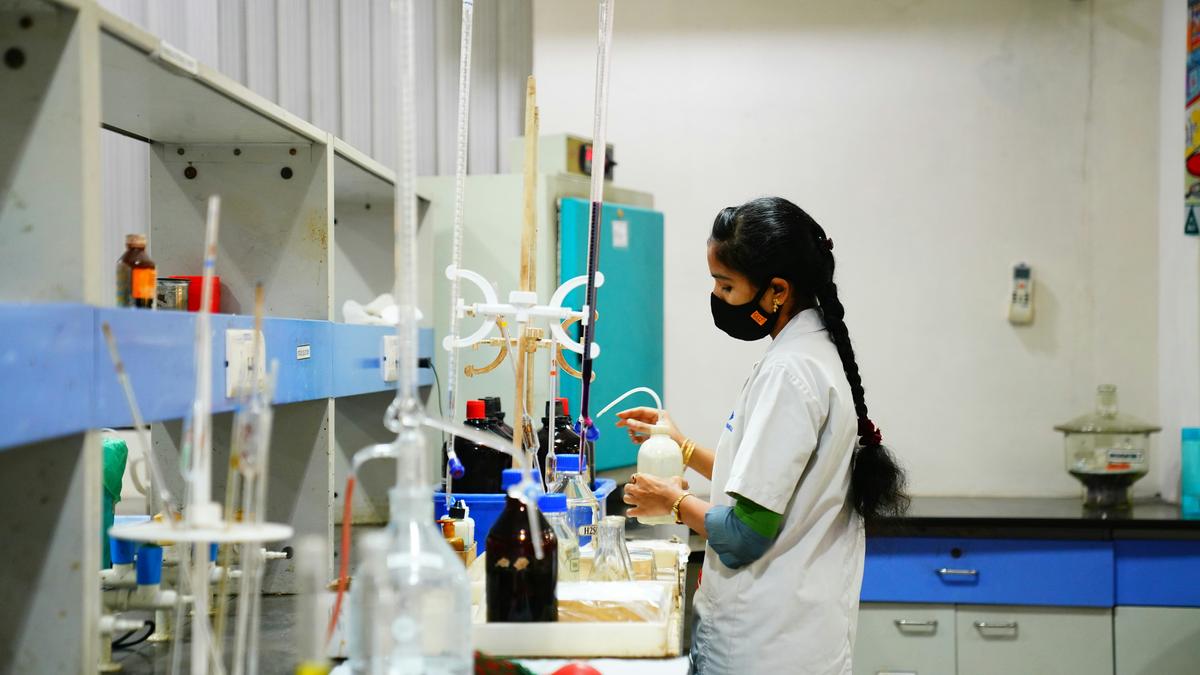
In spite of producing the highest number of female STEM graduates, women constitute only 18% of the research and development workforce in the country. A Department of Science and Technology report reveals that women constituted less than 30% of scientists in India’s national research agencies; the highest representation was in the Indian Council of Medical Research at 29% and the lowest in the Defence Research and Development Organisation at 14%. Women also make up only 8% of faculty at the Indian Institute of Science Bangalore and 11-13% of scientists at the IITs. While university settings, both government and private, report higher representation, the figures are still lower than 30%.


Economist Arvind Subramanian advises CM Revanth Reddy on strengthening Telangana's finances during a meeting in Hyderabad.

Supreme Court emphasizes stakeholder consultation for legal education reforms, hesitant to change five-year law course duration.

Authorities in Andhra Pradesh are set to tranquillise a roaming tiger near Annavaram temple for safety and conservation.

MEA criticizes USCIRF for bias, urging focus on vandalism of Hindu temples in the U.S. over selective criticism of India.

Bengaluru's Urban Development aims to beautify underutilized flyover spaces, enhancing city aesthetics and improving green cover initiatives.

Indian Navy warships escort merchant vessels in the Gulf of Oman, ensuring safe passage amid regional tensions under Operation Sankalp.

A rare crab species exhibiting both male and female traits was discovered in Silent Valley, revealing unique biological characteristics.

Gujarat court convicts five in 2016 Una flogging case; punishment announcement scheduled for March 17, 2026.

The Greater Bengaluru Authority (GBA) has extended the deadline for citizens to submit claims and objections to the revised draft voters’ list for the upcoming elections to five city corporations under its jurisdiction until March 20.

SSC Public Examinations-2026 commenced peacefully, with a 98.90% attendance across 3,415 centres and rigorous monitoring in place.

Flying Squad Team seizes whistles, ‘manjappai’ bearing TVK name in Thoothukudi

Thousands gathered for a Ramzan prayer meet, promoting spiritual renewal and civic responsibility amidst calls for peace and justice.

Players get double bill horror as Resident Evil returns with Grace, a new series character, and other fan favourites in their latest edition