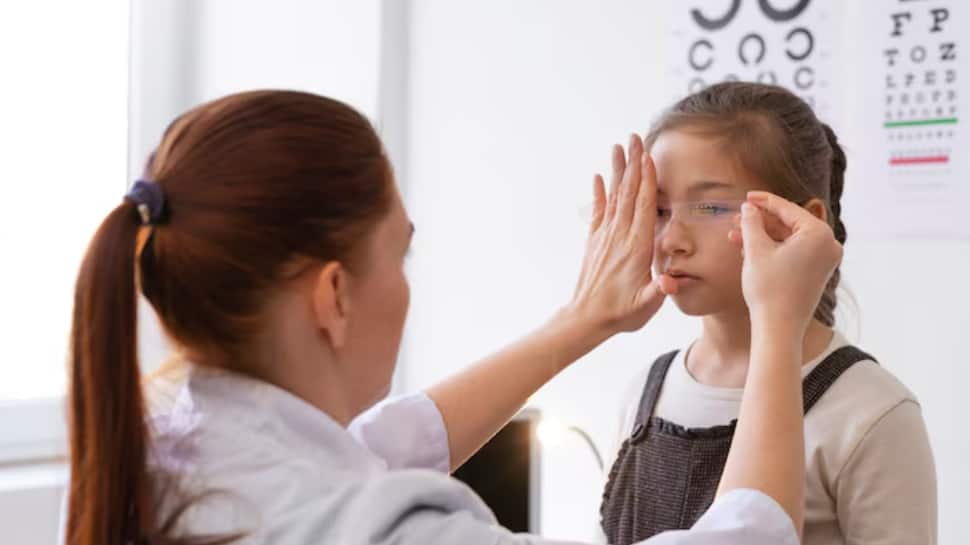
Why early eye check-ups matter: Eye experts bust common myths about children’s vision
Zee News
Many parents believe eye problems only affect adults or can wait until symptoms appear. Experts reveal why these assumptions can silently harm a child’s learning, confidence, and long-term development.
Children’s vision plays a far bigger role in their growth than most parents realise, yet eye health often goes unchecked until a visible problem arises. Several long-standing myths around children’s eyesight continue to put young eyes at risk. With rising screen time, uncorrected vision issues can quietly affect a child’s academic performance, self-esteem, physical coordination, and even brain development. We reached out to experts about common myths and how these these assumptions can silently harm a child’s development.
1. Many parents assume children don't need eye tests unless there is a visible issue. What are your biggest misconceptions you encounter?
Ans- Dr Swetha Kudtarkar, Consultant Eye Surgeon, Dr Agarwals Eye Hospital, Hubli, says, "Many parents assume that babies don’t need eye exams, but a child’s first eye check should ideally take place between six months and one year of age, as early detection plays a crucial role in healthy visual development. Another common belief is that children will simply outgrow vision problems; however, conditions such as amblyopia (lazy eye) and strabismus (crossed eyes) can lead to permanent vision loss if not treated early. Parents also worry that sitting too close to the television harms eyesight, when in reality it does not cause permanent damage it is often a sign of an existing vision issue like near-sightedness (myopia), meaning it is more an effect than a cause."
Dr Kudtarkar reveals there is a widespread myth that wearing glasses weakens the eyes. In truth, glasses help the eyes focus properly, and not using the correct prescription can actually increase eye strain. Some believe that vision loss only affects adults, but children are also at significant risk, especially with conditions like amblyopia and strabismus that can reduce vision if left untreated. Eye exercises are often thought to fix most vision problems, yet they are not a substitute for glasses and are only useful for specific conditions such as convergence insufficiency; while they may reduce eye strain in children, they do not correct refractive errors. Finally, many assume poor vision does not impact learning, but even mild vision problems can affect reading, academic performance, attention, and information retention, and good vision is equally important for sports and overall development.Top of FormBottom of Form
2. How can uncorrected vision issues affect a child’s learning, confidence, and overall development?


Many parents believe eye problems only affect adults or can wait until symptoms appear. Experts reveal why these assumptions can silently harm a child’s learning, confidence, and long-term development.

Overeating chocolates on Chocolate Day is common, but it doesn’t mean you have to stress about calories or sugar. With a few simple lifestyle changes, you can easily balance your calorie intake and reduce excess sugar in a healthy way.

Teddy Day 2026: Teddy Day adds a soft, comforting touch to Valentine’s Week by celebrating love through warmth and innocence. Observed as the fourth day of Valentine’s Week, Teddy Day 2026 is all about affection, reassurance, and emotional closeness.

These techniques will help one focus better, have a better memory, and be balanced emotionally when implemented on a regular basis.

Undeterred by rejections and barriers, he persisted, starting off by assisting senior producers and directors to learn the ropes of film-making.

Interstellar comet 3I-ATLAS is a rare cosmic visitor that may be older than our Sun, offering scientists a unique glimpse into the early Milky Way. Its ancient origins and unusual composition could help unlock secrets about the formation of stars and planets.

These techniques will help one focus better, have a better memory, and be balanced emotionally when implemented on a regular basis.

The Realme P4 Power runs Realme UI 7.0 based on Android 16, promising three years of OS updates and four years of security patches. Meanwhile, the OnePlus Nord CE5 5G ships with OxygenOS 15 based on Android 15.

Google Android Phone Security: Samsung and Google Pixel have announced that they will provide security updates for more than seven years on their devices.

Google Android Phone Security: Samsung and Google Pixel have announced that they will provide security updates for more than seven years on their devices.

India AI Impact Summit 2026: The seven Chakras are Human capital, Inclusion for social empowerment, Safe and trusted AI, Science, Democratising AI resources and more.

In a developing country like India, there are parts of states with limited access to diagnostic testing and probably less availability of health education and medical facilities that could have helped recognize symptoms earlier.

India AI Impact Summit 2026: The seven Chakras are Human capital, Inclusion for social empowerment, Safe and trusted AI, Science, Democratising AI resources and more.