Early warning signs of childhood eye cancer that parents often miss
Zee News
Unfortunately, because childhood eye cancer symptoms are painless and children cannot clearly express vision problems, the diagnosis is often delayed. This delay can significantly impact both vision preservation and survival outcomes.
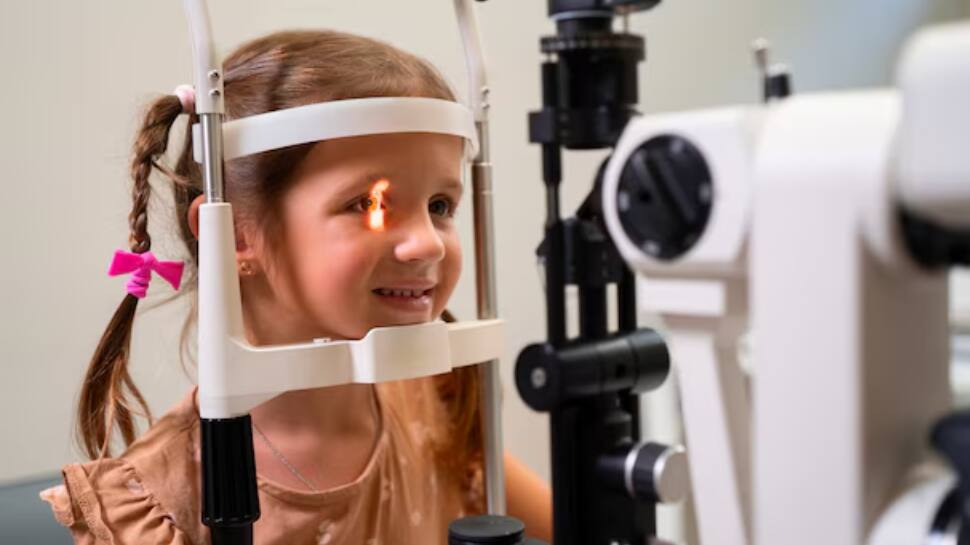
Childhood eye cancer, most commonly retinoblastoma, often presents with subtle early signs that parents may overlook or dismiss as nothing of significance. One of the earliest and most critical warning signs is a white reflection in the child’s eye, especially noticeable in photographs taken with flash. Persistent squinting, crossed eyes, or an eye that appears misaligned are other warning signs that should also never be ignored. In some cases, parents may notice redness, swelling, or watering of the eye that does not improve with routine treatment.
Another concerning sign is a noticeable change in vision, which, when compromised, might lead children to bump into objects, struggle to focus, or show reduced interest in visual activities. Unfortunately, because these symptoms are painless and children cannot clearly express vision problems, the diagnosis is often delayed. This delay can significantly impact both vision preservation and survival outcomes.
Fairooz P Manjandavida, Specialist, Ocular Oncology, HORUS Specialty Eye Care, Bengaluru, says, "Early detection of childhood eye cancer can be life-saving. Regular eye screenings in infancy and early childhood, along with prompt evaluation of any unusual eye appearance or behaviour, are crucial. Implement newborn red reflex screening, dilated exams through age 5 (essential for 40% hereditary cases), and immediate ophthalmology referral for any anomaly. Parents should stay vigilant, if something about their child’s eyes seems unusual, seeking immediate specialist consultation can make all the difference."
Dr Manish Sahni, Consultant Surgical Oncologist, Kailash Hospital, Noida, says, "Eye cancer in children is rare but can be serious if not detected early. Parents often overlook the subtle warning signs. One of the most noticeable signs is a white reflection in the pupil (cat’s eye reflex). Other signs include redness or swelling in the eye, crossed eyes, poor vision, frequent squinting, or a child complaining of eye pain. Changes in eye alignment or unusual eye movements may also be a warning."
Early detection makes treatment more effective and increases the chances of protecting the child’s vision. Being aware of early signs, maintaining regular eye exams, and promoting a healthy lifestyle can make a big difference. Early attention and preventive care are key to keeping a child’s eyes healthy and ensuring their overall well-being.


Many parents believe eye problems only affect adults or can wait until symptoms appear. Experts reveal why these assumptions can silently harm a child’s learning, confidence, and long-term development.

Overeating chocolates on Chocolate Day is common, but it doesn’t mean you have to stress about calories or sugar. With a few simple lifestyle changes, you can easily balance your calorie intake and reduce excess sugar in a healthy way.

Teddy Day 2026: Teddy Day adds a soft, comforting touch to Valentine’s Week by celebrating love through warmth and innocence. Observed as the fourth day of Valentine’s Week, Teddy Day 2026 is all about affection, reassurance, and emotional closeness.

These techniques will help one focus better, have a better memory, and be balanced emotionally when implemented on a regular basis.

Undeterred by rejections and barriers, he persisted, starting off by assisting senior producers and directors to learn the ropes of film-making.

Interstellar comet 3I-ATLAS is a rare cosmic visitor that may be older than our Sun, offering scientists a unique glimpse into the early Milky Way. Its ancient origins and unusual composition could help unlock secrets about the formation of stars and planets.

These techniques will help one focus better, have a better memory, and be balanced emotionally when implemented on a regular basis.

The Realme P4 Power runs Realme UI 7.0 based on Android 16, promising three years of OS updates and four years of security patches. Meanwhile, the OnePlus Nord CE5 5G ships with OxygenOS 15 based on Android 15.

Google Android Phone Security: Samsung and Google Pixel have announced that they will provide security updates for more than seven years on their devices.

Google Android Phone Security: Samsung and Google Pixel have announced that they will provide security updates for more than seven years on their devices.

India AI Impact Summit 2026: The seven Chakras are Human capital, Inclusion for social empowerment, Safe and trusted AI, Science, Democratising AI resources and more.

In a developing country like India, there are parts of states with limited access to diagnostic testing and probably less availability of health education and medical facilities that could have helped recognize symptoms earlier.

India AI Impact Summit 2026: The seven Chakras are Human capital, Inclusion for social empowerment, Safe and trusted AI, Science, Democratising AI resources and more.