When AI firms become power firms, should governments foot the bill? Premium
The Hindu
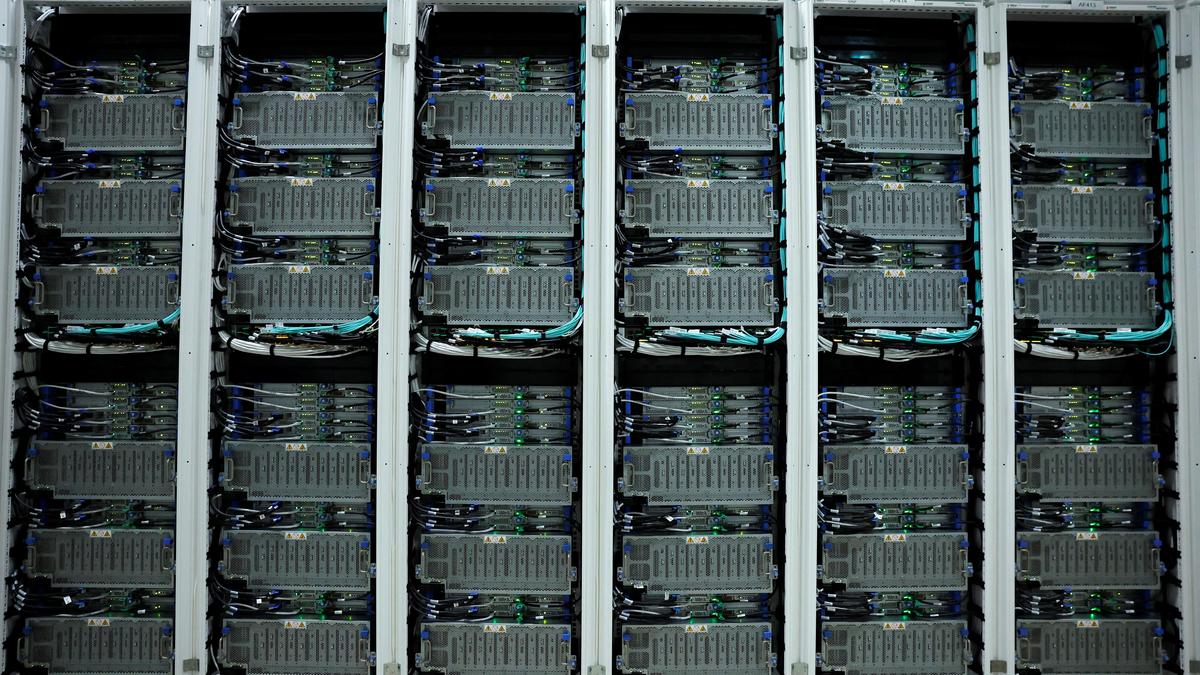
Training and running large AI models requires enormous computing clusters with thousands of GPUs operating continuously inside data centres that consume electricity at industrial scale.
It is rare for a policy announcement in Washington to feel like the real-time validation of a thought experiment I undertook. Yet that is precisely what happened last week when the Trump administration unveiled the “Ratepayer Protection Pledge”, urging America’s largest artificial intelligence firms to build, or procure, their own electricity supply for the data centres that power AI.
The non-binding pledge asks hyperscalers like Alphabet, Microsoft, Amazon, Meta, Oracle, and xAI to pay the full cost of energy generation and grid upgrades required to run their facilities, rather than passing those costs on to ordinary consumers.
For anyone who has been modelling the economics of AI infrastructure, this proposal is striking. Interestingly, I ran a sort of Monte Carlo-style exercise examining Alphabet’s “century bonds” in one of my earlier columns. One of the plausible long-term scenarios from that exercise was hyperscalers slowly evolving into quasi-utility companies whose competitive advantage lies not only in algorithms and data but also in electricity generation, transmission, and physical compute capacity. The Trump administration’s pledge seems to nudge the industry in that direction.
The reason is simple: AI is an energy revolution disguised as a technological revolution.
Training and running large AI models requires enormous computing clusters with thousands of GPUs operating continuously inside data centres that consume electricity at industrial scale. In the United States alone, data centres currently account for roughly 4–5% of national electricity demand, and projections suggest this could rise to 9–17% by 2030 as AI infrastructure expands.
That growth has triggered political backlash as communities hosting large data centres have complained about rising power bills and strained grids. This pledge is therefore as much a political gesture as an economic one. And, by the way, it is not binding and its operational details are sketchy at best. So let us not even get into the enforcement mechanism. Still, the pledge signals something profound about the next phase of the AI race.


Delhi government partners with IIT Madras to study smog-eating surfaces for innovative air pollution solutions.

Chennai's Greater Corporation accelerates civic projects, including bridges and schools, ahead of the upcoming Assembly election.

Former Indian skippers recognised for their role in shaping women’s cricket

M.K. Stalin increases pensions for journalists and announces medical insurance and housing support in Tamil Nadu.

Kerala Cabinet approves a comprehensive Film Policy focused on job security, gender justice, and elevating the Malayalam film industry.

The High Court of Karnataka on Friday ordered issue of notice on a PIL petition questioning the State government’s January 8, 2026, order for transferring four acres of pristine land of the Karnataka Veterinary, Animal and Fisheries Sciences University to construct additional 20 quarters as an annexe for the Nyaya Grama, the existing residential quarters for judges of High Court, and another three acres to build a super-speciality hospital.

McGrath recalls his duels with Tendulkar

I want to play the next level; I’m at the top of my game and definitely ready: Shreyas Gopal Premium
Shreyas Gopal discusses his impressive season, ambitions for IPL, and readiness to elevate his cricket career.

CM A. Revanth Reddy defends the Musi Riverfront project against criticism, highlighting benefits for displaced families and urban development.

Artist Lalit Verma's photo exhibition captures the diverse experiences and unity at the 'Maha Kumbh Mela' in Prayagraj.

CRPF and Tiruchi City Police conduct a flag march in preparation for the upcoming Assembly election.

Finance Minister advises hoteliers to reduce menu items and consider alternate day operations amid cooking gas scarcity in the State.

British Council celebrated outstanding U.K. alumni at the Study U.K. Alumni Awards 2026 in Bengaluru, recognizing their remarkable achievements.