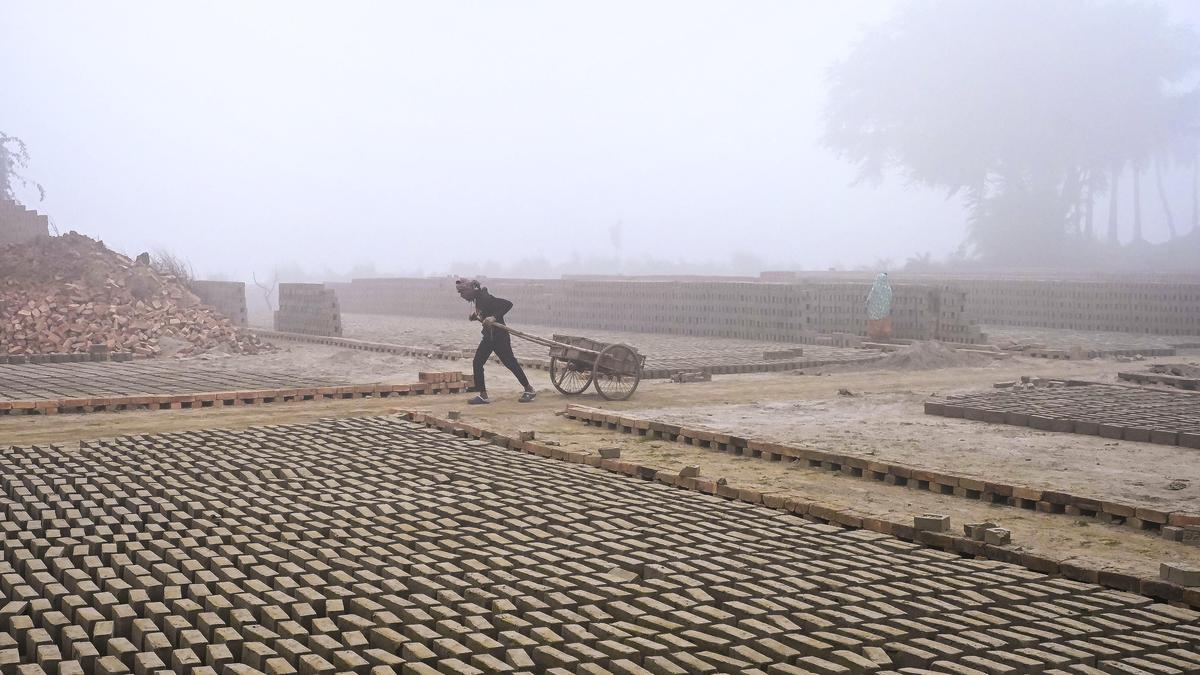
West Bengal remains destination and source of Bonded Labour
The Hindu
West Bengal faces ongoing challenges with bonded labour, affecting migrant workers and youth from Bihar, Jharkhand, and Odisha.
On February 9, when the country was observing 50 years of the Bonded Labour System (Abolition) Act Chamru Majhi, his wife, and their children were rescued from the Moni Brick Kiln in Aranghata, Nadia. The rescue was a joint effort of several departments, including Secretary, District Legal Services Authority (DLSA) — Nadia Bidushi Tsering Lepcha and officials at the Taherpur Police Station in Nadia district.
The brick kiln is located in a remote area surrounded by fields and water bodies, approximately 9.6 km away, and is known to employ mostly migrant workers from Bihar and Jharkhand. After the rescue intervention of the administration, an FIR was registered.
Hailing from Hussainabad Sheikhpura in Bihar, the Majhi family had been trapped in second-generation bonded labour for the past 17 years. The family was held under an advance bondage system after accepting ₹35,000 from a labour contractor, forcing all family members—including three minor children—to work in the kiln.
The rescue is a reflection of the status of bonded labour in West Bengal, where the State remains both a source and destination for bonded labour. Several brick kilns and other small industrial units act as the destination for the bonded labour particularly from Bihar, Jharkhand and Odisha. In March 2025, twenty-eight children were rescued from two brick kilns in South 24 Parganas in West Bengal.
A 2020 report estimated that West Bengal has around 11,000 brick kilns employing nearly 0.8 million workers. The study documented low daily wages, long working hours, restrictions on workers leaving kiln premises during the season, and limited access to healthcare and maternity benefits.
Also read: India’s shame — the trap of bonded labour


Delhi's air quality is poor with an AQI of 268, while Mundka reports the worst at 357.

ED summons actor Jayaram for questioning regarding financial links to the Sabarimala gold theft case and its prime accused.

Parliament Budget Session 2026 Day 10 Live Updates: Follow The Hindu for more updates.

ED to issue new summons to Tina Ambani regarding a money laundering investigation tied to a Manhattan condominium purchase.

BJP women MPs demand action against Opposition for disruptive behavior in Lok Sabha, citing concerns over parliamentary decorum and democracy.

Meta Platforms and YouTube deliberately designed products they knew would addict children, a lawyer for a woman suing the two companies told jurors in California on Monday

Fire breaks out at Attapur car showroom, leading to evacuation of 90 residents; no injuries reported. Investigation ongoing.

Explore the controversy surrounding Form 7, including allegations of misuse and the impact on voter deletions in India.

Explore the regional divide in Indian politics: how the Hindi heartland dominates Lok Sabha majorities while South India faces persistent underrepresentation. An analysis of 15 majorities since 1967 and the future of federalism.

Delhi High Court requests CBI's response to Jaideep Sengar's plea for interim bail extension due to health issues.

Karnataka government aims to register 18,791 unrecorded school properties with new legislation to protect educational institutions.

Bengaluru's Deputy CM announces fare hike pause for reassessment, considering costs and CPI, amid political discussions and protests.

The Hindu Morning Digest gives a select list of stories to start the day. Read the top news today on February 10, 2026.